


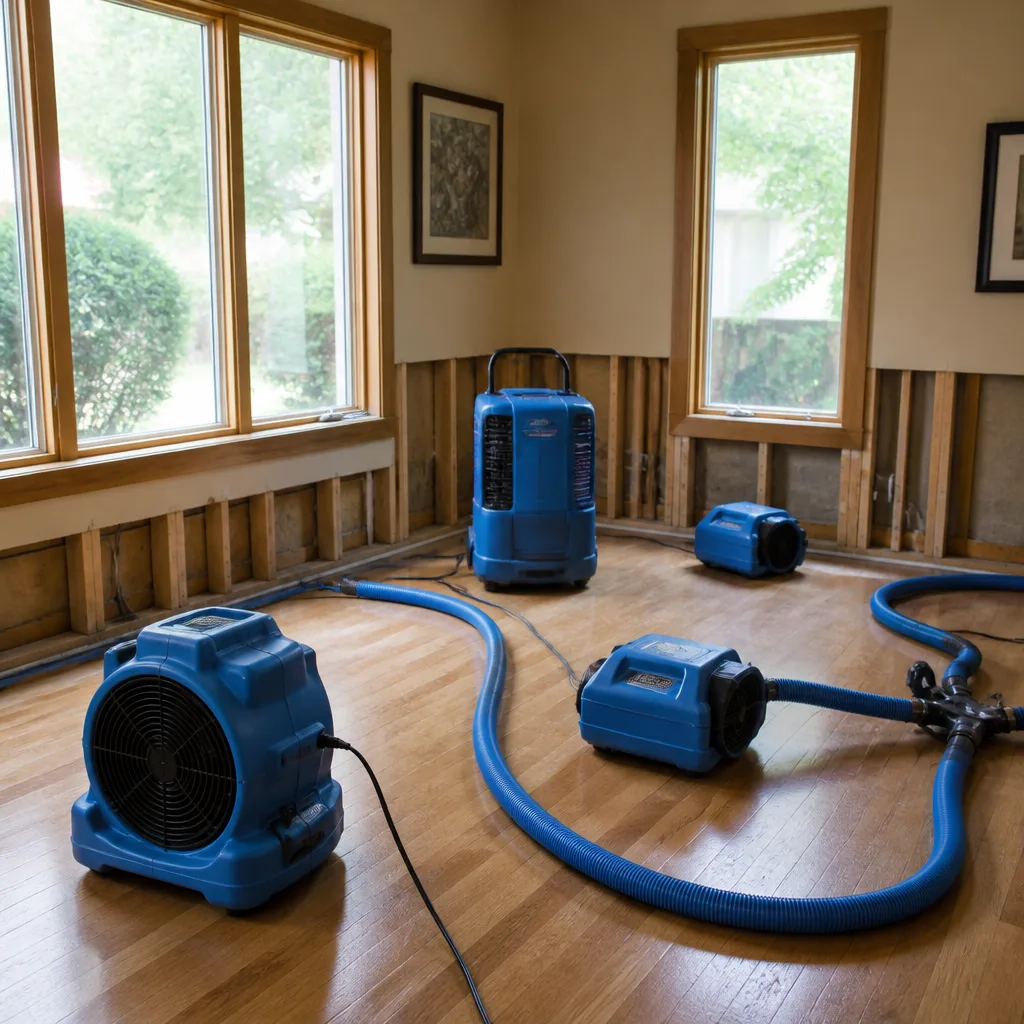
 Water damage drying
 Fire & smoke cleanup
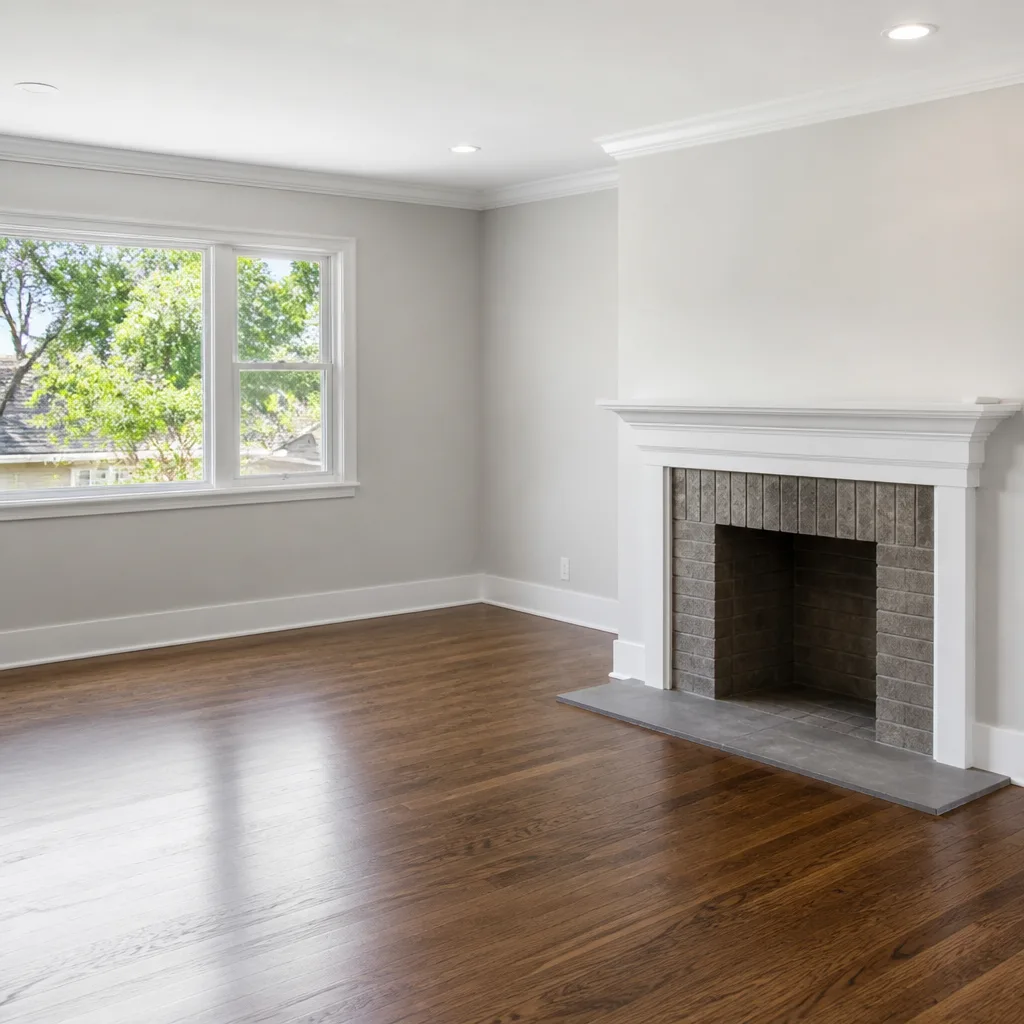 Mold remediation
 Storm response
 Sewage cleanup
 Reconstruction
Free visual inspection and a written scope of work before any mitigation begins - photos, moisture readings, and drying logs go in your claim file
The scope we write is the scope we bill. Anything new gets shown to you, in writing, before we touch it.
Get your free estimateFast, Reliable Mold Remediation Across Corona
Mold remediation in Corona, CA typically costs between $1,800 and $4,500 for a standard 10×10 room, with full-home jobs running $6,000 to $18,000 depending on how far moisture traveled. Most Corona homes we treat are dry within 3 to 5 days, and we’re on-site within hours when the call comes from 92877, 92878, 92879, or 92880. Call (844) 878-6356 and we’ll send a certified crew with commercial-grade drying equipment and a written scope before any work begins.
Corona is not a town where mold behaves predictably. The heat cycling, the Santa Ana winds, the foothill drainage, the HOA gates that slow everything down. We’ve worked enough losses across the 91/15 corridor and up into the 92881 and 92883 hillsides to know exactly what we’re walking into. Nolan Hester leads our crews, and he’s spent years here reading moisture meters in stucco walls that looked dry on the outside and were growing colonies behind the paint.
Why Fresh Start Water Damage Is Corona’s Preferred Mold Remediation Company
Corona homeowners call us because we show up with IICRC-certified technicians and equipment that belongs in a commercial restoration fleet, not a rental counter. Dri-Eaz dehumidifiers, Phoenix axial fans, XPOWER air movers, B-Air Hepa units. The same gear you’d see on a hospital or school loss. When a homeowner in the older 92879 tract neighborhoods finds mold behind a slab leak, or a family in the 92880 foothills discovers moisture trapped behind builder-grade stucco, we bring the full protocol: containment, negative air, air scrubbing, antimicrobial treatment, and drying that actually reaches wall cavities, not just the surface.
Our Mold Remediation team has worked losses in every corner of the city, from the 1960s ranchers near downtown to the master-planned clusters above Eagle Glen and Sierra Bella. We coordinate with HOAs where gates add 20 to 40 minutes to every ingress and egress. We document everything with photos for insurance. And we do not hand you a mystery invoice at the end. The scope is written before the first floor mat goes down.
Nolan Hester has walked enough Corona attics and crawl spaces to know which neighborhoods hide moisture behind which walls. That local pattern recognition is not something you get from a franchise dispatch line. When you call (844) 878-6356, you’re talking to a crew that actually knows the difference between a 92882 slab leak and a 92883 hillside drainage failure.
Restoration work we handle
Mold Removal Specialist in Corona
A mold removal specialist in Corona is what you call when visible mold covers more than about 10 square feet, or when you smell it but can’t see it, or when a water event happened weeks ago and nobody dried the framing. The job is containment first, then removal of affected drywall and insulation, then HEPA vacuuming and antimicrobial application on the exposed framing, then drying to below 16% moisture content in every affected stud. In Corona, typical mold removal from a single wall cavity or closet runs $1,200 to $3,200. A full bedroom or bathroom remediation with containment and air scrubbing runs $3,000 to $6,500.
What drives the price in Corona specifically: the age of the home, whether HOA escorts are required, and whether the mold is in a single room or spread through a return-air duct. The foothill subdivisions built in the 1990s and 2010s often have tight attic clearances and stucco assemblies that make access slower than the older downtown homes with crawl spaces.
Containment and Air Filtration
We build zippered containment with negative air inside the affected area before we touch a single square foot of drywall. The air scrubber runs continuously during removal, which prevents spores from moving through a Corona home’s forced-air system. In foothill homes where the return air runs through the attic, this step is not optional.
Antimicrobial Treatment and Drying Logs
After the damaged material is removed, the exposed framing gets an antimicrobial treatment that is rated for structural wood. Then every stud and plate is moisture-metered and logged. We do not close a wall until the numbers say it is dry. That is the difference between a job that holds and a job that comes back in six months.
Black Mold Removal in Corona
Black mold removal in Corona starts with a determination of what you are actually dealing with, because not every dark stain is Stachybotrys. When testing confirms toxigenic mold, the protocol tightens: full containment with negative air, HEPA vacuuming of every surface inside the containment, disposal of affected porous materials, and post-remediation air sampling. In Corona, black mold removal from a single bathroom or laundry area typically runs $2,500 to $6,000. A crawl space contamination requiring full encapsulation and treatment runs $5,000 to $12,000.
Homes along the foothill edges of 92881 and 92883 get black mold from a specific pattern: a small roof leak or window flashing failure during a wind-driven rain event, followed by weeks of hot attic air, creates exactly the dark, cool, humid microenvironment toxigenic mold needs. The homeowner sees no visible water damage, just a faint musty smell that gets stronger when the AC kicks on.

Testing Before and After
When the situation warrants, we arrange third-party sampling to identify the species present and verify clearance after remediation. The lab report is not guesswork. It is written evidence that the indoor spore counts are back to normal for a Corona home in that season.
When Paint Is Not a Plan
Killing surface mold with bleach and painting over it is the most common and least useful response we see in Corona homes. The colony remains behind the drywall and feeds on the paper backing. Within weeks it is back, often worse. Removal of the affected material is the only treatment that ends the cycle.
Trusted Brands We Service in Corona
Corona remodelers and builders have preferences, and we work around them. We see Bradford and Jeld-Wen exterior doors in the older 92879 and 92877 homes, Milgard and Andersen windows across most of the city, and Rheem, Carrier, and Goodman HVAC units in just about every subdivision. When mold remediation in Corona requires us to remove and reset drywall around these assemblies, we keep our cuts clean and our finishes matched. We also know which local suppliers stock the trim profiles common to the master-planned 92880 and 92881 communities, which means shorter lead times when materials need to be matched after removal.
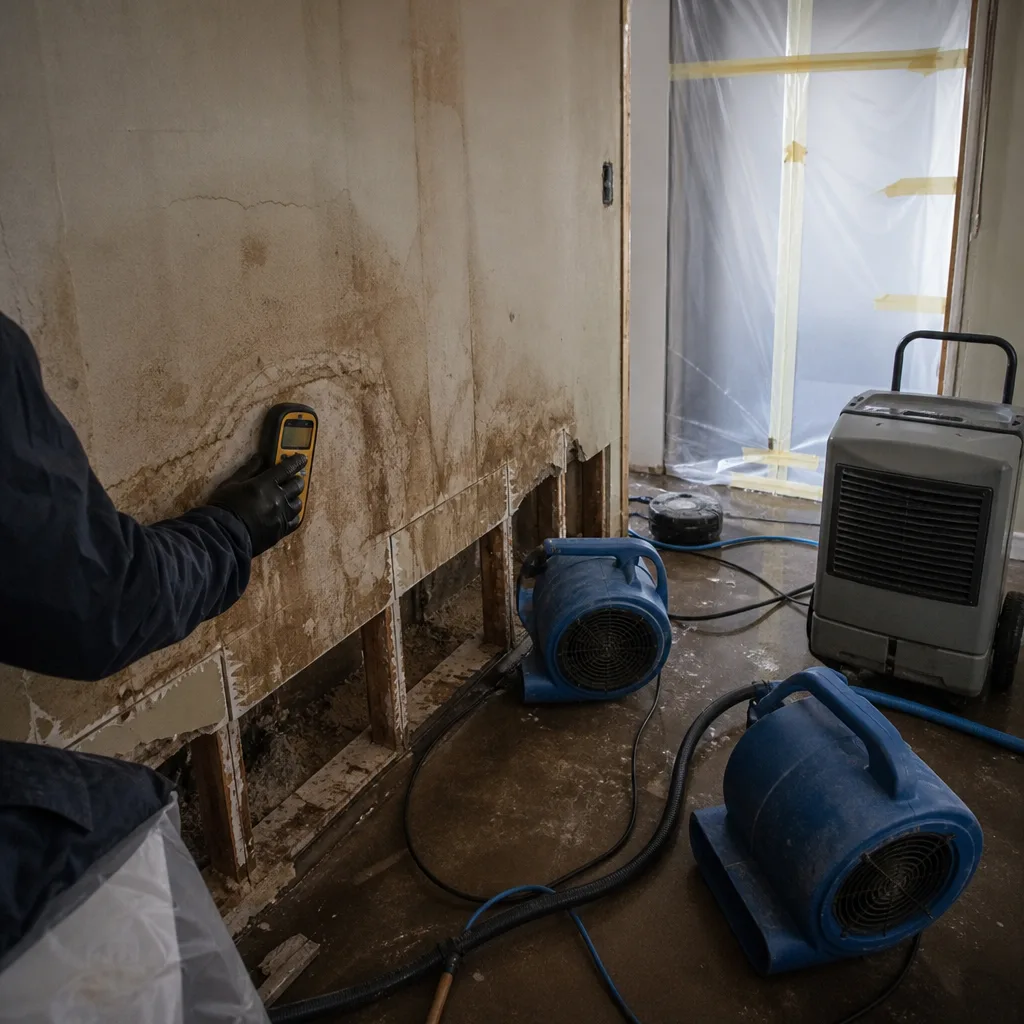
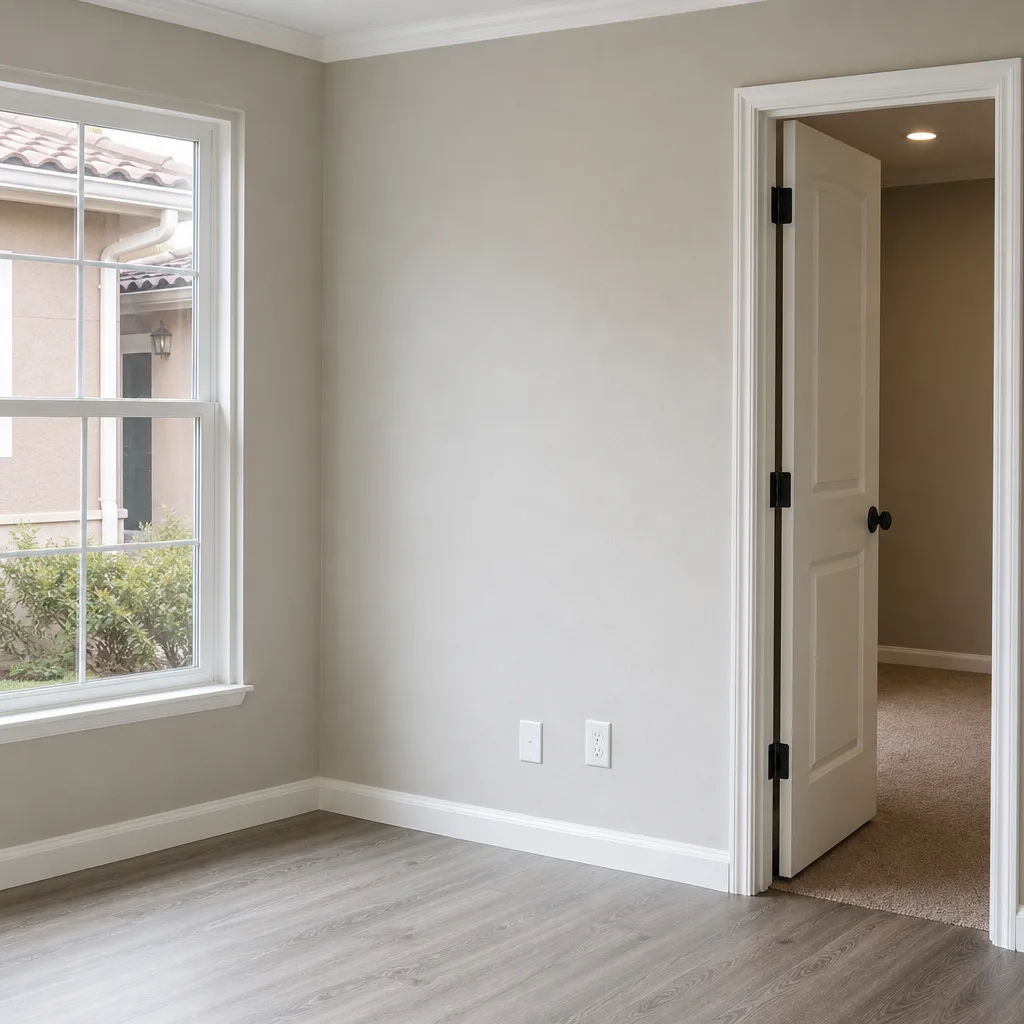
See the difference
 Before
 After
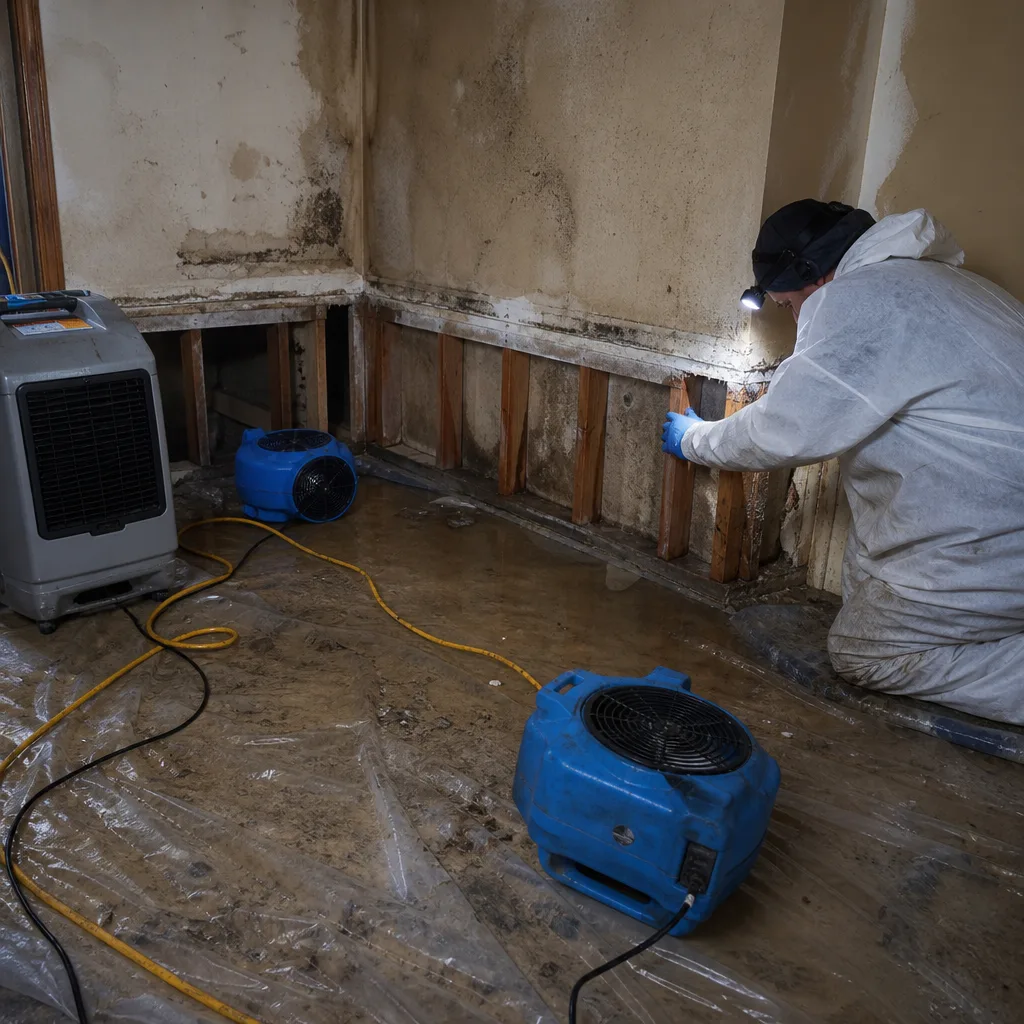 Before
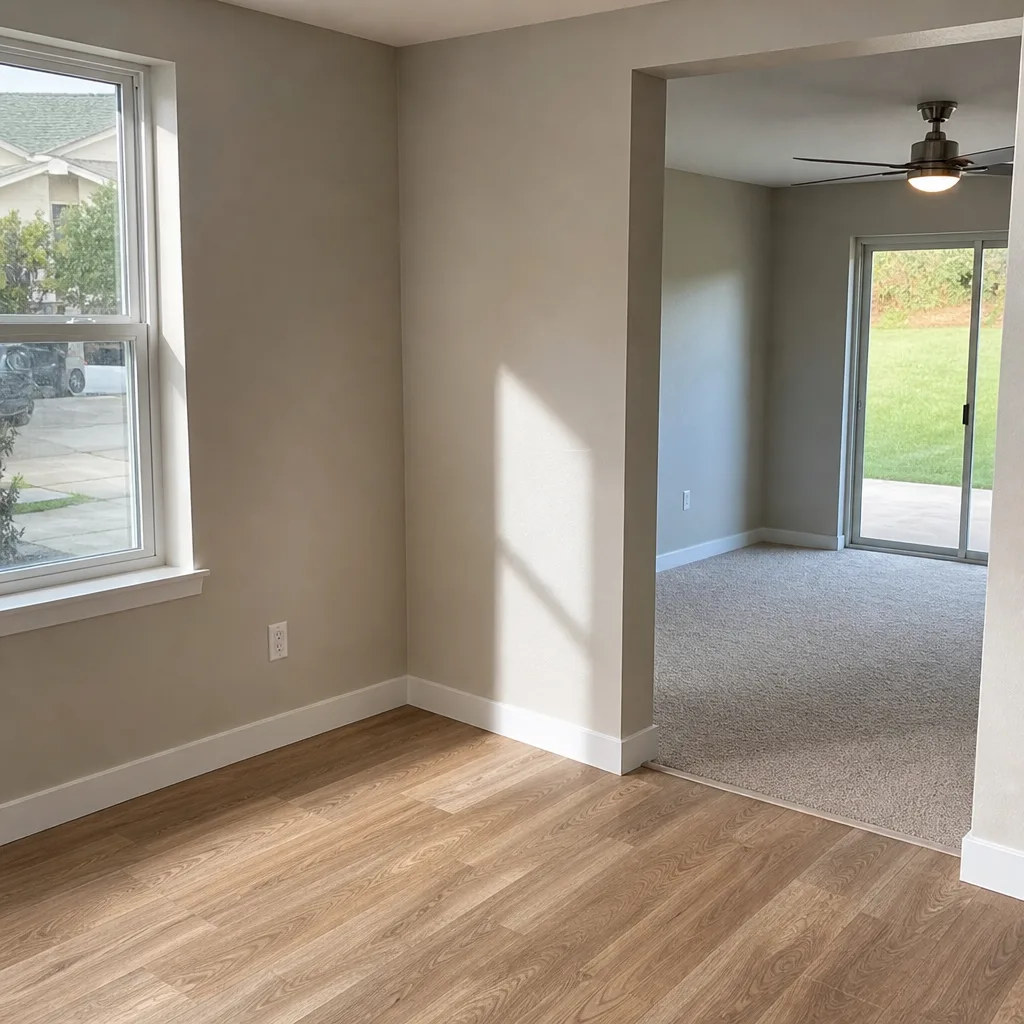 After
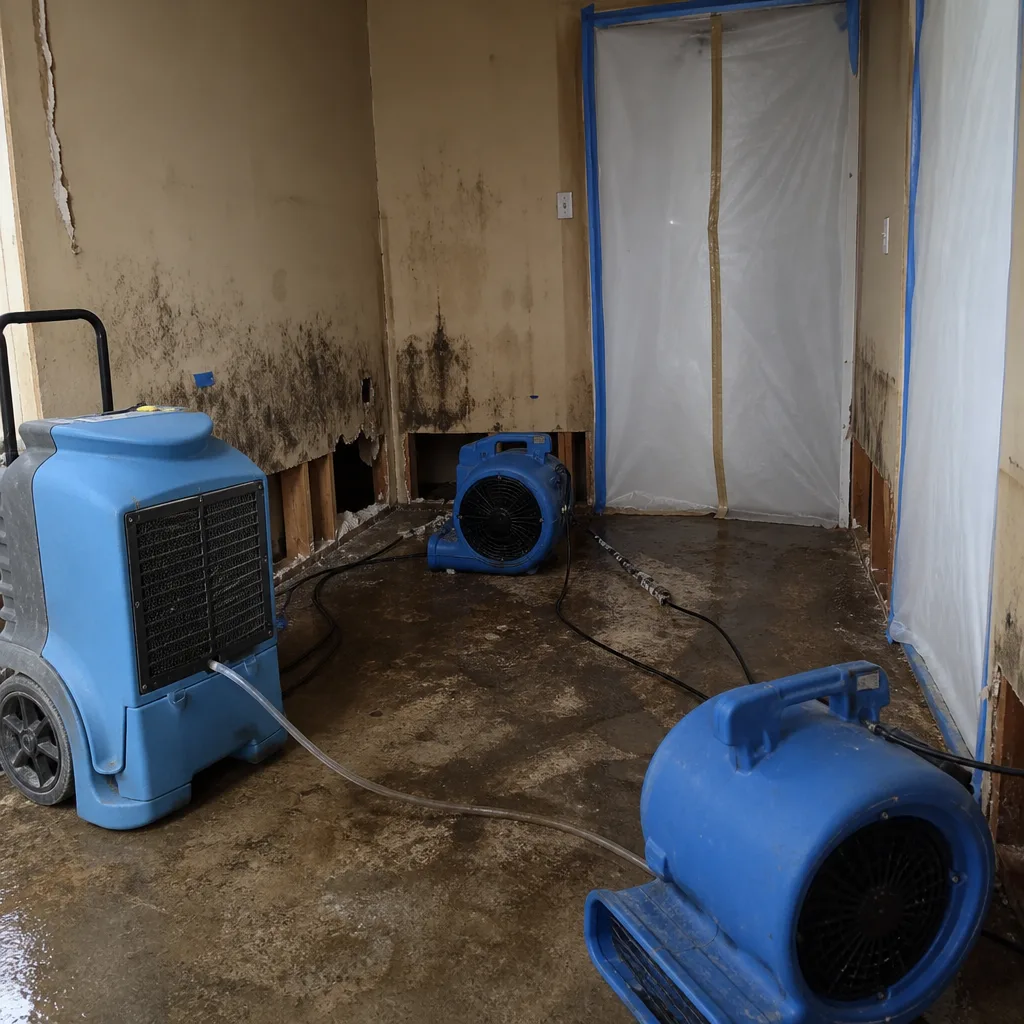 Before
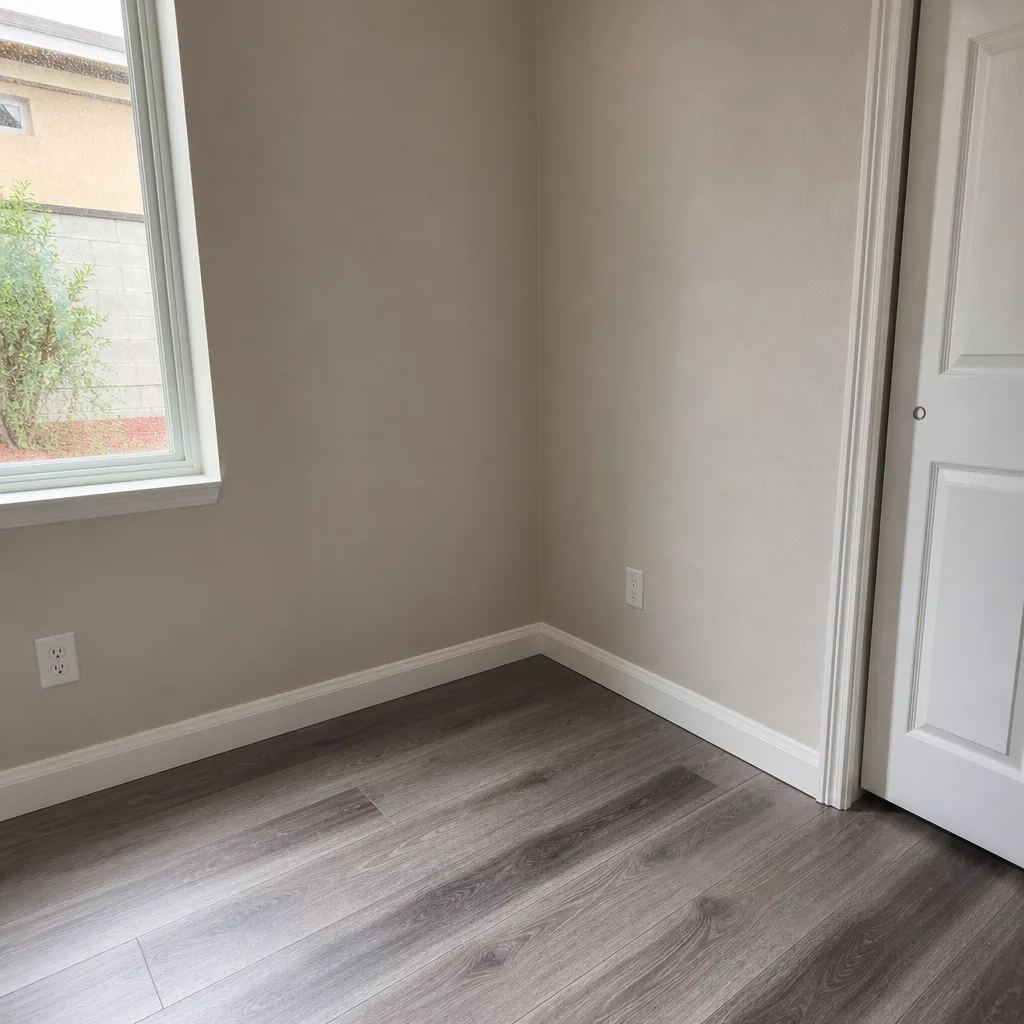 After
Common Mold Remediation Problems We See in Corona Homes
- Wind-driven rain through stucco hairline cracks. Corona’s heat cycling expands and contracts stucco hundreds of times a year. When a Santa Ana wind pushes rain horizontally through those cracks, water saturates the building paper and feeds mold inside the wall cavity where nobody sees it until the paint starts to bubble.
- HOA-gated access delaying mitigation. We have waited at guard gates in Sierra Bella and other foothill communities while a board member was located to approve entry. Mold amplifies fast. 24 to 48 hours is enough for a small wet spot to become a remediable colony in Corona’s warm interior air.
- Builder-grade roof underlayment failures above cathedral ceilings. The 1990s through 2000s foothill homes often have vaulted ceilings with minimal vented space. A small underlayment tear leaks for years, growing mold on the top side of the drywall that is invisible from inside the room until it rots through.
- Post-fire runoff and misclassified water. Homes backing onto the Cleveland National Forest in 92881 and 92883 absorb firefighting water mixed with ash and hillside sediment. That is Category 3 water, not clean water. Treating it as Category 1 leads to inadequate antimicrobial work and recurring mold.
Pricing for Mold Remediation in Corona, CA
Here is what Corona homeowners can expect to pay, in actual numbers:
- Mold inspection and moisture mapping: $200 to $500
- Bathroom mold removal (single room): $1,500 to $3,500
- Whole-room remediation with containment: $3,000 to $6,500
- Attic mold remediation: $2,500 to $7,000
- Crawl space mold and encapsulation: $5,000 to $12,000
- Black mold remediation (full protocol): $2,500 to $6,000 per affected area
The spread depends on how much drywall and insulation comes out, whether HOA gate access requires escorts, and whether duct cleaning or air quality restoration is added. Every Corona job gets a written scope with line-item pricing before we start. No surprises at the end. Call (844) 878-6356 for a free site assessment.
We Also Serve Cities Near Corona
Our Mold Remediation in Corona coverage extends into the surrounding communities, including Home Gardens along the 91, El Cerrito Corona above the 15, Eastvale to the northeast, and Norco with its horse-friendly acreage. Each area has its own building patterns and moisture behavior, and our crews work them all regularly.
Serving Corona, CA — Our Local Coverage Area
We’re based in the Corona area and know this community well. Use the map below to see our service coverage — if you’re nearby, we can almost certainly help.
FAQs About Mold Remediation in Corona
Because the communities in 92881 and 92883 sit directly against the wildland-urban interface, so a single Santa Ana wind event can push embers and ash into a home while firefighting aircraft drop water that saturates the same structure. The ash and char are fire contaminants; the water is often contaminated with runoff that includes sediment, vegetation, and possibly fire-retardant residue. Mold remediation after this dual-loss pattern requires anti-microbial treatment and containment from the start, not after a Category 1 cleanup has already been done incorrectly. If your Corona home has been through a fire-adjacent event and you smell must, call (844) 878-6356 and we will assess both loss types together.
Corona’s triple-digit summer days followed by cool foothill nights expand and contract stucco, caulking, and roof tile underlayment. The cracks that open up are where wind-driven rain enters during winter storms. The water that gets in is trapped behind vapor barriers and fed by warm interior air, which is exactly the condition mold needs. Newer master-planned homes are not immune; in some ways they are more vulnerable because the builder-grade materials have less tolerance for thermal cycling than older solid-wood construction.
Plan for an extra 20 to 40 minutes on every entry and exit while the gate system is coordinated. HOAs in Sierra Bella and similar Corona foothill communities require vendor approval before work begins, and some require escorts through the community. We are experienced with these protocols and include access coordination in our scope of work, but homeowners should notify their HOA early in the process so mitigation is not delayed. Delays are exactly what mold needs to become a much larger problem.
Sometimes yes, and this is why a documented loss with photographs and moisture readings matters from day one. In Sierra Bella and other 92880/92881 communities, the builder may be responsible for construction defects like improperly flashed windows or cracked stucco that allowed the water intrusion. If the builder disputes causation, our written scope and moisture logs provide the evidence package your attorney or homeowner association will need. We have worked through these warranty disputes with Corona homeowners and understand how to document to the standard that holds up.
With third-party lab testing. Visual identification is not reliable, because many dark molds are not Stachybotrys and many Stachybotrys colonies are not pure black. The sample is collected and sent to a laboratory that identifies the genus and species and quantifies the spore load. That report tells us whether full toxigenic protocol is required, which affects containment, removal, and clearance testing. If you have visible dark growth in a Corona home, we will not guess. We will test, scope, and price accordingly. For an exact quote call (844) 878-6356.
Written by Nolan Hester, Owner at Fresh Start Water Damage, serving Corona and surrounding Riverside County communities since 2008.