


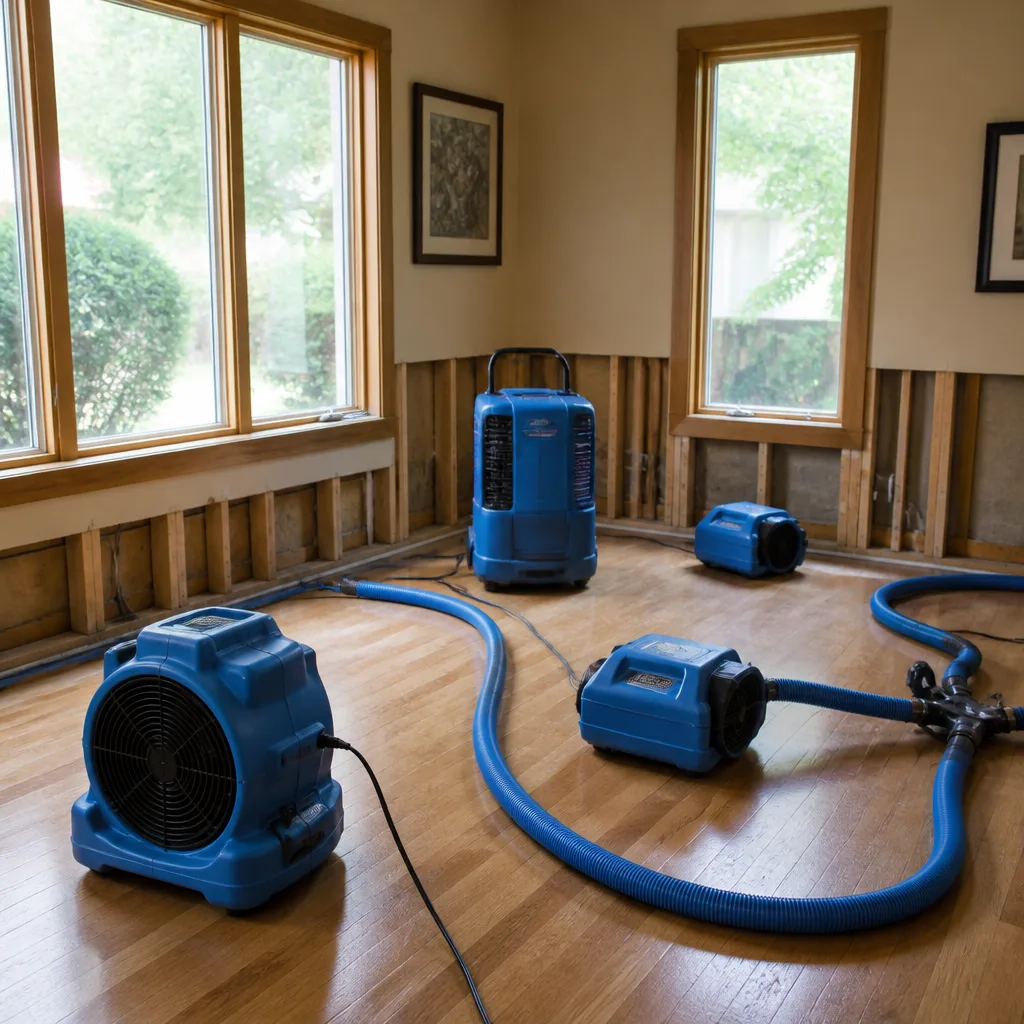
 Water damage drying
 Fire & smoke cleanup
 Mold remediation
 Storm response
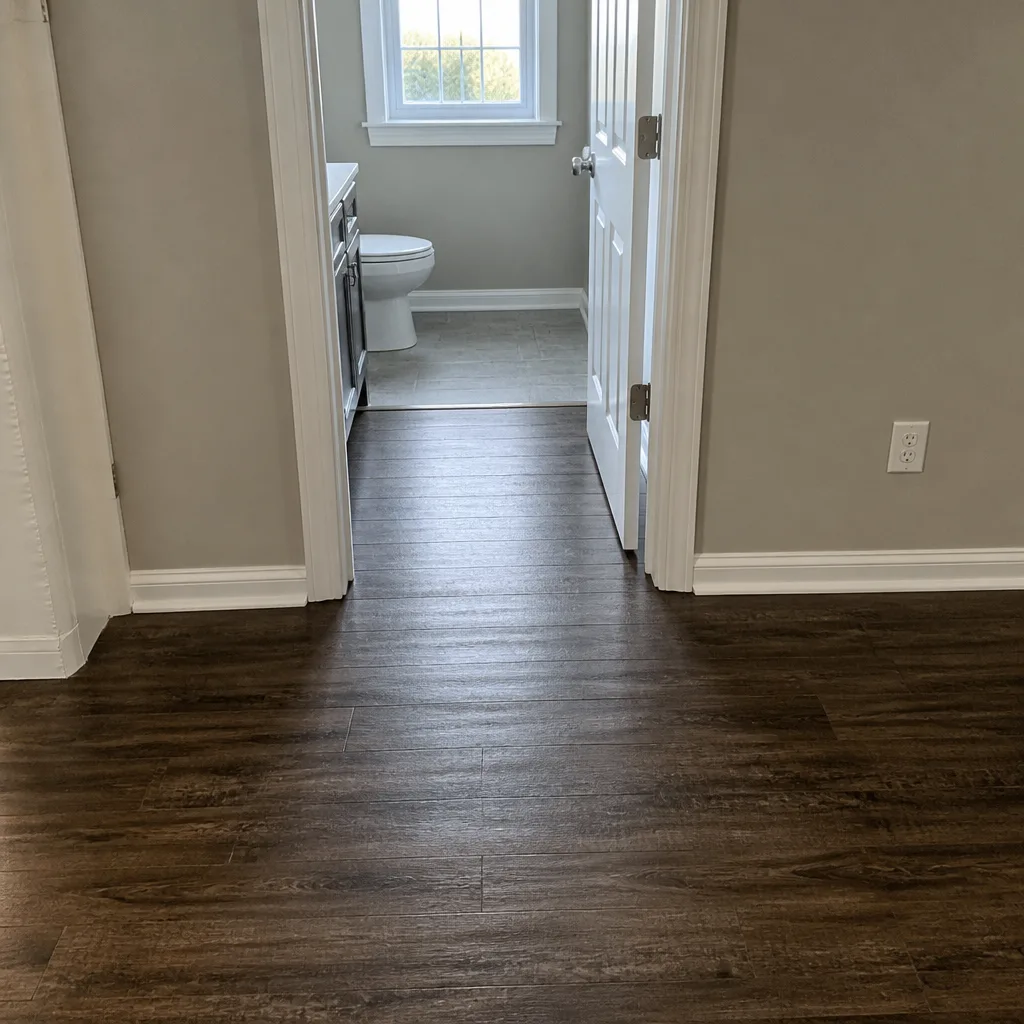 Sewage cleanup
 Reconstruction
Free visual inspection and a written scope of work before any mitigation begins - photos, moisture readings, and drying logs go in your claim file
The scope we write is the scope we bill. Anything new gets shown to you, in writing, before we touch it.
Get your free estimateFast, Reliable Water Damage Restoration Across Fullerton
Water damage restoration in Fullerton typically costs between $1,800 and $6,500 depending on the water source, affected square footage, and whether structural drying requires opening walls or slab access. Most emergency extractions in Fullerton are completed the same day you call, with full structural drying taking three to five days. We know Fullerton’s mid-century homes and the specific ways they fail after rain. If you’re dealing with a slab leak, roof intrusion, or overflow right now, call (844) 878-6356 and we’ll walk you through the first steps while a crew heads your way.
Why Fresh Start Water Damage Is Fullerton’s Preferred Water Damage Restoration Company
Fullerton homes don’t fail like newer construction. They fail in layers. A 1958 ranch on a slab with original galvanized supply lines can have three separate moisture problems running at once, and most restoration crews only chase the visible one. Our team is IICRC-certified, and we run moisture mapping on every single job so the water you can’t see gets dried too.
Nolan Hester built Fresh Start on a simple premise: bring commercial-grade drying equipment and the discipline of commercial restoration to residential jobs. That means Dri-Eaz dehumidifiers, Phoenix air movers, and Injectidry systems that dry wall cavities without tearing out drywall unnecessarily. One team manages the whole arc from extraction to dry structure. That matters in Fullerton, where a missed moisture pocket in a stucco wall turns into mold inside 48 hours.
Restoration work we handle
Emergency Water Removal in Fullerton
Emergency water removal in Fullerton is the first and most time-sensitive step when a supply line bursts, a water heater lets go, or a storm pushes water through a roofline. Standing water in a slab-on-grade home doesn’t just sit on the floor. It wicks into baseboards, drywall, and the slab itself, especially in older tract homes where the vapor barrier has long since degraded.
Extraction That Gets Below the Surface
We start with high-volume extraction using truck-mounted and portable units in combination with HEPA-filtered air scrubbers. Then comes the part most crews skip: thermal imaging and pin-style moisture meters to map how far the water actually traveled. In Fullerton’s mid-century homes, water frequently runs under vinyl flooring and along sill plates long before it shows up as a stain.
When Minutes Count
A burst galvanized supply line in a Fullerton home can release four to eight gallons per minute. That’s hundreds of gallons before you even locate the shutoff. The response window isn’t hours. It’s minutes. Extraction within the first two hours prevents secondary damage that later requires full wall and floor replacement.
Flood Damage Restoration in Fullerton
Flood damage restoration in Fullerton follows the same protocol as emergency extraction but with a critical difference: floodwater is rarely clean. When Coyote Hills and Puente Hills runoff overwhelms streets during heavy winter rain, the water entering homes through door thresholds and garage slab cracks carries silt, fertilizers, and bacteria. That’s category 2 or 3 water, and it requires more than drying.
Containment and Sanitizing
We set containment barriers and negative air pressure before we start working on flood water. Then we remove wet drywall, insulation, and carpet pad as needed, followed by antimicrobial treatment on all affected framing and concrete. This step is where Fullerton’s older homes need careful judgment. Cutting open original 1960s lath-and-plaster walls to check for moisture migration takes skill, not just demolition instinct.
Slab and Subfloor Drying
Flood water seeps under slab-on-grade floors through cracks and expansion joints. We use Injectidry systems to dry those cavities from the inside, which often eliminates the need to pull up the entire floor. For hardwood floors in Fullerton’s older homes, this can mean the difference between refinishing and full replacement.

Trusted Brands We Service in Fullerton
We’re brand-agnostic when it comes to the equipment already in your home, but our own gear is commercial-grade: Dri-Eaz, Phoenix, B-Air, and Injectidry. That matters because Fullerton’s older homes often have non-standard plumbing runs and tight crawl spaces that cheap rental units can’t reach. We stock common fittings, valves, and connectors for mid-century plumbing systems so we aren’t chasing parts across Orange County while your home sits wet. The IICRC standard we operate under requires documented drying progress, and our equipment gives us the data logs to prove it.
See the difference
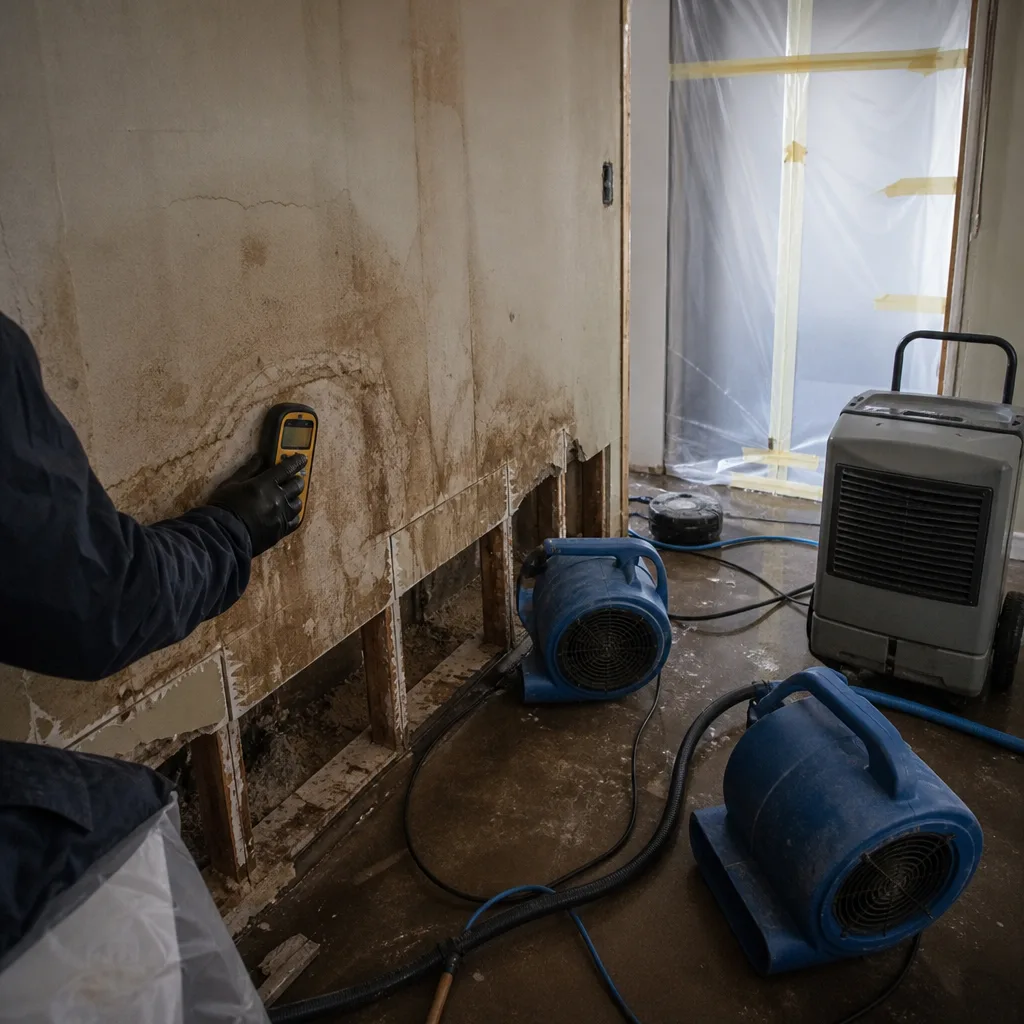 Before
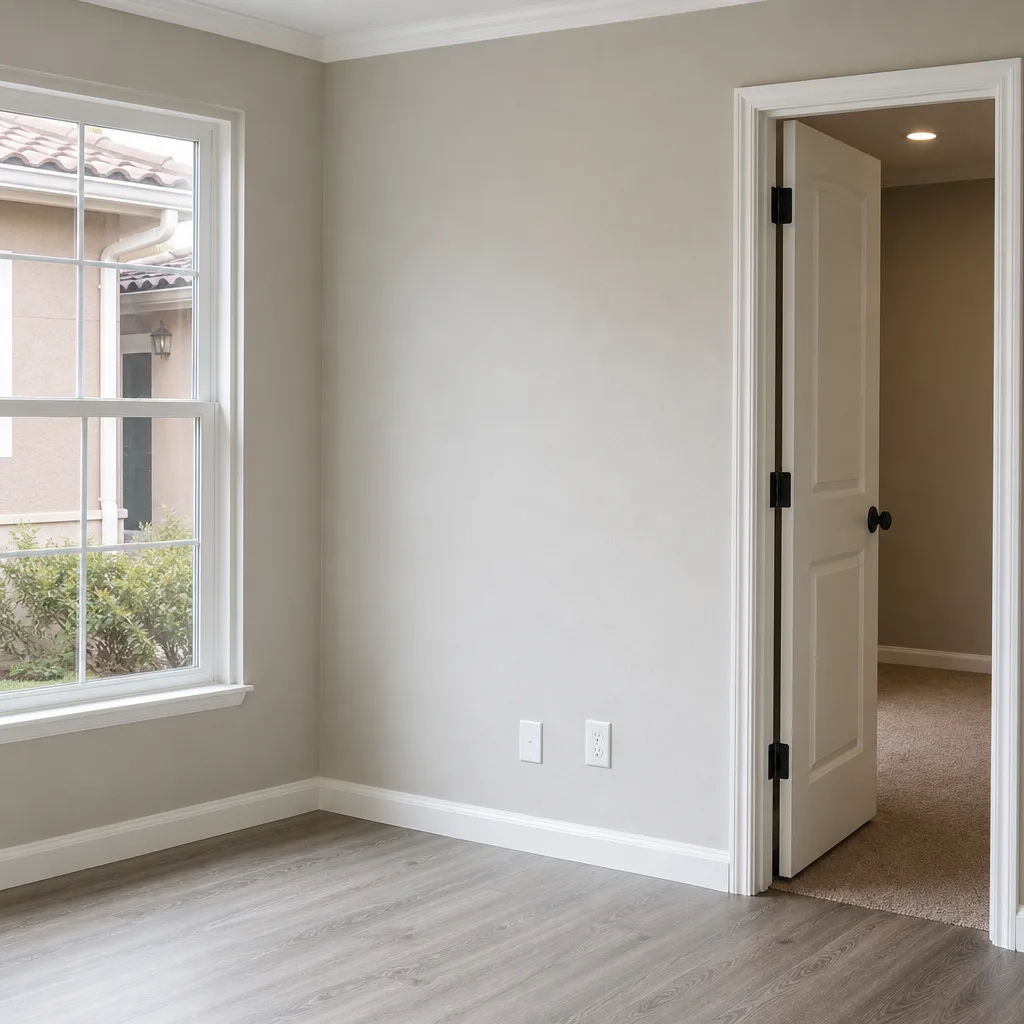 After
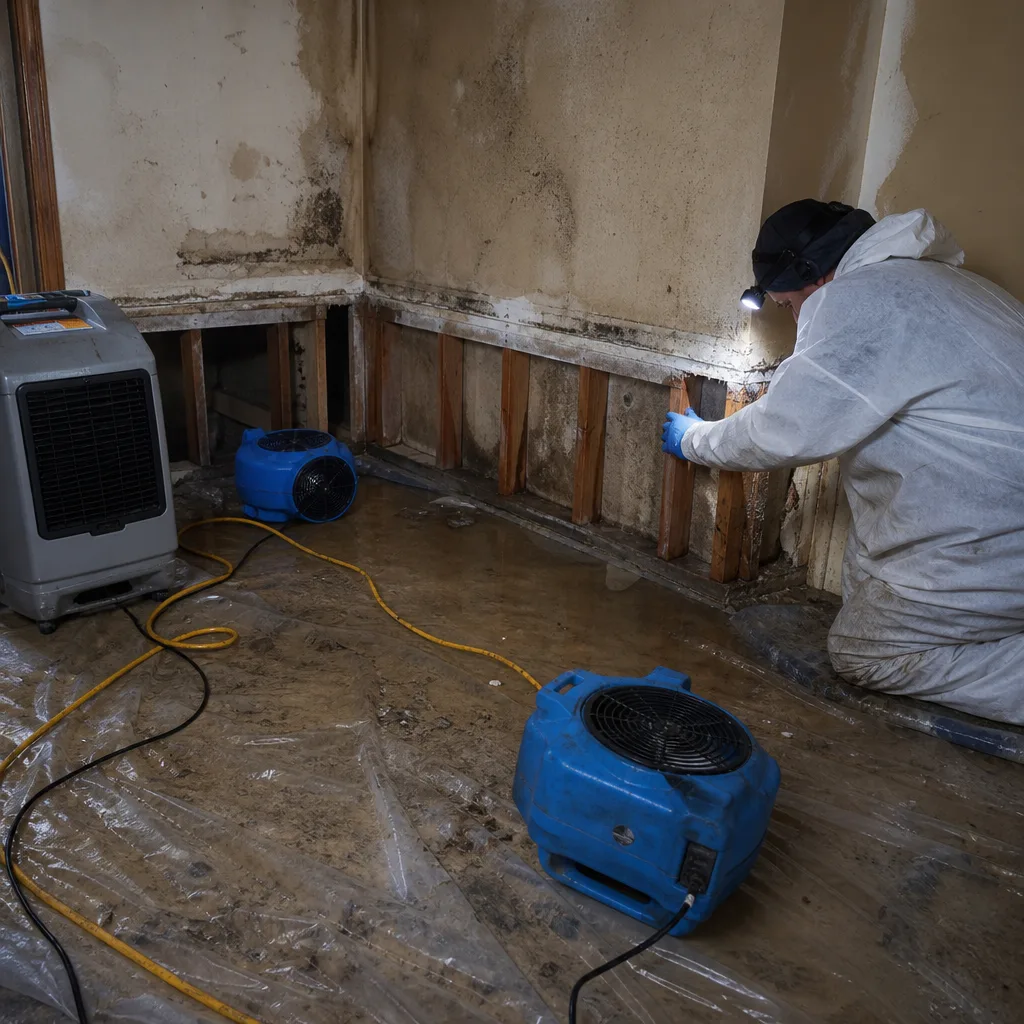 Before
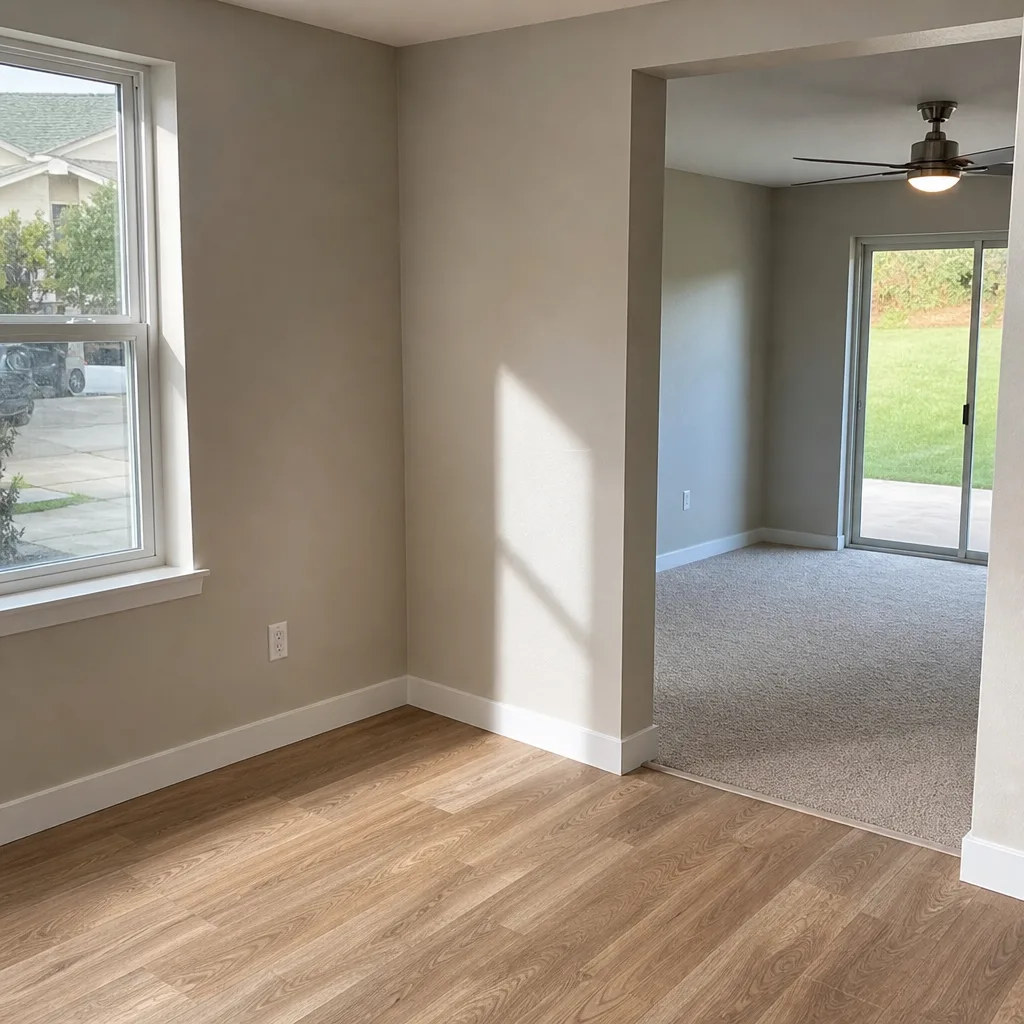 After
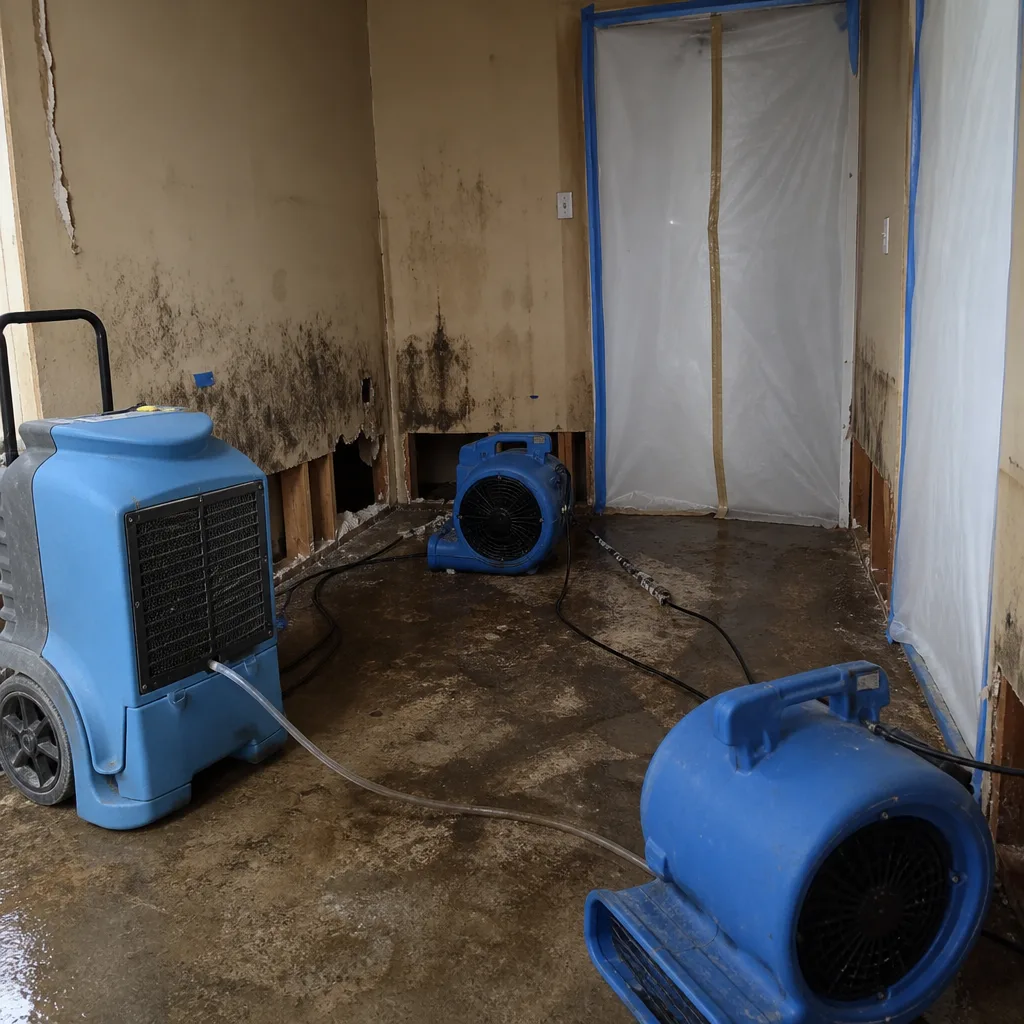 Before
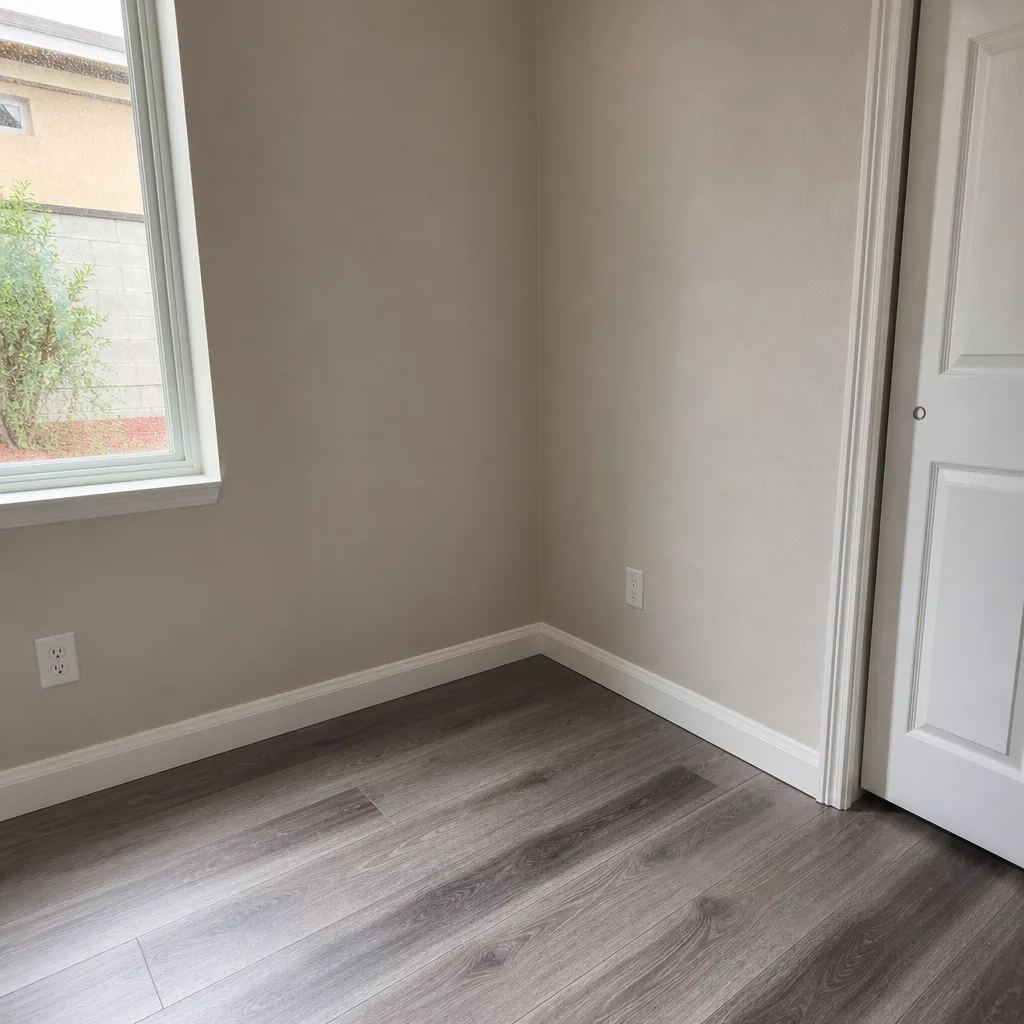 After
Common Water Damage Restoration Problems We See in Fullerton Homes
- Galvanized supply pipe failure under slabs. Fullerton’s 1950s-1970s tract homes were built with steel pipes that corrode from the inside. Pinhole leaks develop under the foundation and saturate the slab for weeks before a floor buckles or a baseboard starts wicking.
- Cast-iron drain line cracking during wet winters. Winter rain saturates Fullerton’s clay-heavy soils, which expand and shift. Original cast-iron drain lines crack under that movement, letting category 2 or 3 water into wall cavities and subfloor spaces.
- Missing moisture mapping allows hidden mold. In slab-on-grade homes, moisture travels upward through concrete and into wall framing. Without proper moisture mapping, a crew sets up fans on visible water and declares the job done, while the real damage is brewing inside the wall.
- Roof and slab leaks combining into one event. During heavy rain, a compromised roof lets water in from above while saturated soil stresses supply lines below. The result is a two-front water damage event that needs a single team managing both, not two contractors pointing fingers.
Pricing for Water Damage Restoration in Fullerton, CA
Here are real ranges for Fullerton’s market, based on typical mid-century homes: emergency water extraction alone runs $900 to $1,800. Full structural drying with containment and dehumidification typically lands between $2,500 and $4,200. Flood damage restoration with category 2 or 3 water, sanitizing, and wall cavity treatment runs $3,800 to $6,500. Slab leak mitigation with targeted Injectidry drying adds $1,200 to $2,800 on top of plumbing repairs. Factors that move the number: square footage affected, whether asbestos or lead testing is triggered on older materials, and how long the water sat before we arrived. Call (844) 878-6356 for a written estimate. We document everything with photos and moisture readings before work begins so you’re never guessing what the final invoice includes.
We Also Serve Cities Near Fullerton
Fresh Start runs crews to Fullerton and the surrounding North Orange County communities daily. If your property is in Fullerton or anywhere nearby, the same Water Damage Restoration protocols apply. We regularly serve Anaheim, La Habra, Placentia, and Brea as well, often reaching homes in the 92833, 92834, 92835, and 92836 ZIP codes within an hour of dispatch.
Serving Fullerton, CA — Our Local Coverage Area
We’re based in the Fullerton area and know this community well. Use the map below to see our service coverage — if you’re nearby, we can almost certainly help.
FAQs About Water Damage Restoration in Fullerton
Mold can begin colonizing within 24 to 48 hours in Fullerton’s warm indoor temperatures, especially inside wall cavities where moisture is trapped and airflow is minimal. That’s why we begin extraction and air movement the same day you call, and why we don’t declare a job finished based on surface dryness alone. If you’ve had a leak running for more than two days, call (844) 878-6356 for a moisture assessment before visible mold develops.
Fullerton’s mid-century homes hide water differently than newer builds. Slab-on-grade construction means water wicks upward into walls. Original galvanized pipes fail inside the walls and under the slab. Stucco exterior walls trap moisture behind the shell. We treat every older Fullerton home as a multi-path moisture problem until our mapping data proves otherwise, because assuming a simple dry-out on these homes is how mold goes missed for months.
We can often save hardwood floors in Fullerton homes if moisture is addressed within about a week of first exposure. Injectidry mats pull moisture through the wood and out through the surface, which prevents cupping and warping from setting in permanently. The longer floors sit wet, the lower the chances of saving them. We’ll give you a straight answer after taking moisture readings at the floor, subfloor, and slab levels.
Category 3 water is grossly contaminated, meaning it contains sewage, chemicals, or other hazardous material. In Fullerton, it most often occurs when storm runoff floods a home, when a cast-iron sewer line cracks, or when a toilet backs up. Category 3 water requires removal of affected porous materials, full antimicrobial treatment, and containment during the work. This is not a dry-it-and-walk-away situation.
We document everything with moisture readings, thermal imaging, and photos before, during, and after mitigation, and we’ll work directly with your adjuster if you’d like. Burst pipe damage is usually covered under standard homeowner policies, and the key to a smooth claim is documentation of the loss and the drying process. Call (844) 878-6356 and we’ll walk through what your policy likely covers on the first call.
Written by Nolan Hester, Owner at Fresh Start Water Damage, serving Fullerton and Orange County since founding the company with a focus on certified, equipment-serious restoration.