

Last updated October 30, 2026
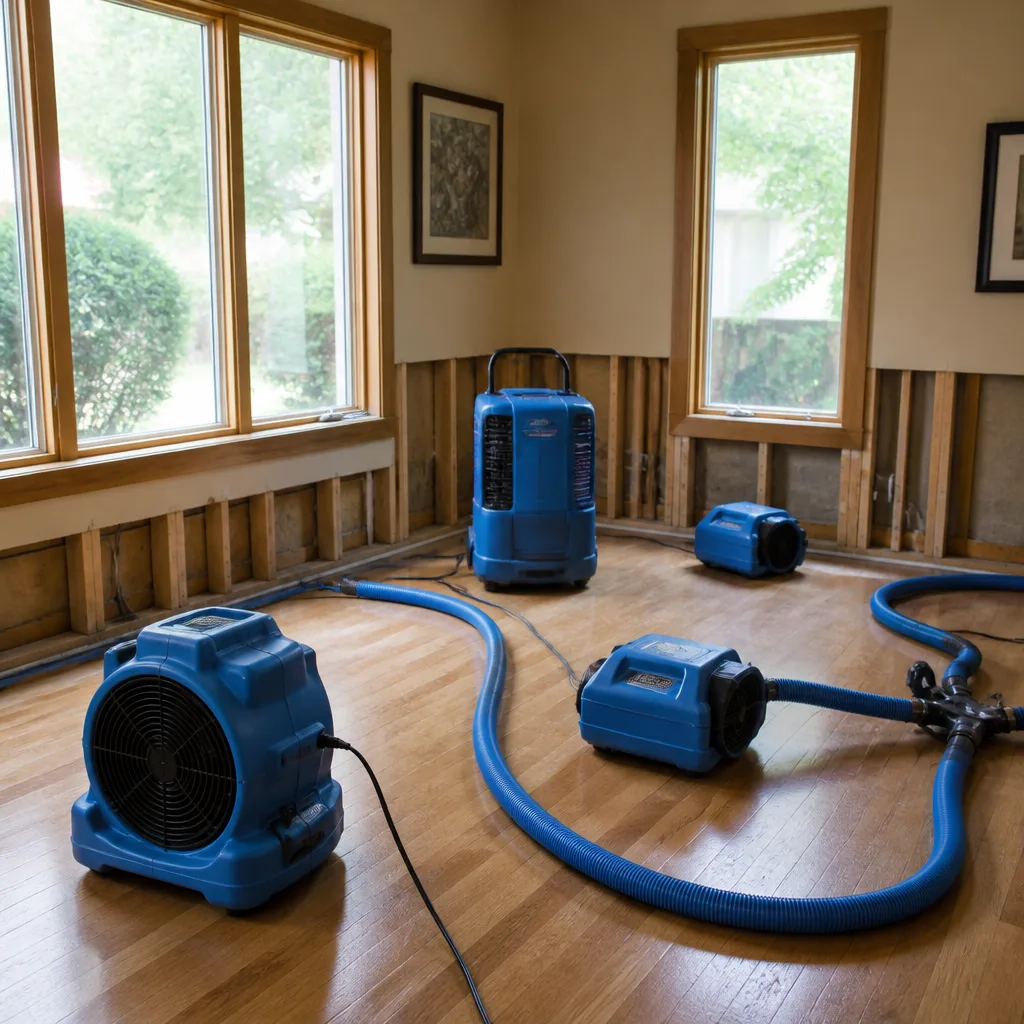 Water damage drying
 Fire & smoke cleanup
 Mold remediation
 Storm response
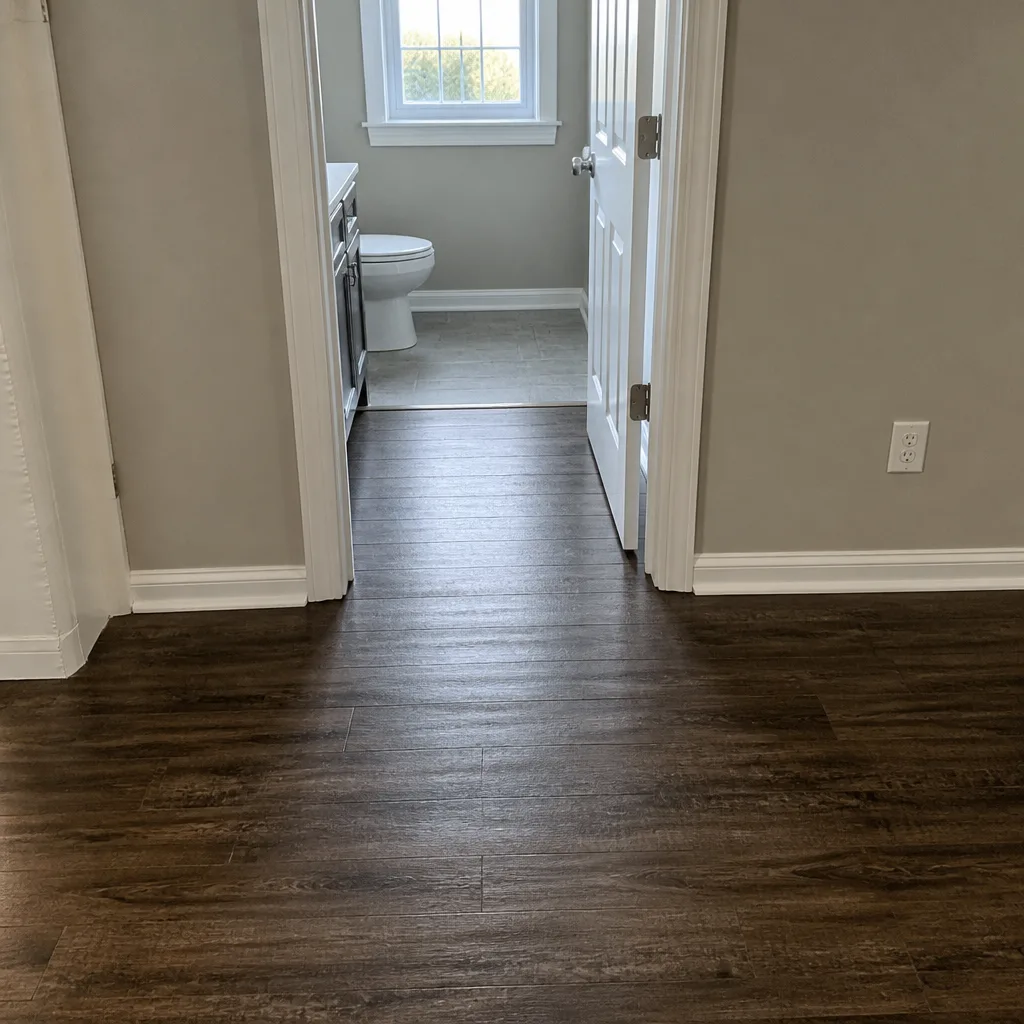 Sewage cleanup
 Reconstruction
Free visual inspection and a written scope of work before any mitigation begins - photos, moisture readings, and drying logs go in your claim file
The scope we write is the scope we bill. Anything new gets shown to you, in writing, before we touch it.
Get your free estimateDamage Restoration Warning Signs: A Temecula Homeowner’s Reference Guide
Here’s a counterintuitive fact we’ve learned after years of restoration work in Temecula: by the time a homeowner calls us about a water stain on the ceiling, the leak that caused it has usually been active for three to eight weeks. The stain isn’t the beginning of the problem. It’s the end of the quiet phase. This guide is built around that reality. We’ll walk you through the early warning signs that appear before visible damage takes hold, organized by where they show up in your home, with specific attention to how Temecula’s climate and construction patterns affect moisture behavior.
Quick Answer
The earliest water damage warning signs in Temecula homes are not stains or puddles. They are subtle signals: a musty odor that appears only when the HVAC cycles, baseboards that have slightly separated from the wall, cabinet doors that don’t close flush anymore, and a small uptick in your water bill that you can’t explain. These indicate moisture intrusion weeks before visible staining appears. Catching them early means the difference between a targeted dry-out and a full demolition—explore more guides & resources on our blog to stay ahead of water damage.
Restoration work we handle
Table of Contents
- The Attic: Where Temecula Temperature Swings Create Condensation
- The Crawlspace: What’s Happening Beneath Your Floor
- The HVAC System: The Most Overlooked Moisture Vector
- Bathrooms: Sealed Surfaces, Hidden Failures
- The Kitchen: Appliance Lines and Cabinet Signals
- The Garage: Stucco, Slab, and Water Migration
- The Exterior: Temecula Stucco vs. Wood Siding
- Common Mistakes to Avoid
- When to Call a Professional
- Frequently Asked Questions
The Attic: Where Temecula Temperature Swings Create Condensation
Most Temecula homeowners never go into their attic unless they’re retrieving holiday decorations. That’s a missed opportunity, because the attic is where some of the earliest and most consequential moisture problems begin. Temecula’s diurnal temperature swings, often 30 degrees or more between midday and pre-dawn, mean attic air is constantly cycling through condensation conditions. When warm daytime air cools rapidly at night, moisture condenses on the underside of roof sheathing, on exposed nails, and on any metal ductwork running through the space.
The earliest sign is not a stain. It’s a sheen. Look for areas on the underside of roof decking that appear slightly darker or shinier than surrounding wood, especially near roof penetrations like plumbing vents, exhaust fans, or attic access hatches. This sheen indicates the wood is taking on moisture before it’s wet enough to discolor. A second early signal is condensation on nails. If you see nail tips with small beads of water or a rusty halo around the nail head, the attic has crossed into a moisture-active state.
Here’s what to check in the attic, in order of what appears first:
- Rust on exposed nails or metal straps – appears within weeks of a condensation problem, well before staining.
- Damp insulation – fiberglass batts will feel heavier than expected and may have a slightly matted appearance.
- Bathroom or kitchen exhaust fans that vent into the attic – in older Temecula homes, especially those built before 2000, we regularly find exhaust fans discharging directly into the attic space rather than through the roof. This is a code violation and a guaranteed moisture source.
- Discoloration on sheathing – the stain you see after moisture has been present for months.
If you find any of these, the issue is usually ventilation or exhaust routing. The fix is typically adding intake vents at the soffits and exhaust vents at or near the ridge, or re-routing exhaust fans through proper roof penetrations. This is not a project that requires demolition in most cases, but it does require correction before mold colonizes the sheathing.
The Crawlspace: What’s Happening Beneath Your Floor
If your Temecula home is built over a crawlspace, you have an entire diagnostic zone most people never see. Crawlspaces fail quietly. Moisture accumulates there from three sources in our area: ground evaporation during wet seasons, plumbing leaks from supply or drain lines, and condensation on ductwork when warm crawlspace air meets cold AC supply lines during summer months. The crawlspace tells the story of a home’s water health before any living space shows symptoms.
The first thing to notice is a smell, but not the one you expect. Crawlspace problems don’t smell like mold right away. They smell like damp cardboard or wet concrete, a flat, heavy odor that wafts up through floor penetrations and registers as slightly stale air in the finished space above. In Temecula summers, when temperatures push past 100 degrees, crawlspace moisture bakes off and can make the whole house smell musty in the afternoon. That’s not a cleaning problem. That’s moisture in the crawlspace being volatilized by heat.
Visually, here’s what to look for in a crawlspace:
- Insulation falling or sagging – batts should sit flush against the subfloor above. When they droop, moisture has added weight to the fiberglass, breaking down the adhesive that holds them in place.
- Dark staining on the subfloor from above – indicates standing water or severe condensation at some point in the past.
- Ductwork with condensation beads – metal ducts should never have water droplets on the exterior. If they do, the crawlspace is too humid or the ducts are poorly insulated.
- Visible ground water or dark soil patches – especially near foundation vents or plumbing penetrations.
One Temecula-specific note: homes in neighborhoods like Redhawk, Harveston, and Paseo del Sol were built during different construction booms, and crawlspace design varies significantly between them. Older homes in central Temecula often lack proper vapor barriers, while newer builds sometimes have them but with seams that have failed. If you see bare dirt without a continuous plastic barrier, you’re looking at a system that will always fight moisture in wetter months.
The HVAC System: The Most Overlooked Moisture Vector
A musty smell that’s only noticeable when the HVAC runs isn’t a cleaning problem. It’s a diagnostic clue. Moisture has entered the air handler, the return plenum, or the duct system, and the system is actively distributing mold spores every time it cycles. Most homeowners buy air fresheners. The right move is a thermal camera sweep of the air handler cabinet.
Here’s the mechanism, explained simply. Your air conditioner’s evaporator coil sits inside the air handler and gets cold during operation. Condensation forms on it. That’s normal. A drain line carries the water away. But when the drain line clogs, or the pan below the coil cracks, or the unit is oversized for the home and short-cycles, water accumulates. That standing water sits in a dark cabinet in your garage or attic, and within 48 to 72 hours, mold begins growing on the coil, the cabinet lining, and any dust that has accumulated inside.
The early warning signs are specific and sequenced:
- Odor only when the system runs – that’s the first signal. It means mold is present inside the air stream, not in the room.
- Visible dust or discoloration around supply vents – mold spores that get blown into rooms often collect around the vent openings, appearing as gray or black speckling that wipes off easily but reappears.
- A slight increase in indoor allergy symptoms – sneezing, congestion, or itchy eyes that improve when you leave the house. This is not a formal medical diagnosis, but it’s a pattern we hear from customers repeatedly.
- Water staining on the ceiling or wall below an attic-mounted air handler – by this point, the problem has been active for months and has caused secondary damage.
If the odor appears only when the AC runs, but not during heat, the issue is almost always condensation-related at the coil, pan, or drain line. In Temecula’s summer climate, where AC runs hard from June through October, this is when we see the highest volume of these calls. Our Fresh Start Water Damage home technicians have documented condensation failures in systems as new as three years old.
One additional note for this region: Temecula’s hard water contributes to faster mineral buildup in condensate drain lines, which clogs them more quickly than in coastal communities with softer water. If you have hard water, your drain line needs to be flushed or serviced more frequently than the national average would suggest.
Bathrooms: Sealed Surfaces, Hidden Failures
Bathrooms are the most common water damage origin point in Temecula homes, but the early signs are rarely found on the tile. They show up on the other side of the walls, under the floor, and in the cabinet below the sink. The bathroom’s worst problem is that modern construction relies heavily on caulk and grout to keep water out, and both materials fail slowly and invisibly.
The earliest signal is almost always in the vanity cabinet. Open the cabinet doors below the sink and look at the floor of the cabinet. Press a finger against the wood or composite material. If it feels even slightly soft, spongy, or if the laminate has begun to bubble, water has been leaking from the supply lines, the drain connection, or the faucet seal. This is a slow leak, not a burst pipe. It has likely been running for weeks when you notice the first physical change.
Here are the bathroom warning signs ranked by how early they appear:
- Baseboard separation at the floor line – water traveling down the wall from a shower valve or tile failure collects at the base, causing the baseboard’s adhesive to release from the wall. You’ll see a thin dark line or a visible gap.
- Grout lines that stay dark after showering – efflorescence or mold in grout indicates water has penetrated behind the tile. In severe cases, the grout itself becomes a moisture reservoir.
- A floor that feels cool or damp in one specific spot – subsurface water under tile or vinyl affects temperature transfer, making that spot feel noticeably cooler than surrounding floor.
- Peeling paint or wallpaper at the top of the shower enclosure – steam escaping the shower accumulates at the ceiling line, breaking down paint adhesion over time.
- Door frames that bind or swell at the bottom – the framing lumber is taking on water, expanding, and the door no longer closes smoothly.
One bathroom failure that Temecula homeowners consistently miss is the waterproofing behind the tile. Homes built in the 1990s and early 2000s in developments throughout the city often used green board (moisture-resistant drywall) behind tub and shower surrounds rather than a true waterproof membrane. Green board is better than standard drywall, but it is not waterproof. Once water gets behind the tile through a small grout crack, the green board wicks moisture horizontally across the wall, and you get mold growth on the back side of the wall that you cannot see for months or years. We’ve documented cases in Temecula where a homeowner had no visible issues in the bathroom itself, but mold was growing on the back side of the shared wall into an adjacent bedroom.
The Kitchen: Appliance Lines and Cabinet Signals
Kitchen water damage in Temecula follows a different pattern than bathroom damage. While bathrooms fail through surface water intrusion, kitchens fail through pressurized supply lines, appliance connections, and slow drain leaks. The kitchen also has more concealed plumbing than any other room in the house, which means problems develop in spaces you cannot see.
The most common kitchen water damage source we respond to is the refrigerator water line. It’s a small, flexible tube, usually polyethylene or copper, running from a saddle valve or shutoff at the wall to the fridge. These lines fail in one of three ways: the fitting loosens over time, the line develops a pinhole from friction against the wall or floor, or the saddle valve itself corrodes and begins dripping. Because the leak is usually behind the refrigerator, homeowners don’t see it until water has soaked the drywall, damaged the flooring, and often migrated into the subfloor.
Here’s what to check in the kitchen:
- Pull the refrigerator out two feet and inspect – look for water staining on the wall behind the fridge, moisture on the floor, or any mineral deposits on the supply line or shutoff. This should be done twice a year.
- Check cabinet floors under the sink – same as the bathroom: softness, bubbling laminate, dark staining, or a persistent damp smell.
- Inspect the dishwasher connection – the supply line and drain hose both connect under the unit or behind the lower front panel. Water that pools in front of the dishwasher after a cycle indicates a failed door gasket, but water under the unit indicates a line or pump failure.
- Look for cabinet doors that no longer close flush – particleboard cabinet boxes swell when they absorb water. A door that was fine six months ago and now binds at the corner is a signal that the cabinet box has taken on moisture.
One Kitchen-specific pattern we see in Temecula relates to the water quality. Our municipal water has mineral content that accelerates corrosion in copper pipes and fittings. Homes built in the 1980s and earlier with original copper supply lines are at higher risk of pinhole leaks, especially in hot water lines. A pinhole leak inside a wall cavity can run for weeks without visible evidence, because the water follows the pipe down to the bottom plate and then wicks into the slab or subfloor. If you notice a warm spot on the floor, a slight increase in your water bill, or the sound of running water when no fixtures are on, that’s worth investigating immediately.
The Garage: Stucco, Slab, and Water Migration
The garage is where Temecula’s construction style meets water physics in ways that surprise homeowners. Three specific failure patterns show up here that don’t appear in other rooms: the stucco exterior wall that separates the garage from the yard, the water heater platform, and the shared wall between the garage and finished living space.
Garage water damage often begins at the exterior stucco wall. Stucco is a cement-based cladding, and when it develops small cracks, water penetrates the surface layer. In most of Temecula, the garage is on a slab, so water that enters through the stucco travels down the interior of the wall cavity and sits at the bottom plate, or migrates under the drywall on the garage side. The earliest visual signal is usually a white, chalky deposit on the interior garage drywall near the floor, or along the seam where drywall meets the slab. That white deposit is efflorescence, and while it’s not mold, it’s evidence that water has been moving through the wall.
A second garage-specific issue is the water heater. Most water heaters in Temecula homes are in the garage, seated in a metal or plastic drain pan on a raised platform. A slow leak from the tank develops at the fittings, the pressure relief valve, or the tank itself. The pan catches the first water, but if the seal around the pan has degraded or the drain line has clogged, water spills over and runs across the garage floor. Look for rust stains near the water heater platform, or water that reappears in the same spot after you’ve wiped it up. A water heater that is more than 10 years old and showing any sign of leakage is a replacement item, not a repair.
The third garage warning sign is the shared wall. In many Temecula floor plans, the living room or a bedroom shares a wall with the garage. If moisture enters the garage on that shared wall, whether from a stucco failure, a water heater overflow, or seasonal humidity, it can migrate through the wall cavity and present as musty odors in the finished room. This is especially common in homes where the garage is not climate-controlled, because the temperature differential between the garage and the house drives moisture vapor through the wall assembly.
The Exterior: Temecula Stucco vs. Wood Siding
Most of Temecula’s housing stock is stucco-clad. That’s not a coincidence. Stucco handles the region’s hot, dry climate well, and it’s relatively low-maintenance. But stucco’s moisture behavior is fundamentally different from wood siding, and the warning signs you look for are also different. Homes in more wooded areas of Riverside County or older ranch properties that have wood siding require a different inspection approach.
Stucco Homes
Stucco is a porous cement system. It’s designed to shed water, but it’s not waterproof. Small cracks in stucco, especially hairline cracks around windows, doors, and utility penetrations, let water in. Once water enters the stucco system, it sits between the stucco and the moisture barrier (typically asphalt-impregnated paper) or between the moisture barrier and the framing. The water then migrates downward and finds entry points at the bottom edge of the wall, around flashings, or at wall penetrations.
Early warning signs on stucco homes in Temecula:
- Hairline cracks around window and door openings – especially diagonal cracks extending from the corners of openings. These are stress points, and they open up over time with thermal expansion and contraction.
- Dark staining below window sills or above foundation lines – water that has entered at the top of the wall exits at the bottom, carrying dirt and minerals that leave residue.
- Blistering or bubbling paint on exterior walls – water trapped behind the paint layer causes loss of adhesion. This is not a paint failure; it’s a moisture issue presenting as a paint failure.
- White streaks or salt deposits on the stucco surface – efflorescence on the exterior indicates water moving through the cement matrix.
Wood Siding Homes
Wood siding behaves differently. It absorbs water directly when the protective coating fails, and it releases moisture slowly. The early warning signs are changes in the wood itself: cupping, splitting, warping, or areas where the grain has begun to gray and soften. In Temecula’s dry summers, wet wood siding dries quickly, which can mask the ongoing problem. If you have wood siding, run your hand along the lower courses of siding after a rain. If any area feels damp, soft, or if the wood depresses under pressure, the siding has taken on water and is failing. This is also where termite activity tends to follow, because termites prefer moist wood.
The moisture migration pattern differs between cladding types: stucco traps water between layers and moves it downward, while wood absorbs water into the substrate and moves it outward as it dries. This matters for detection because stucco problems are often found inside the house before they’re visible outside, while wood siding problems are visible on the cladding before they reach the interior.
Using a Moisture Meter: What the Readings Mean
A $30 non-contact moisture meter from any hardware store is the single most useful diagnostic tool a homeowner can own. It won’t replace a professional assessment, but it will tell you whether you’re looking at a real problem or a surface-level one. Here’s how to use it and what the numbers mean.
Non-contact meters emit a small electrical field and measure the capacitance of the material in front of the sensor. Different materials have different baseline readings, and the meter’s scale is typically calibrated for wood. For drywall, the readings will naturally run higher than wood, but the relative comparison is what matters.
The process:
- Establish a baseline – take readings on a wall you know is dry, such as an interior partition wall in the middle of the home. Record that number.
- Take comparative readings – measure the suspect wall or surface, taking readings at multiple heights: top, middle, and bottom of the wall. Moisture migrates downward, so problems are often concentrated at the base of the wall.
- Compare the numbers – a reading that’s measurably higher than the baseline (typically 10% or more on the meter’s relative scale) indicates moisture in the material.
Here’s the interpretation guide we use when we walk customers through their own readings:
- Within baseline range (no elevation) – the material is dry. The stain or smell you’re seeing has another source.
- 10-20% above baseline – surface or shallow moisture. This could be recent, minor, or the result of high humidity. Worth monitoring over a few days.
- 20-40% above baseline – the material is wet. Water has penetrated the surface. A leak is active or recent. Call for professional assessment.
- 40%+ above baseline – saturated material. This has been ongoing and requires immediate professional intervention. Mold growth is likely.
One caveat for Temecula homeowners: our climate is dry enough that a wall can show low moisture readings even while mold is present inside the wall cavity. The meter measures surface moisture, not microbial activity. If your nose says mold but the meter says dry, trust your nose and call for a professional assessment.
Common Mistakes to Avoid
- Painting over a water stain without fixing the source. The stain will reappear, and by then, the underlying damage has doubled. Paint seals moisture in, which accelerates mold growth behind the surface. The fix is to stop the water first.
- Dismissing a musty smell as “old house smell.” That smell is a chemical signal from microbial activity. It’s not ambience. It’s a bio-indicator. In Temecula, where we have long dry periods, musty smells that persist through summer indicate an active moisture source, not residual humidity.
- Using a fan to dry a wet area without addressing the water source. A fan moves air, and moving air helps surface drying. But it doesn’t stop the leak, and it doesn’t dry the wall cavity or subfloor. You can dry the visible surface while the hidden layers get wetter.
- Waiting to see if a problem “gets worse.” Water damage never gets smaller. It never stabilizes. It compounds. Every day a leak is active, the damage area grows and the cost to repair increases disproportionately.
- Caulking over visible cracks without understanding what’s behind them. Caulk is a sealant, not a structural repair. If water is already inside the wall, sealing the outside traps it. Cracks need to be evaluated, not just sealed.
- Filing an insurance claim before documenting the damage. In Temecula, most homeowner policies cover sudden and accidental water damage, but the adjuster will look at the condition of the area to judge whether the problem was acute or chronic. Photos before cleanup, and a written timeline of when you noticed the issue, are your best leverage.
When to Call a Professional
Call a professional when the moisture meter reads 20% or more above baseline, when you can see visible mold growth of any size, when water has penetrated wall cavities or subfloors, or when you’ve had a water event in the attic that involves the HVAC system or insulation. Also call when you see staining that recurs after cleaning, when the musty odor persists after drying measures, or when you find water in an area with electrical wiring.
For Temecula homeowners, the relevant professionals to call are Water Damage Restoration in Temecula specialists. Fresh Start Water Damage offers free estimates in Temecula. Call (844) 878-6356 and we’ll assess the situation with the right equipment, tell you whether it’s a quick dry-out or a larger project, and document everything for your insurance records. We’re IICRC-certified, and we use commercial-grade drying equipment including Injectidry systems that dry wall cavities without unnecessary demolition.
Frequently Asked Questions
Water damage restoration in Temecula typically runs between $1,500 and $6,000 for a contained category 1 or 2 water event, depending on the size of the affected area, how long the water has been present, and whether demolition is required. Larger events that involve structural drying, mold remediation, or multiple rooms can reach $15,000 or more. The single biggest cost variable is time: a leak caught within 48 hours is a drying project; a leak that has run for weeks is a mitigation project. Call (844) 878-6356 for a free, specific estimate.
Most Temecula homeowner policies cover sudden and accidental water damage, such as a burst pipe, an appliance line rupture, or a storm-related roof leak. They typically do not cover gradual damage from a slow leak, maintenance failures, or water events caused by flooding, which requires separate flood insurance. The key distinction is “sudden and accidental” versus “gradual and preventable.” Document everything with photos before cleanup begins, because the adjuster will look at your documentation to determine coverage.
For active water events in Temecula, we typically dispense a team the same day the call comes in. We prioritize active emergencies over scheduled assessments. If water is actively flowing or a pipe has burst, shut off the main water supply and call immediately. The faster extraction and drying begin, the less damage you’ll face. Call (844) 878-6356.
If the visible mold area is less than 10 square feet, appears on a non-porous surface like tile or glass, and there is no underlying moisture problem, a homeowner can typically clean it with the appropriate cleaning agents. If the mold is on drywall, carpet, wood, or insulation, if it covers more than 10 square feet, or if it’s accompanied by any musty odor, professional Mold Remediation in Temecula is the right call. Mold in porous materials cannot be cleaned; the material needs to be removed, and that’s a contained remediation project.
Efflorescence is a white, crystalline mineral deposit that forms when water moves through cement or masonry and deposits salt on the surface. It’s often powdery, crumbly, and dissolvable in water. Mold is organic growth that appears fuzzy, slimy, or soft, and can be white, gray, green, or black. On a block wall in the garage, white powdery material is almost always efflorescence and is a moisture indicator, not a health hazard. White fuzz on drywall, especially in a humid area, is more likely mold. The distinction matters because they require different responses.
Temecula has a semi-arid climate with a wet season from November through March and a long dry season through the rest of the year. The seasonal transition is where we see most problems: rain saturates soil, ground moisture rises, and crawlspaces and slabs that were stable all summer begin showing signs of moisture. Then the dry-season heat bakes that moisture off, creating the musty cycle many homeowners notice. This pattern means a crawlspace or exterior wall issue may only be evident for a few months each year, which is why seasonal damage restoration care for Temecula homes matters year-round. It compounds annually.
Photograph everything before any cleanup or mitigation begins. Document the water source if visible, the affected surfaces, any standing water, the water meter reading if you can access it, and the surrounding area. Take wide shots and close-ups. Then continue to photograph as the drying process proceeds. For Fire Damage Restoration in Temecula claims, the same principle applies but with additional documentation of soot deposition and structural charring. Your photos are the record that determines whether the adjuster classifies the event as sudden or gradual.
The Bottom Line
Water damage is a silent, compounding problem. The signs that matter most are the ones that appear before visible staining, before peeling paint, and before the musty odor becomes constant. In Temecula’s dry climate, those early signs are often subtle: a baseboard that pulls away from the wall, a cabinet door that binds, a smell that appears when the AC runs, a water bill that ticks up without explanation. Learn what to look for in your attic, crawlspace, bathrooms, kitchen, garage, and exterior walls. Get a moisture meter. Trust your nose. And when you find something, hire a qualified damage restoration contractor in Temecula before it spreads. The cost of an inspection is measured in minutes. The cost of neglecting an early warning is measured in thousands of dollars and weeks of disruption.
Written by the team at Fresh Start Water Damage, serving Temecula since 2017. We’re IICRC-certified, use commercial-grade drying equipment from Dri-Eaz, Phoenix, XPOWER, and B-Air, and deploy Injectidry systems on every applicable job. Call (844) 878-6356 for a free estimate.
See the difference
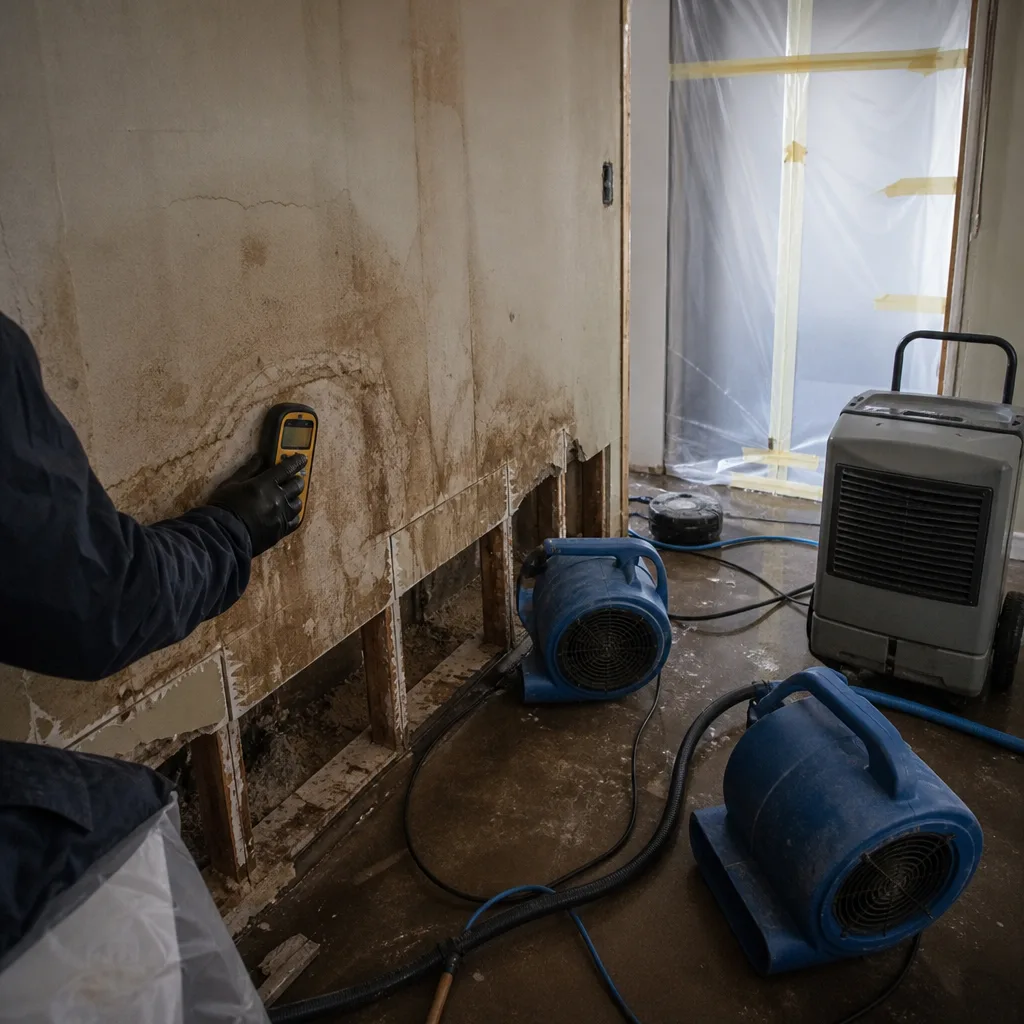 Before
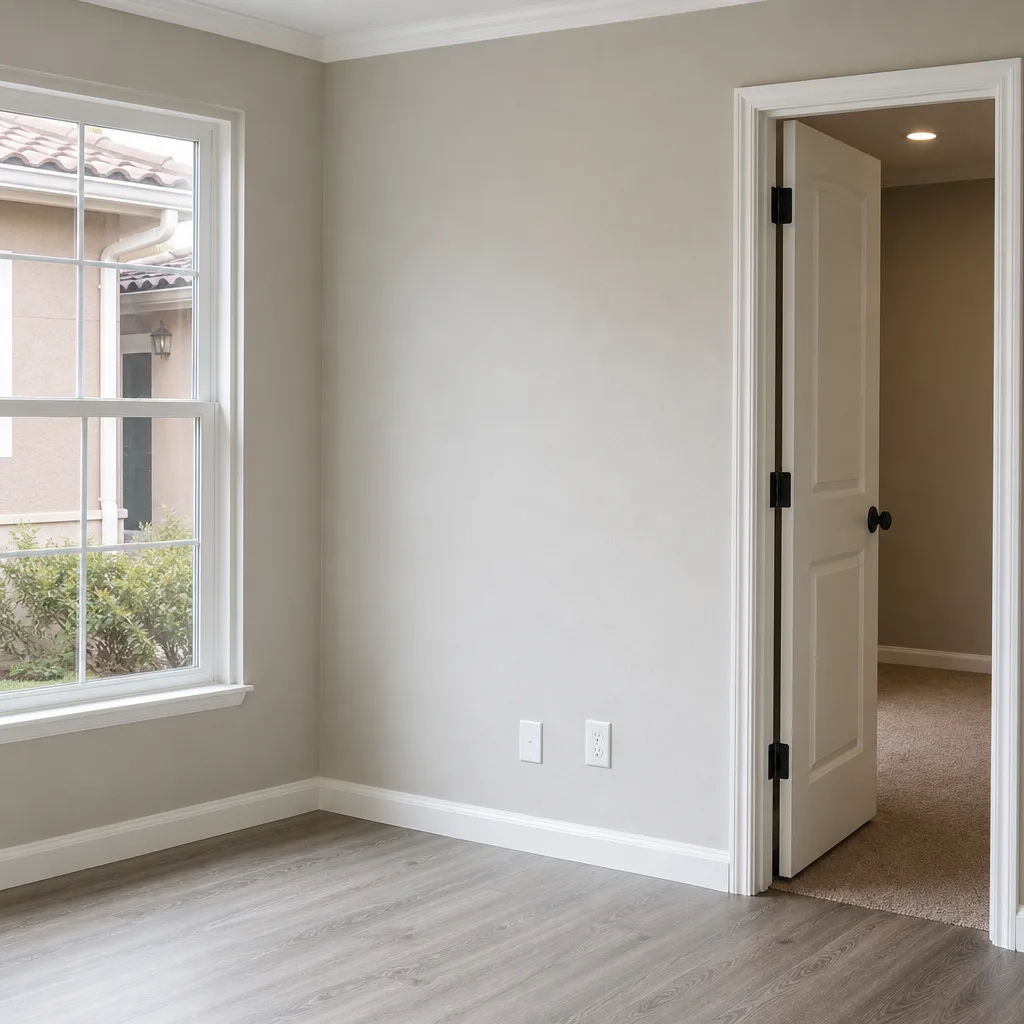 After
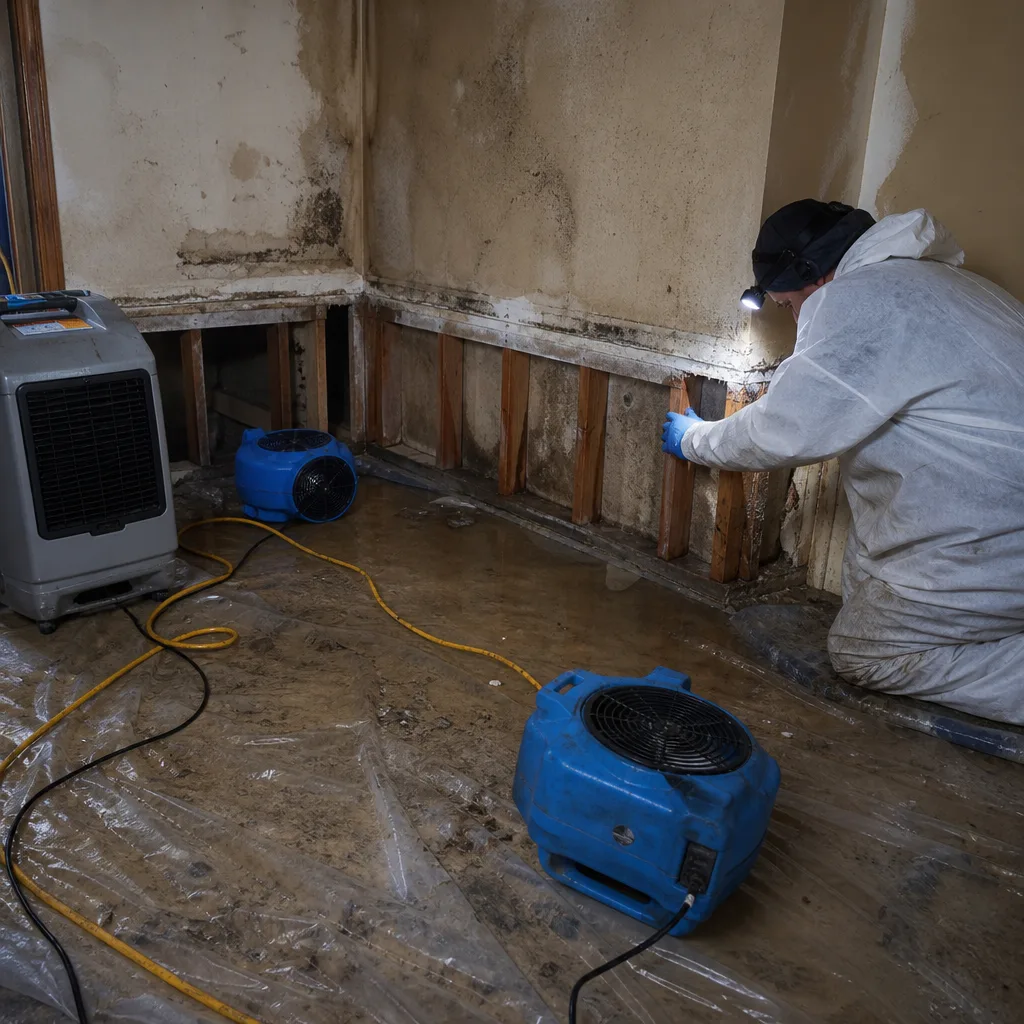 Before
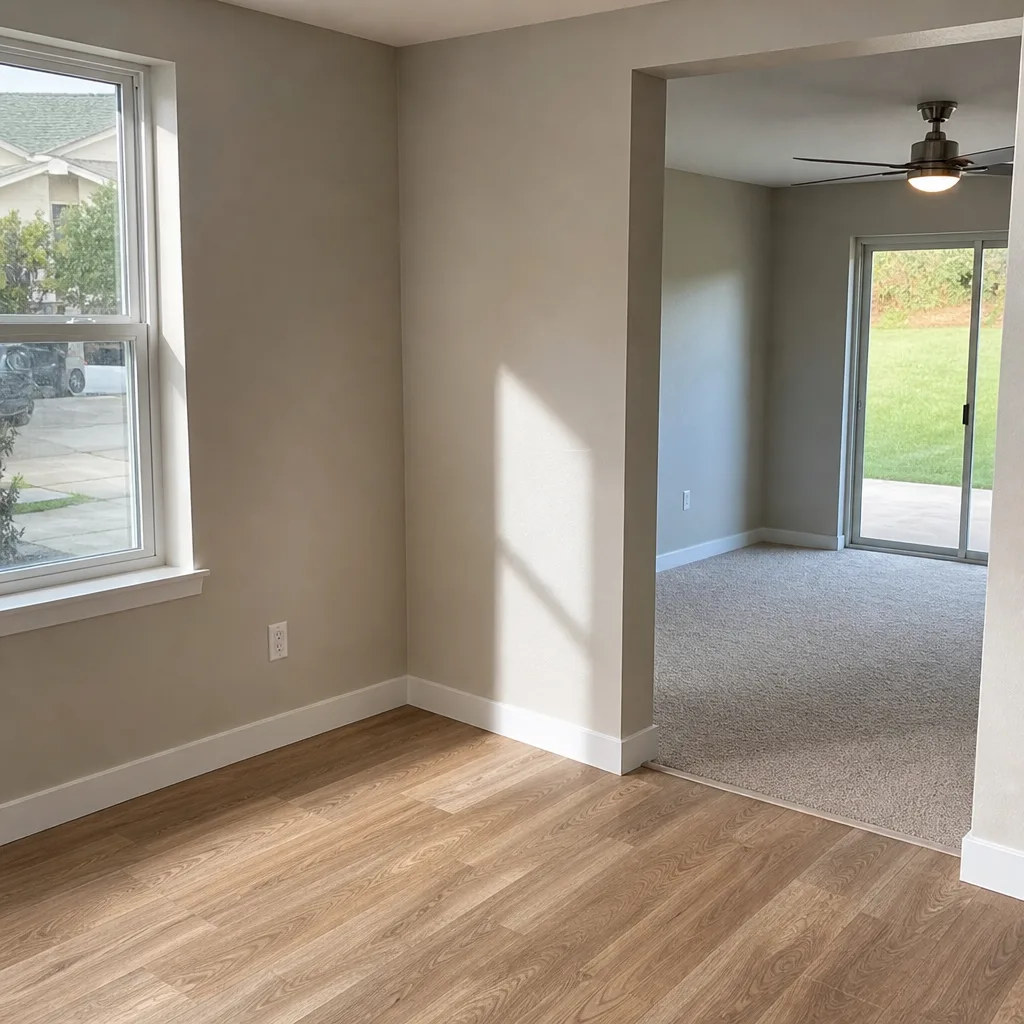 After
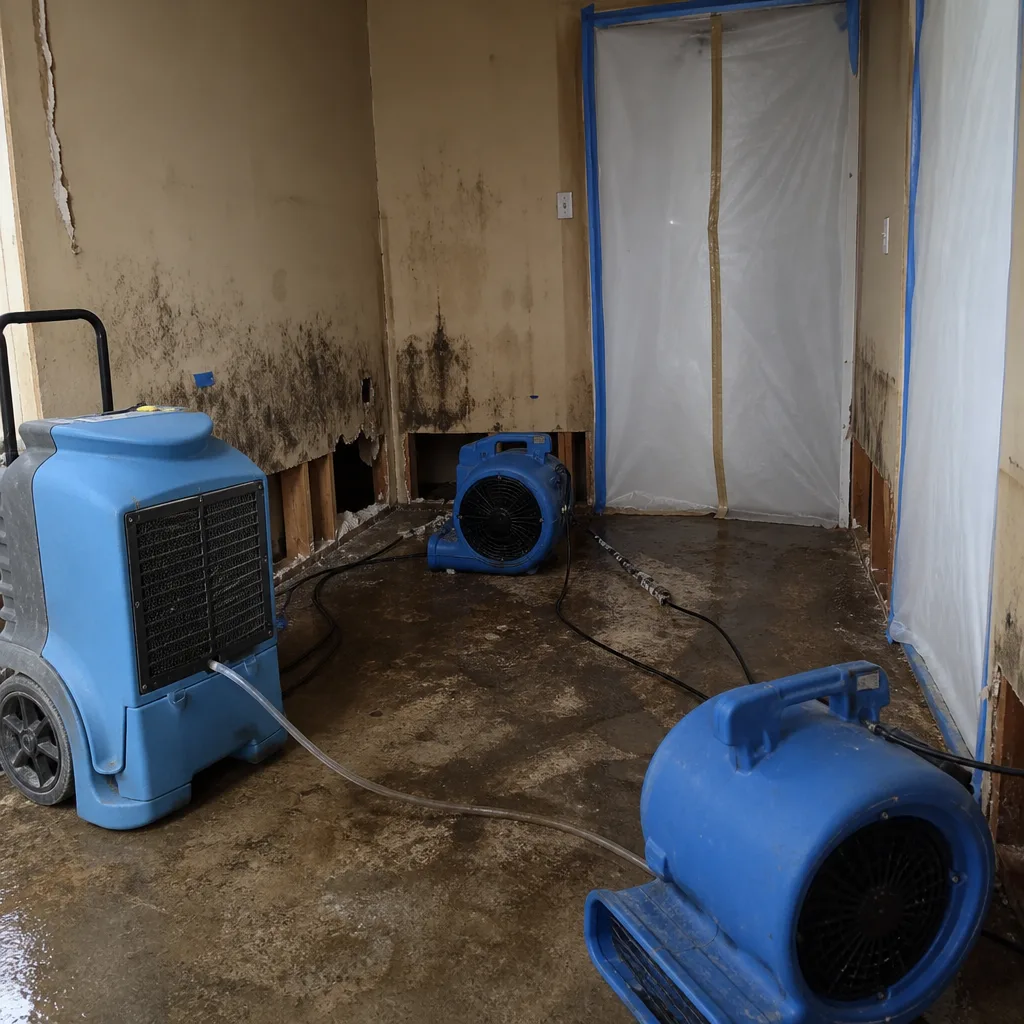 Before
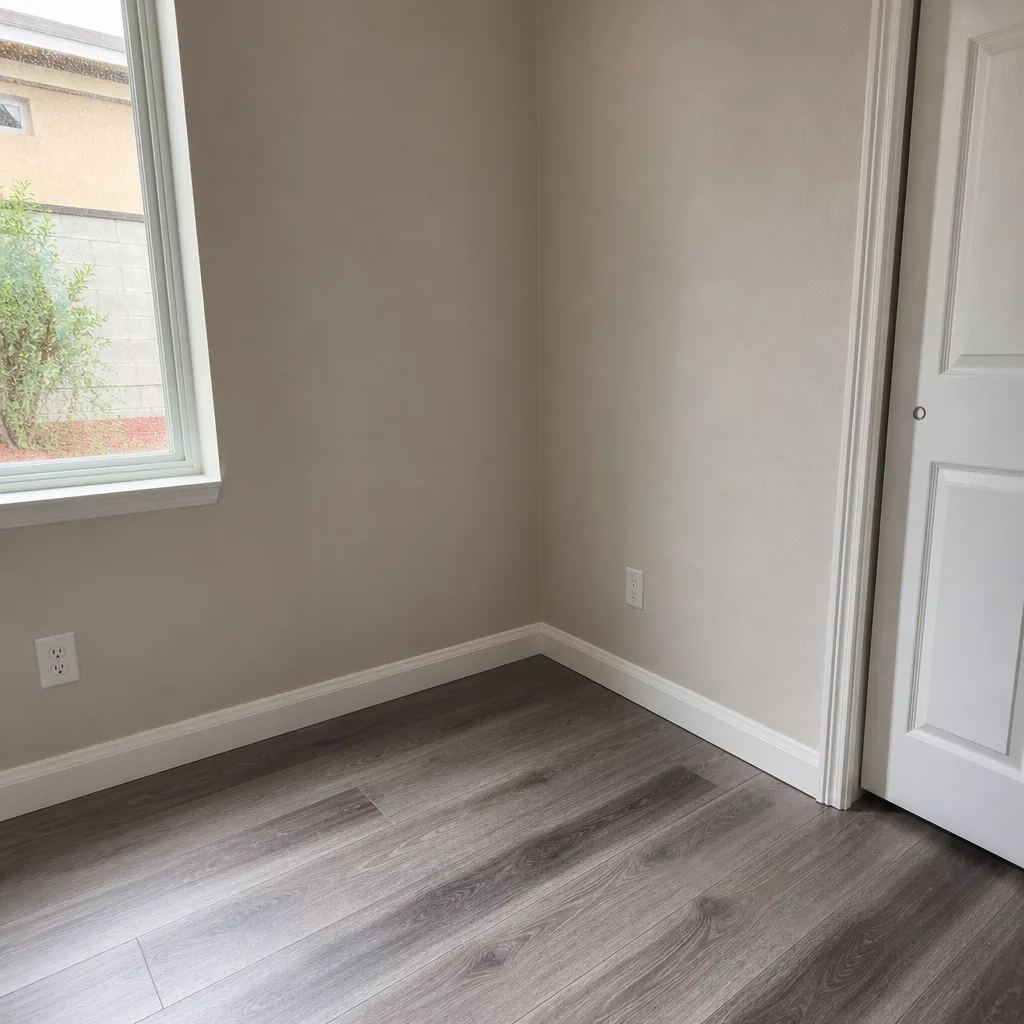 After