


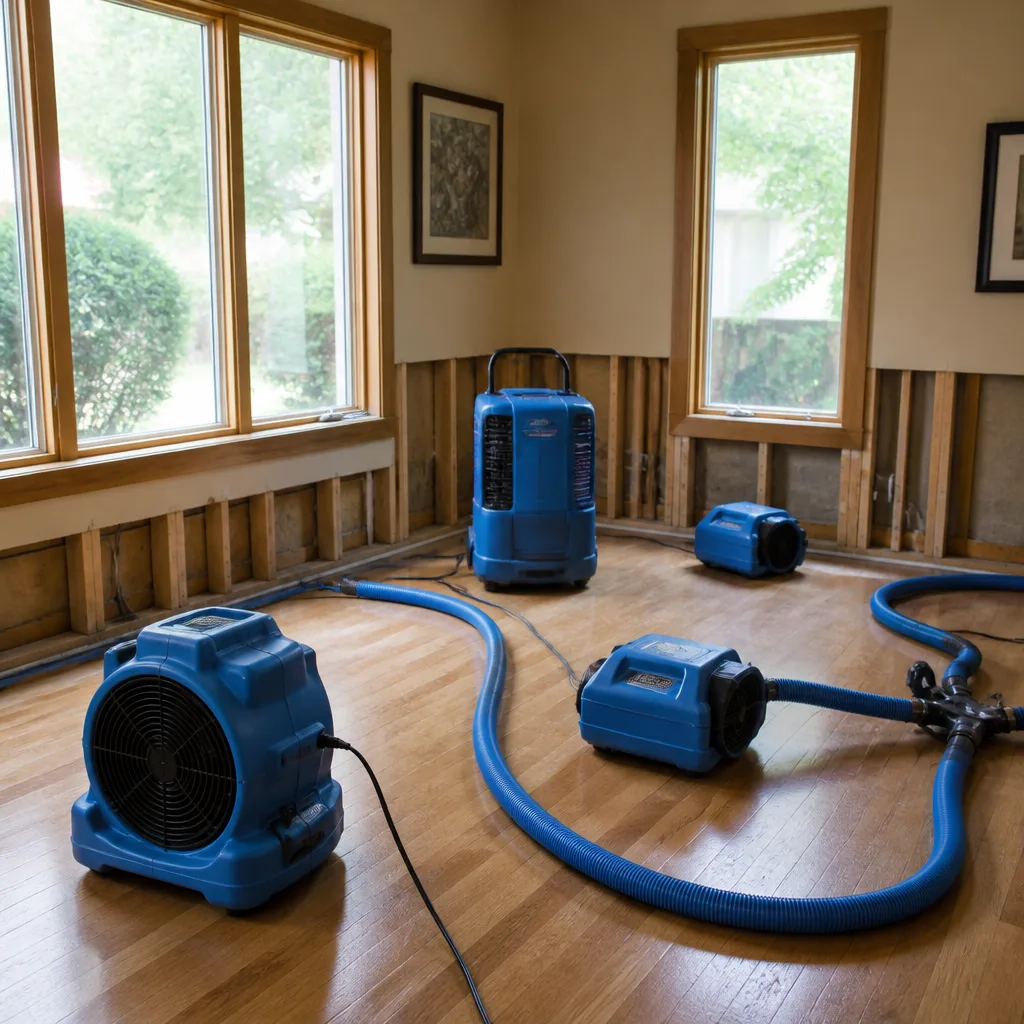
 Water damage drying
 Fire & smoke cleanup
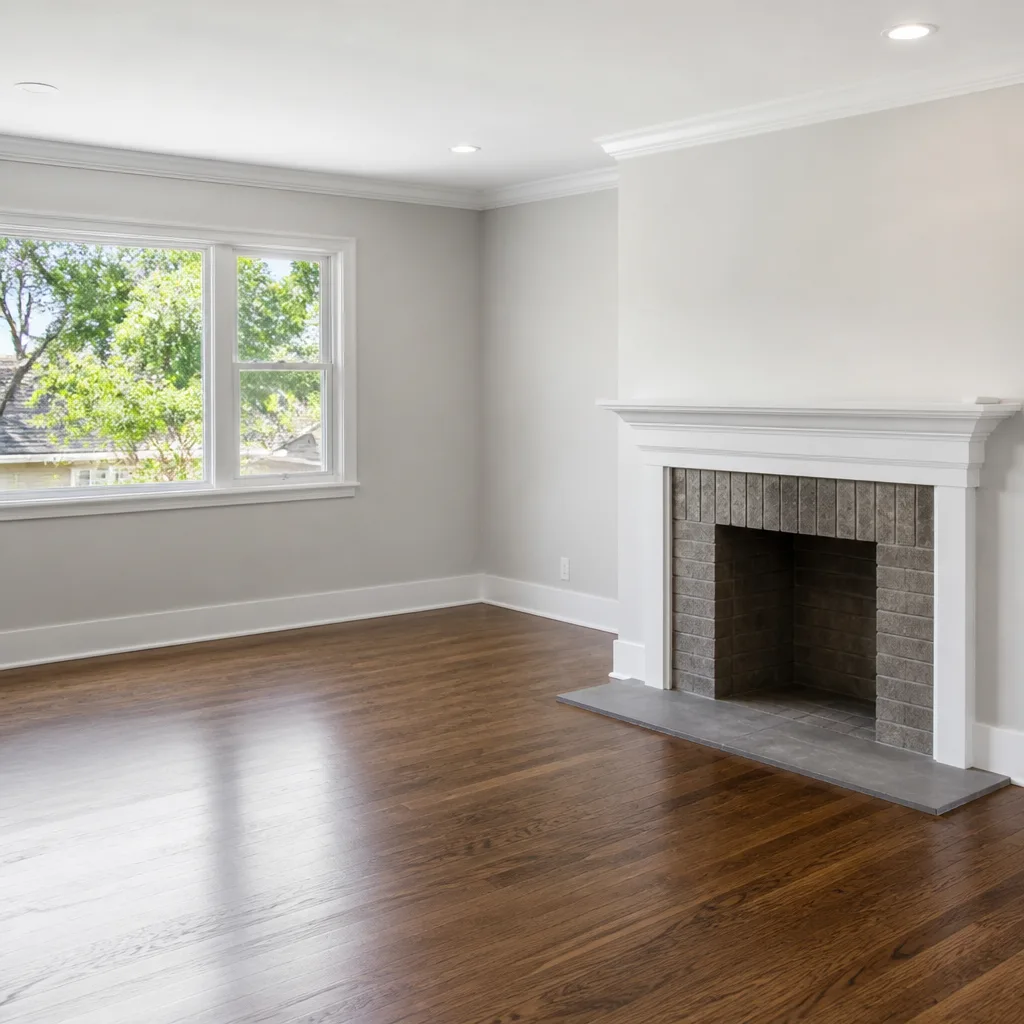 Mold remediation
 Storm response
 Sewage cleanup
 Reconstruction
Free visual inspection and a written scope of work before any mitigation begins - photos, moisture readings, and drying logs go in your claim file
The scope we write is the scope we bill. Anything new gets shown to you, in writing, before we touch it.
Get your free estimateFast, Reliable Mold Remediation Across Highland
Mold remediation in Highland typically costs $1,200 – $4,800 depending on the square footage affected and whether wall cavities or attic insulation are involved. Most jobs in the 92346 area are completed within 2 – 4 days, including containment, drying, antimicrobial treatment, and clearance testing coordination. We know Highland’s 1950s – 1970s tract homes intimately: the stucco exteriors, the original plumbing runs, the alley-access floor plans. If you smell must or see staining along baseboards near the foothills, call (844) 878-6356 and we’ll get a certified technician to your door, usually the same day.
Why Fresh Start Water Damage Is Highland’s Preferred Mold Remediation Company
Homeowners across Highland, from the neighborhoods east of Palm Avenue up toward the base of the San Bernardino Mountains, have called us after discovering mold behind a bathroom vanity or inside a hallway closet that never quite dried after a past leak. Our IICRC-certified team approaches every 1960s ranch and mid-century tract home with the understanding that hidden cavities are where the real problem lives. We arrive with Dri-Eaz dehumidifiers and XPOWER air movers in the truck, not rental equipment from a big-box store. Nolan Hester has built this company on a simple principle: moisture mapping first, demolition second. In Highland, that means we don’t tear out drywall because of a guess. We map the affected area, confirm the moisture boundary, and only open what actually needs to open.
Response time to Highland matters because mold colonies double every 24 – 48 hours once active growth begins. Our Temecula-based dispatch routes technicians directly up the 210 and into Highland’s residential streets, typically arriving within 60 – 90 minutes for emergency calls. We’ve handled mold containment in tight hallway closets, bathroom walls behind original cast-iron tubs, and attics with decades of compaction that trapped moisture against the framing. The reviews from Highland customers consistently mention the same three things: the written scope before work started, the daily drying logs, and the fact that we left the site cleaner than we found it.
Restoration work we handle
Mold Remediation Services in Highland
Our Mold Remediation Services in Highland begin with a full moisture assessment, because in this city the visible mold is rarely the whole story. A 1960s tract home with original galvanized plumbing may show a small bloom behind the toilet, while elevated moisture readings extend under the slab or into the adjacent wall cavity. We build containment using 6-mil polyethylene and HEPA-filtered negative air machines, remove the affected porous materials, treat the framing with EPA-registered antimicrobials, and dry the cavity to verified standards. Here in Highland, that process typically runs $1,200 – $3,500 for a single-room remediation with moderate wall cavity involvement. Larger jobs involving multiple rooms or attic insulation replacement can reach $4,800 or more.
Containment and Air Filtration
In Highland’s mid-century homes, bedrooms and hallways are compact, which makes proper containment the single most important step. We don’t just drape plastic over a doorway and call it done. Our crews seal off the work area, run HEPA air scrubbers to capture airborne spores, and monitor pressure differentials so contaminated air never drifts into the living room or kitchen.
Drying and Antimicrobial Treatment
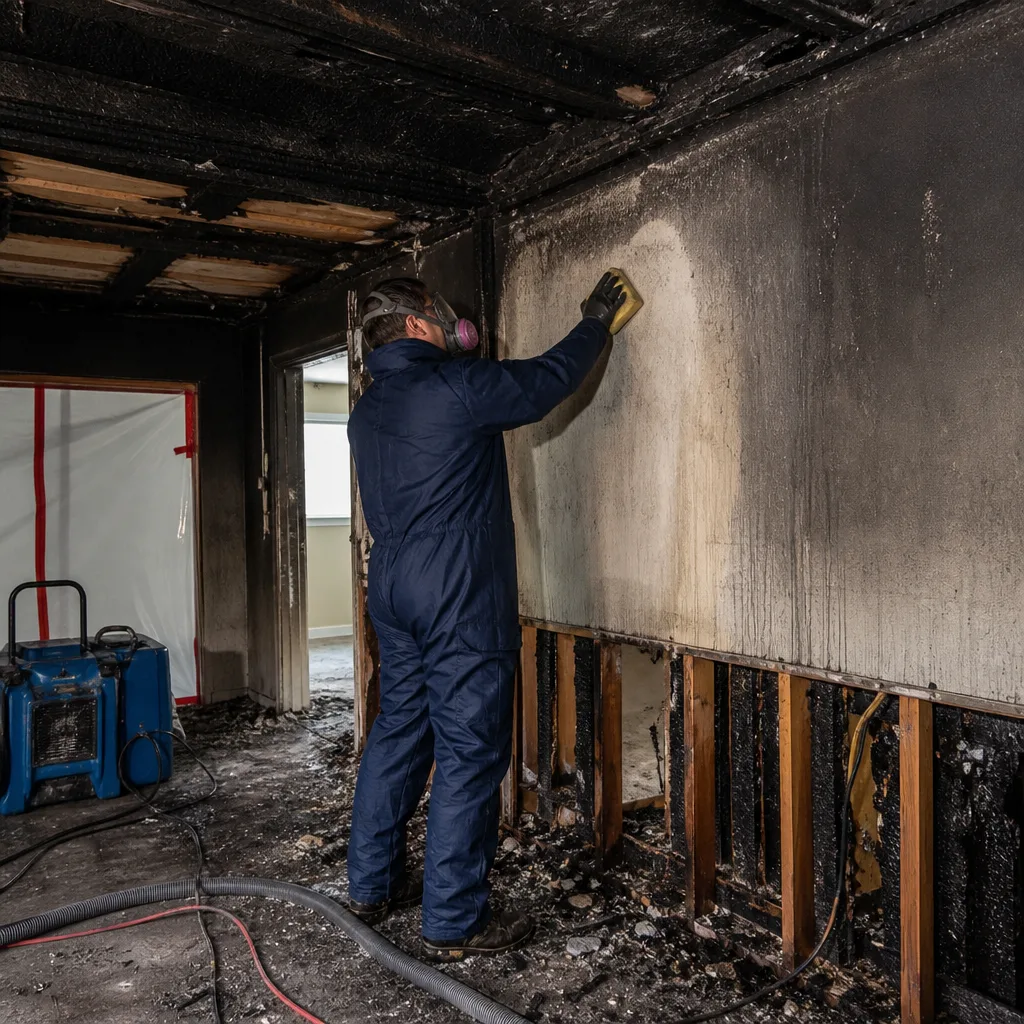
After removing mold-damaged drywall, insulation, or carpet, we treat the exposed framing and remaining surfaces with a hospital-grade antimicrobial agent. Then we set up commercial dehumidification. In Highland’s dry climate, homeowners sometimes assume the air alone will finish the drying. It won’t, not inside a wall cavity or under a subfloor where the moisture is trapped. That’s why we use Injectidry systems on applicable jobs, targeting wall interiors and underlayment without unnecessary demolition.
What happens when you call
- 1
A real person answersNo phone trees — you reach a local pro.
- 2
You get an upfront price rangeHonest numbers before anyone is dispatched.
- 3
A background-checked tech heads outLicensed & insured, dispatched right away.
- 4
You approve before work beginsNothing starts until you say go.
Professional Mold Removal in Highland
Professional Mold Removal in Highland means physically removing the mold, not painting over it or fogging it into submission. We see homes where a previous owner or a handyman wiped down visible staining with bleach and called the problem solved. Under the right conditions, that mold returns within weeks, because the colony was never removed from the porous drywall paper or the wood framing behind it. We remove the affected material, bag it for disposal under containment, and confirm with moisture readings that the structure is dry before any rebuild starts. In Highland, that removal work generally falls between $900 and $2,800 for a contained single-area job, with costs rising when we’re pulling out saturated cabinetry, built-in shelving, or multiple layers of subfloor.
Black Mold and Mycotoxin Care
When black mold shows up in a Highland home, the response has to be immediate and honest. Stachybotrys and similar toxigenic species need sustained moisture to grow, which usually means a hidden leak or condensation problem. We’ll identify the moisture source, contain the affected rooms, and remove the growth to the defined boundary. No shortcuts on black mold, not in homes where kids sleep down the hall.
Air Quality Restoration
Mold spores don’t stay where the mold grew. They ride HVAC returns and hallway drafts into every room. After we complete removal, we run air filtration for a minimum of 24 hours and conduct post-remediation verification to make sure the air inside your Highland home matches baseline outdoor conditions. It’s not enough to remove the mold you can see. The air has to be clear too.

Trusted Brands We Service in Highland
Highland homeowners often ask what equipment we’re actually bringing into their house, and we’ll tell you straight: Dri-Eaz dehumidifiers, XPOWER air movers, and Injectidry drying systems. These are not consumer rentals. They’re the same commercial-grade units deployed by restoration crews on multi-million-dollar commercial losses. We keep a full inventory staged for rapid deployment to Highland jobs, so there’s no waiting on equipment to arrive from a warehouse across the county. Whether the job is a single closet in a 1960s tract home or a full attic after a slow roof leak, the gear shows up ready to work. We’d rather explain the equipment than hide behind vague promises about being “fully equipped.”
Common Mold Remediation Problems We See in Highland Homes
- Hidden cavity growth behind original drywall. Highland’s 1950s – 1970s homes are full of wet wall cavities that never got dried after a previous water loss. The visible staining is minimal, but the moisture inside the cavity is a slow feed for mold. Our moisture mapping catches what a surface inspection misses.
- Poorly vented attics trapping warm, damp air. Many Highland tract homes have soffit vents but no ridge vents or insufficient attic airflow. In the summer, that hot air holds moisture from bathroom fans and duct leaks. The result is mold on the underside of roof sheathing that homeowners don’t see for years.
- Original copper and galvanized plumbing failures. Homes built between 1955 and 1975 in Highland often still have original supply lines. Pinhole leaks in these lines can drip behind walls for months, creating ideal mold conditions in an otherwise dry house. The mold is the symptom. The aging pipe is the problem.
- Previous surface-level cleaning that left mold behind. We regularly take over remediation jobs in Highland where someone wiped visible mold with bleach or vinegar months earlier. Without removing the affected porous material and confirming dry conditions, the mold rebound is almost guaranteed. It’s not negligence to call us. It’s reality.
See the difference
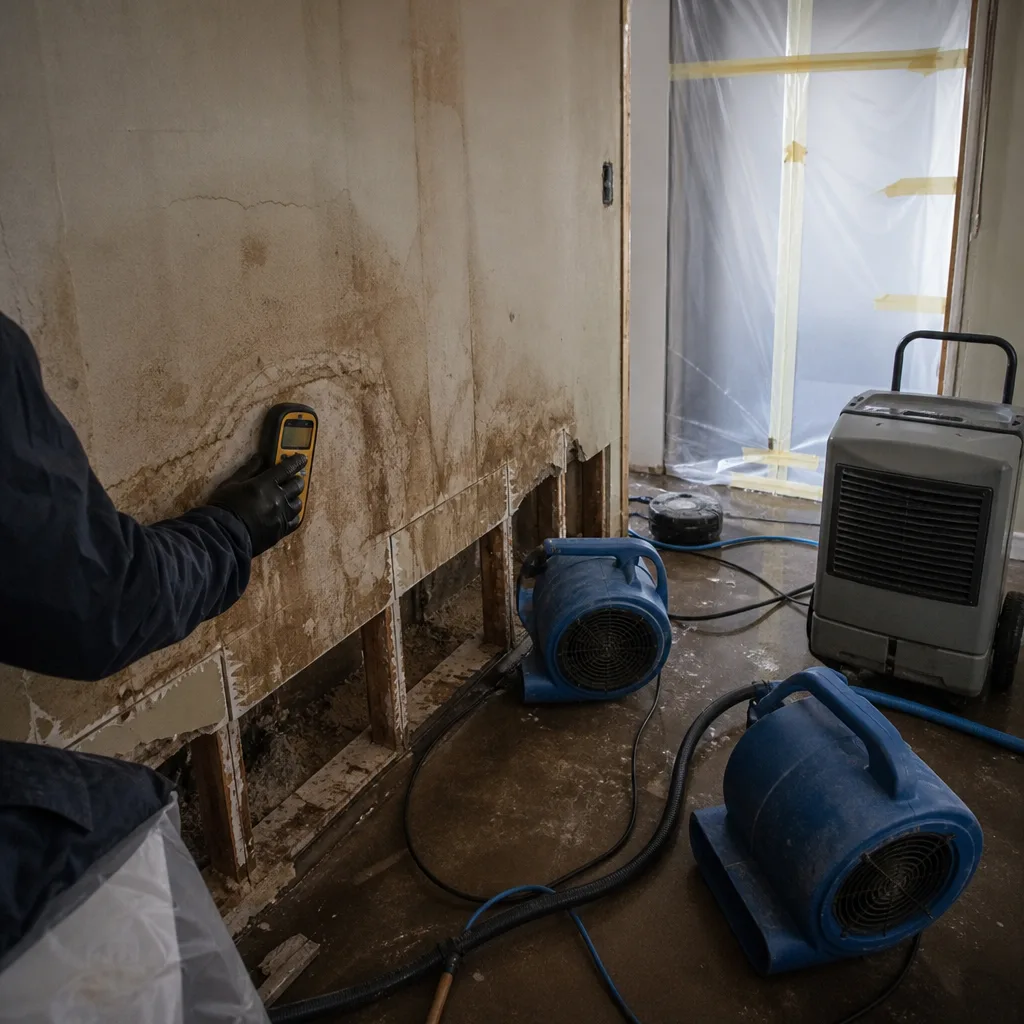 Before
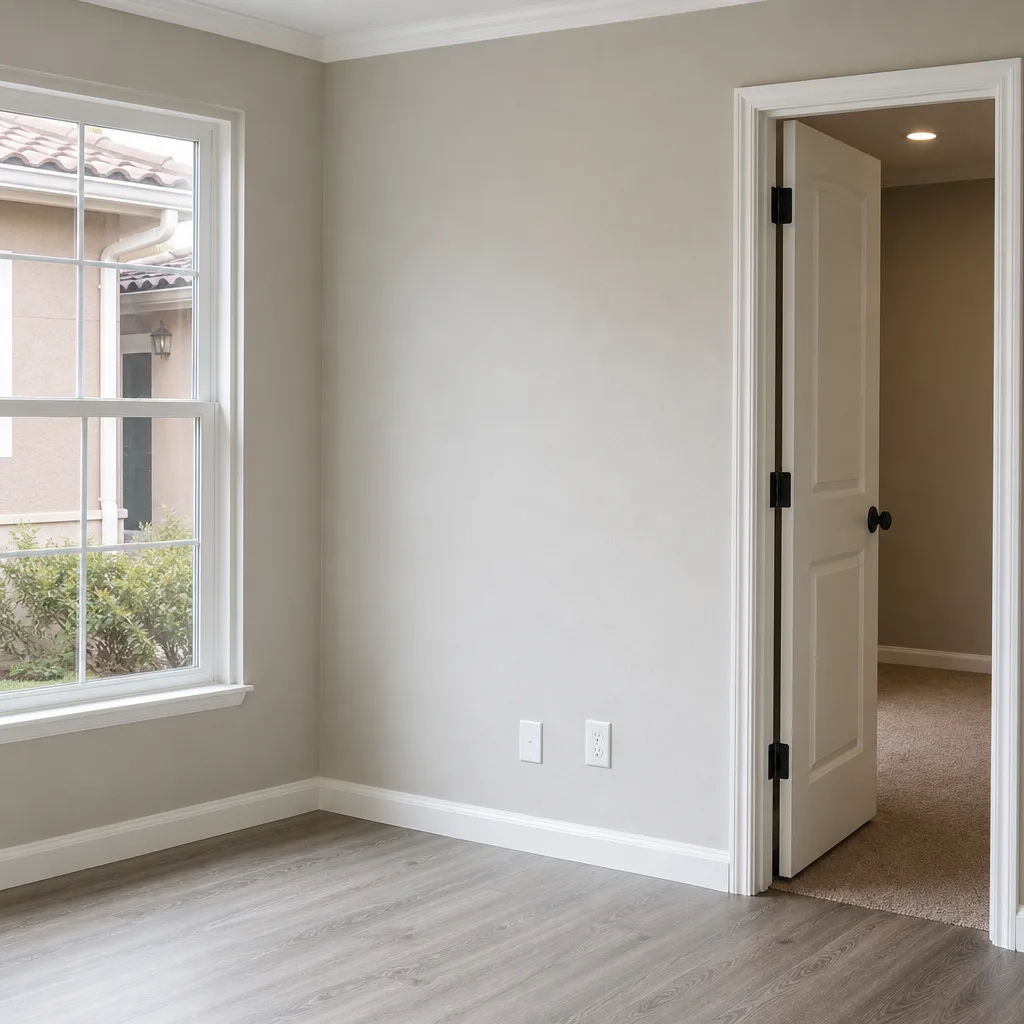 After
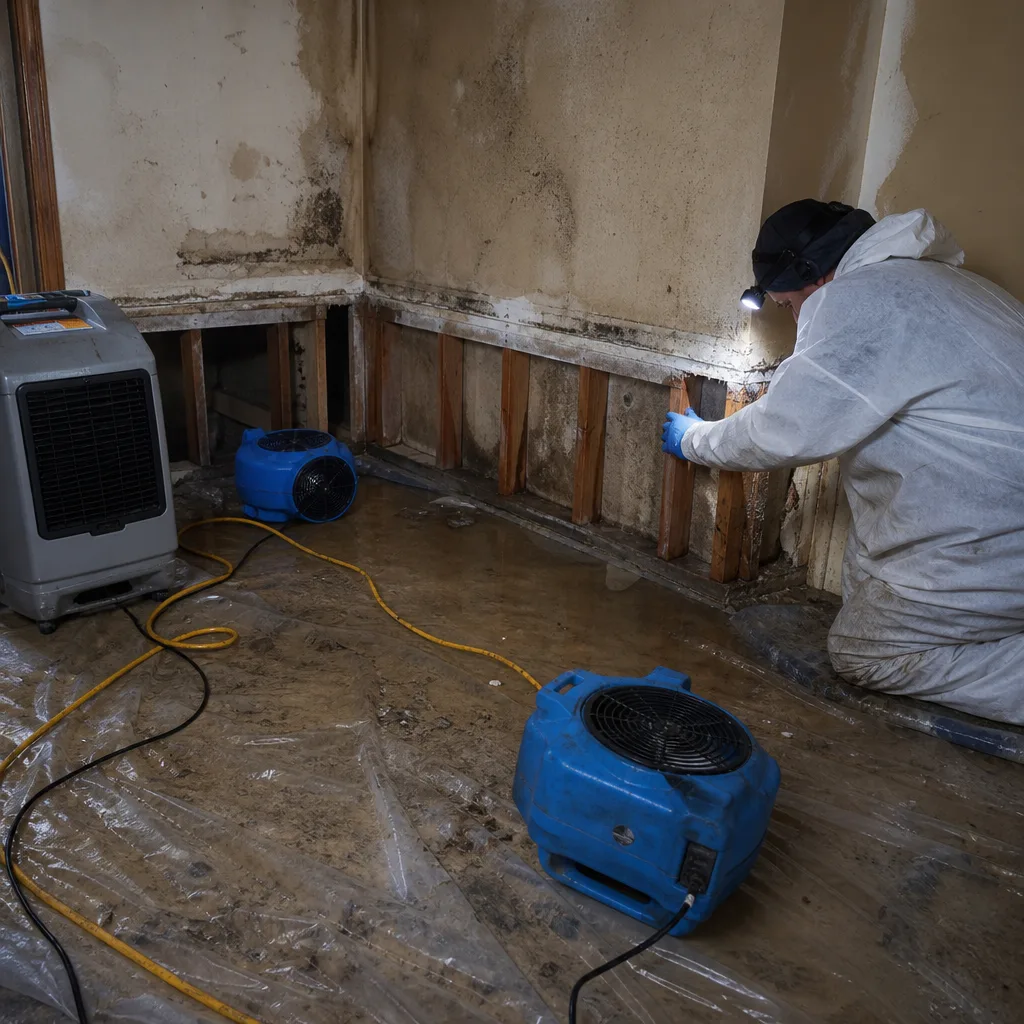 Before
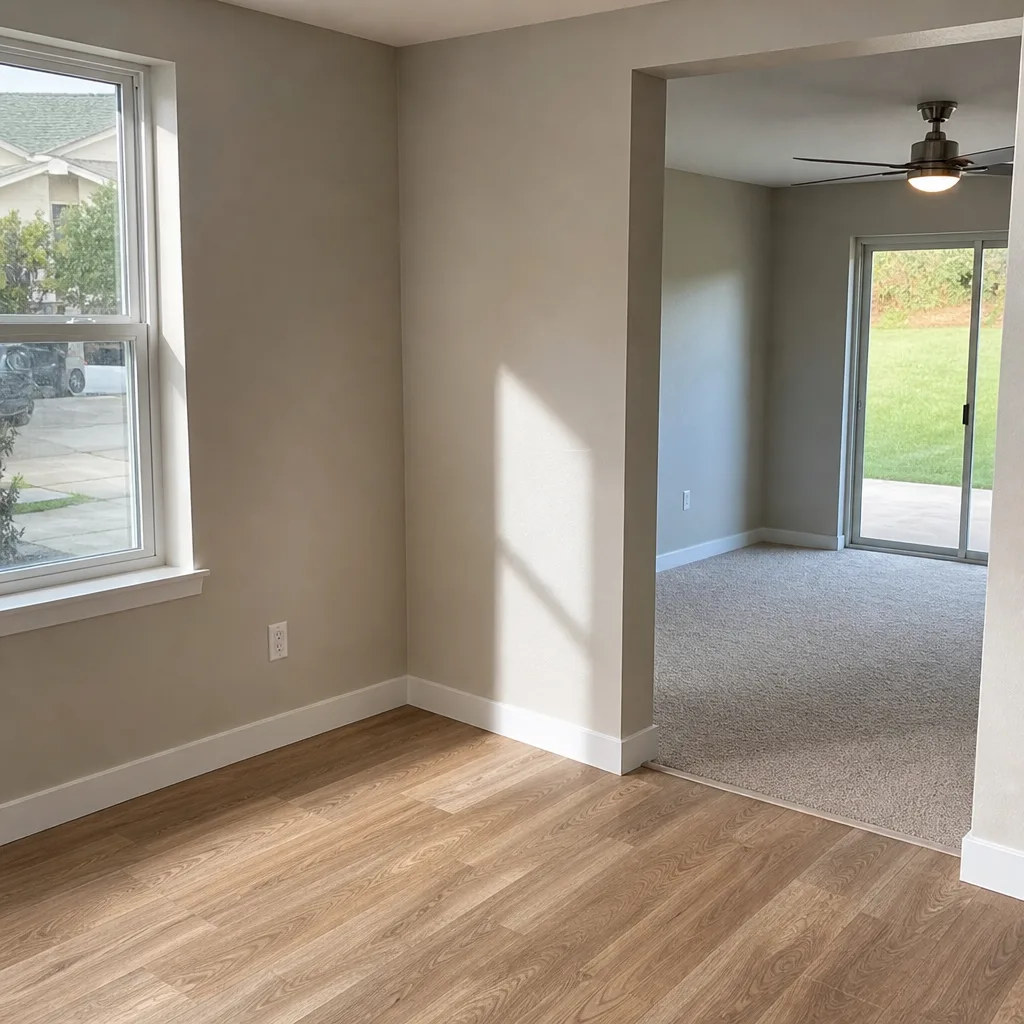 After
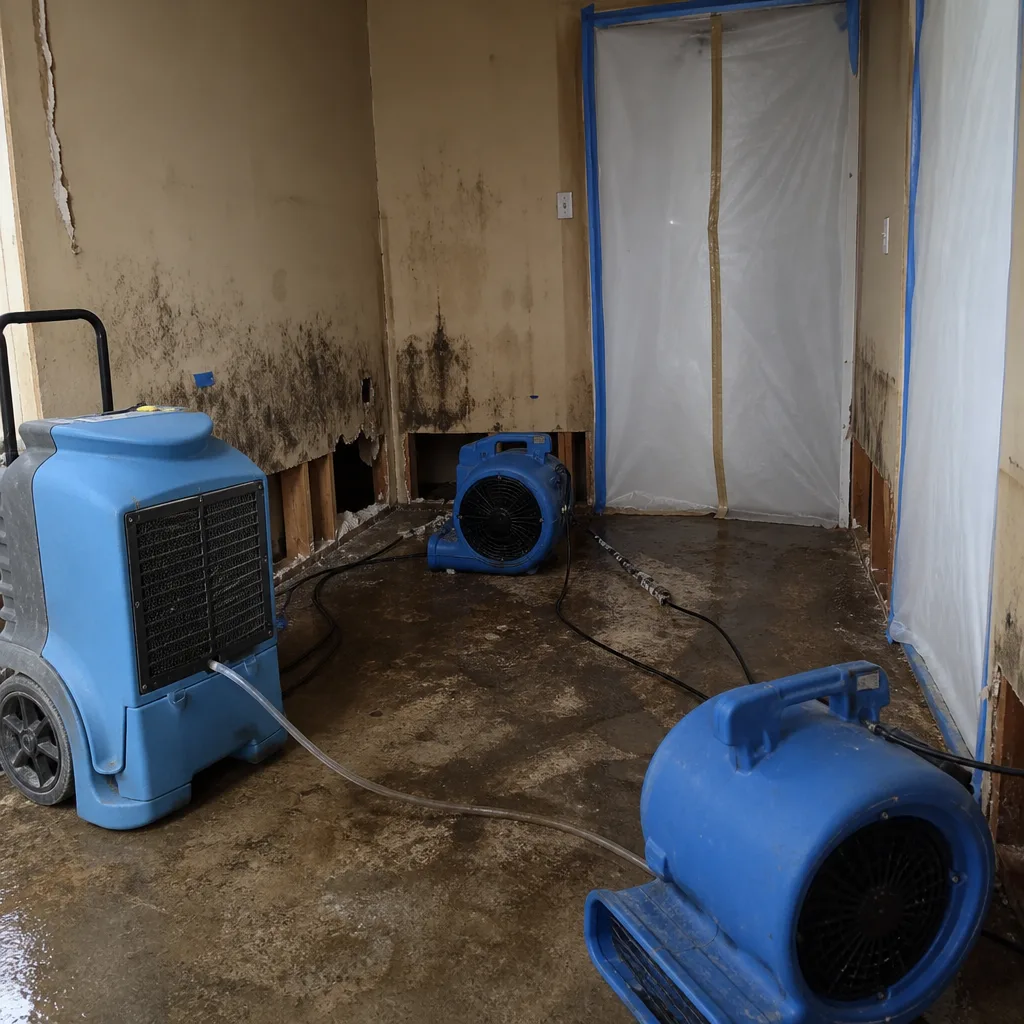 Before
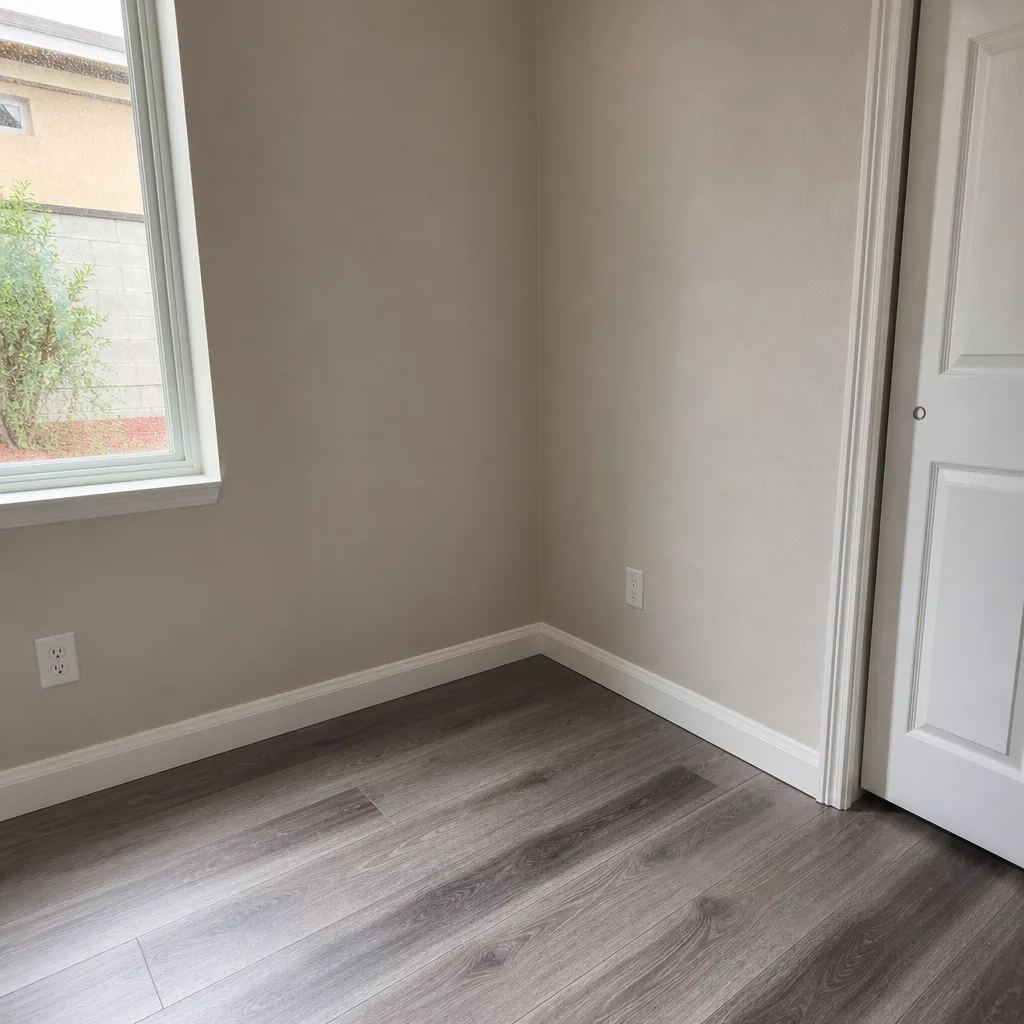 After
Pricing for Mold Remediation in Highland, CA
Mold remediation pricing in Highland follows a clear range. A small contained area, like a single bathroom wall or a closet interior, typically runs $900 – $1,800. A standard single-room remediation with moderate wall cavity removal and full drying lands between $1,800 and $3,500. A larger job involving multiple rooms, attic insulation replacement, or crawl space treatment can reach $4,800 or more. What moves the number is how far the moisture has traveled through the framing. We’ll give you a written scope before work starts, so you know exactly what’s being removed, what’s being dried, and what it costs. Call (844) 878-6356 for a free estimate specific to your Highland home. Estimates are free, and the scope is binding once you approve it.
We Also Serve Cities Near Highland
Our team regularly responds to mold jobs throughout San Bernardino, Muscoy, Redlands, and Loma Linda. If you’re managing a water loss or mold discovery in any of those communities, the same certified crew that handles Mold Remediation in Highland can be routed to you. For residents in and around the 92346 ZIP code, Highland remains our fastest coverage zone.
Serving Highland, CA — Our Local Coverage Area
We’re based in the Highland area and know this community well. Use the map below to see our service coverage — if you’re nearby, we can almost certainly help.
FAQs About Mold Remediation in Highland
Mold can begin growing within 24 – 48 hours after a water leak in a Highland home, especially in the warm months when daytime temperatures push the interior of wall and ceiling cavities into the prime growth range. In Highland’s dry climate, homeowners sometimes assume the low humidity will prevent mold from taking hold, but that only applies to open air. Inside a closed wall cavity, moisture trapped against paper-faced drywall and wood framing creates a perfect microclimate. In the time it takes to notice a small stain on the ceiling, the colony behind it may already be established. Call (844) 878-6356 as soon as you see staining, not after you’ve watched it for a week.
In most 1960s tract homes in Highland, yes, you need to remove the affected drywall to properly treat mold. That’s because mold doesn’t just sit on the painted surface. It grows into the paper backing and the gypsum core, where no antimicrobial spray can reach it. We’ve seen crews attempt fogging treatments that leave the colony intact behind the wall. When we assess a Highland home of this era, we map the moisture boundary in the wall cavity and remove the drywall to that boundary, no further. The goal is to take out exactly what’s contaminated and preserve as much original structure as possible.
Yes, mold can absolutely come back if the attic wasn’t addressed during the original water damage response, and this is one of the most common callbacks we handle in Highland. A roof leak that dripped into a bedroom ceiling will also send moisture into the insulation and the wood framing above it. If the remediation only addressed the ceiling drywall, the attic materials remain damp and contaminated. In Highland homes with older asphalt shingle roofs, this is a frequent pattern. Our process always includes an attic inspection when the water damage originated from above. Call (844) 878-6356 if a previous company handled your ceiling but left the attic untouched.
We handle tight townhome and alley-access properties in Highland by staging equipment at the nearest accessible point and running containment through the most direct path available. Our crews work in these compact floor plans regularly, which means we know how to move commercial dehumidifiers through narrow passageways, set up negative air containment without blocking egress, and keep the workspace contained to the smallest possible footprint. Alley-access properties on the east side of Highland, where garages face the rear and parking is tight, require a little extra planning. That’s built into our process, not an excuse for delays.
Category 1 water is clean water from a supply line, a tub overflow, or a burst pipe under a sink. Category 3 water is grossly contaminated, typically from sewage, floodwater, or any source that carried biological or chemical contaminants into your home. The difference matters for mold remediation in Highland because Category 3 water means the affected drywall, carpet, and insulation almost always require removal, not just drying. Category 1 water may allow for drying in place if the moisture has not penetrated deeply. Our technicians classify the water source on arrival and build the remediation plan around that classification. Call (844) 878-6356 and we’ll tell you what you’re actually dealing with.
Call Fresh Start Water Damage in Highland
If you’ve found mold in your Highland home, or if you smell something that’s been there since the last rain, don’t wait for it to spread deeper into the framing. Our IICRC-certified team is ready to respond with commercial-grade equipment, a written scope of work, and the kind of straight answers you need when your house is affected. Nolan Hester built Fresh Start Water Damage to be the restoration company that shows up credentialed, equipped, and honest. Call (844) 878-6356 today for a free estimate.
Written by Nolan Hester, Owner at Fresh Start Water Damage, serving Highland since 2017.