


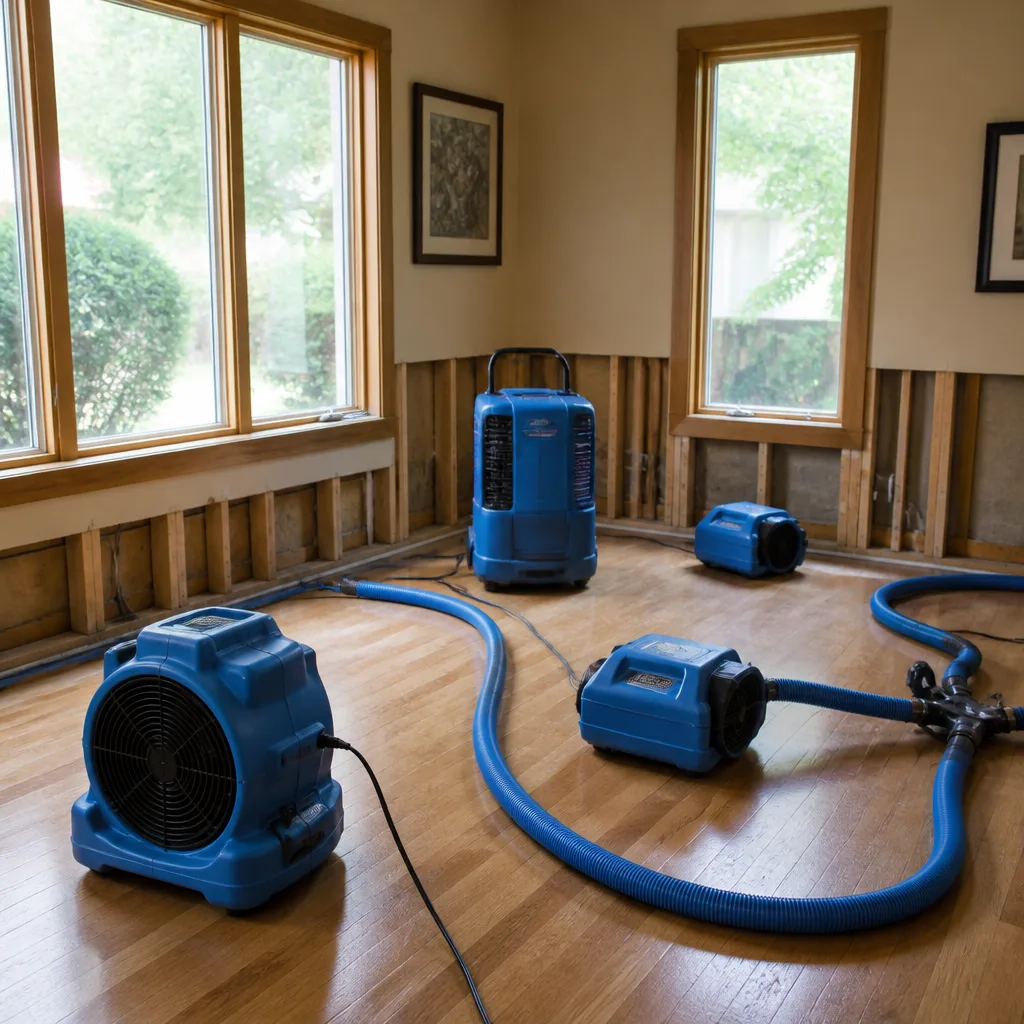
 Water damage drying
 Fire & smoke cleanup
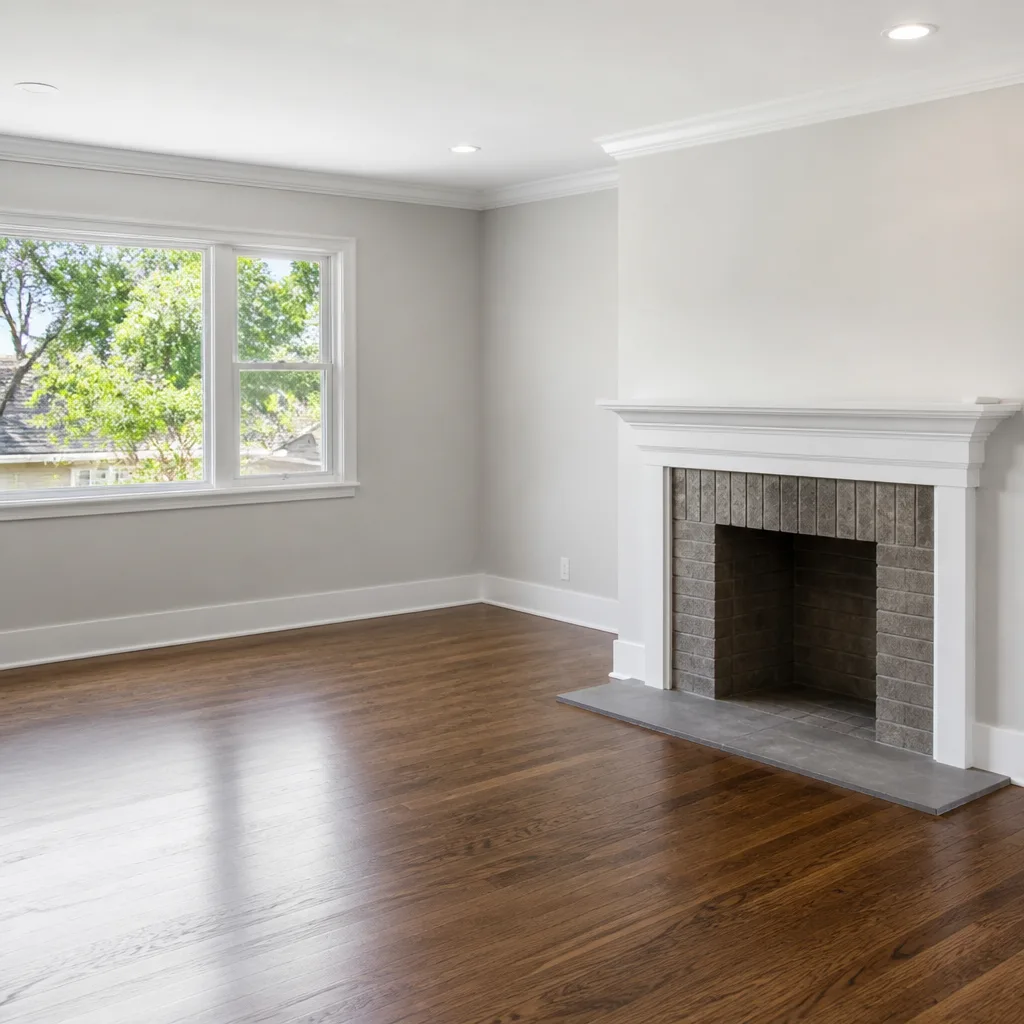 Mold remediation
 Storm response
 Sewage cleanup
 Reconstruction
Free visual inspection and a written scope of work before any mitigation begins - photos, moisture readings, and drying logs go in your claim file
The scope we write is the scope we bill. Anything new gets shown to you, in writing, before we touch it.
Get your free estimateMold Remediation in March Air Force Base: What It Costs and How It Works
Mold remediation in March Air Force Base typically runs $1,800 – $6,500 depending on how far the growth has spread and whether containment, asbestos abatement, or wall-cavity demolition is required. Most jobs in the 92551 area involve hidden moisture sources inside cinder-block walls rather than simple surface growth, which is why we always start with a full inspection before quoting. If you’re seeing staining, smelling mustiness, or dealing with recurring mold after a prior cleanup, call (844) 878-6356 and we’ll walk through what’s actually happening inside the wall.
Key Takeaways
- 1
Mold in March Air Force Base base housing often traces to galvanized supply-line pinhole leaks inside cinder-block walls, not visible roof or plumbing drips.
- 2
Homes built 1940s – 1960s in the 92551 area may contain asbestos and lead paint, which changes the scope of any mold demolition job.
- 3
A full mold inspection runs $300 – $650; full remediation with containment and drying equipment typically starts around ul,800.
- 4
We document every job with moisture readings and drying logs, and we coordinate with insurance on the documentation side.
Fast, Reliable Mold Remediation Across March Air Force Base
March Air Force Base homes present a specific set of mold challenges that most restoration crews don’t see elsewhere in Riverside County. The older base housing stock, much of it built between the 1940s and 1960s, was constructed with cinder-block walls and galvanized steel supply lines that have now been in service for 60 to 80 years. When those lines fail, they fail inside the wall, and that’s where mold takes hold. We’ve worked throughout the 92551 area long enough to know what a mold call in these homes usually means before we even arrive.
Our crews respond to March Air Force Base calls with commercial-grade drying systems from Dri-Eaz and B-Air, and because we’re certified by IICRC, the assessment you get reflects industry standards, not guesswork. Call (844) 878-6356 and we’ll schedule a walkthrough.
Restoration work we handle
Why Fresh Start Water Damage Is March Air Force Base’s Preferred Mold Remediation Company
Nolan Hester leads our team, and his approach to mold work in March Air Force Base is built around one principle: find the water source before you touch the mold. That’s not the fast and easy pitch, but in this housing stock it’s the only approach that holds up. We’ve worked in the older base housing blocks off the 92551 core, behind the commissary and exchange area, and around the neighborhoods bordering Moreno Valley, and the same pattern shows up again and again: a pinhole leak in a galvanized supply line feeding mold inside a cinder-block cavity.
Being IICRC-certified matters here because the IICRC’s S520 standard governs how mold jobs should be scoped, contained, and cleared. We also maintain membership in the RIA, which holds us to a professional code of ethics. When a March Air Force Base customer asks who’s showing up, the answer is a credentialed crew with documented protocols, not a handyman with a spray bottle.
One team, full restoration. That means if a mold job in the 92551 turns out to include water damage behind the wall, we handle both under one scope of work. No juggling contractors. No finger-pointing.
Mold Inspection in March Air Force Base
A mold inspection in March Air Force Base runs $300 – $650, and on older base housing it’s the single most important step you can take before any cleaning or demolition begins. The inspection includes moisture mapping of walls and ceilings, air sampling when indicated, and a visual examination of the plumbing and drainage systems that are the usual culprits in 1940s – 1960s construction. Given how many homes in the 92551 were built with galvanized supply lines, we treat every musty-smelling wall as a potential hidden leak until moisture readings prove otherwise.
What We Check in Older Base Housing
We run moisture readings on cinder-block walls, not just drywall. Block holds water longer and releases it slower, so a wall that looks dry on the surface can still be feeding mold inside. We also look at the plumbing access points, irrigation lines around the foundation, and any signs of previous repairs that might have sealed moisture in rather than routed it out.
When Testing Reveals More Than Mold
If demolition is going to be part of the scope, we flag the need for asbestos and lead testing before any wall comes open. That’s not bureaucratic caution; it’s a legal requirement when dealing with homes from the base’s original construction era. Skipping it puts your family and our crew at risk, and it can open up a much larger liability problem than the mold itself.
Mold Removal Specialist in March Air Force Base
A mold removal specialist in March Air Force Base typically handles jobs ranging from $1,800 for a contained single-wall remediation up to $6,500 or more when multiple rooms, crawl spaces, or hazardous-material abatement are involved. The job starts with containment, then moves through source removal, antimicrobial treatment, and structural drying before a clearance check. In cinder-block homes, that drying step takes longer than it would in a standard drywall house, which is why our crews use Dri-Eaz dehumidifiers and air movers sized to the job rather than consumer-grade fans.
Hidden Leaks, Not Surface Mold
The most common failure we find is a mold job where someone cleaned the surface but never located the supply-line pinhole feeding it. The mold returns in weeks, and the homeowner is told it’s “just a bad area.” That’s not how mold works. If there’s elevated moisture inside a cinder-block cavity in the 92551, the source is still active.

Working Around Hazardous Materials
When a March Air Force Base home from the 1940s – 1950s requires wall-cavity work, asbestos and lead protocols change the entire timeline and cost. We don’t start demolition until testing comes back. If abatement is needed, we coordinate with the right professionals so the job proceeds in the correct sequence: hazardous material removal first, mold remediation second, drying and rebuild last.
Trusted Brands We Service in March Air Force Base
We run Dri-Eaz dehumidifiers, B-Air air movers, and Injectidry drying systems on mold and water jobs across the 92551. These are the brands used in commercial restoration work, not rental-counter equipment, and they’re why we can dry cinder-block assemblies properly instead of guessing at when it’s “dry enough.” We keep the consumables and equipment service parts stocked locally for faster turnaround on March Air Force Base jobs, and every piece of equipment gets logged, monitored, and documented on your job file.
See the difference
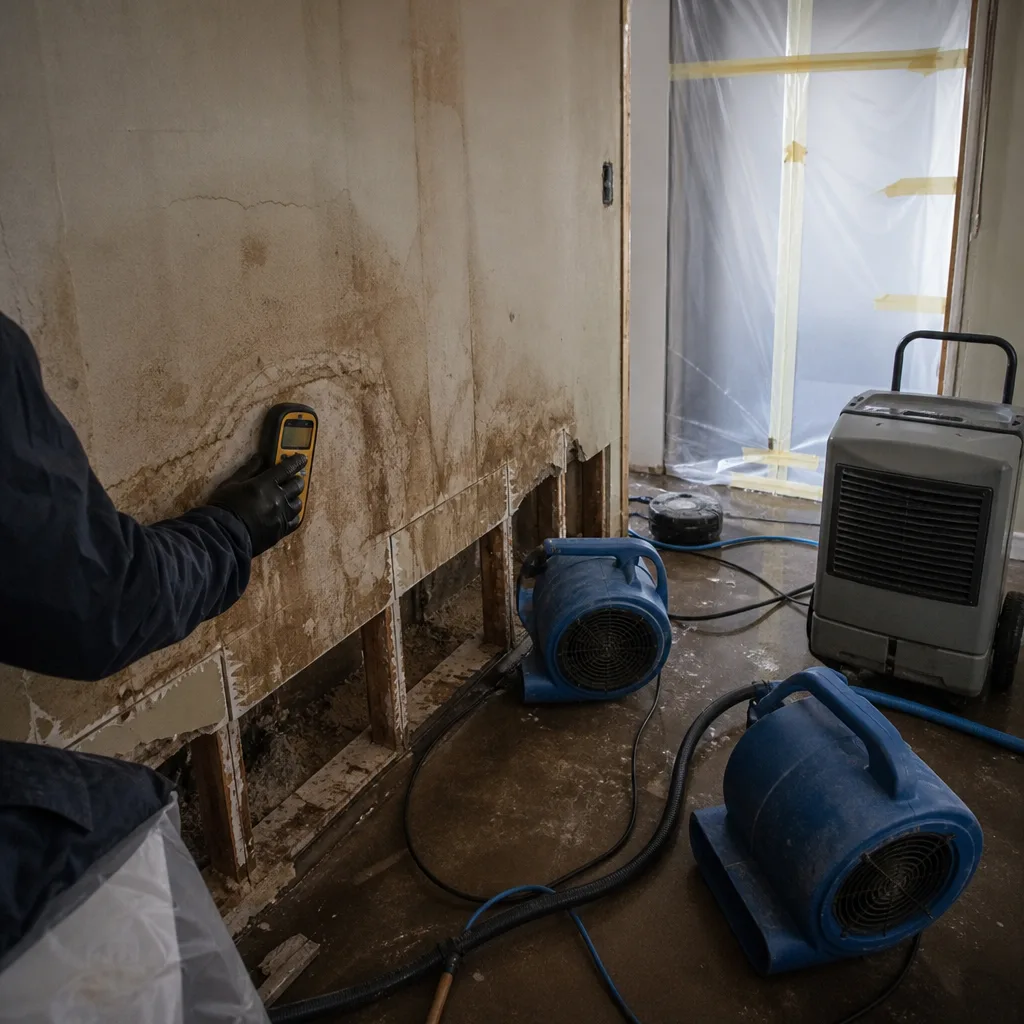 Before
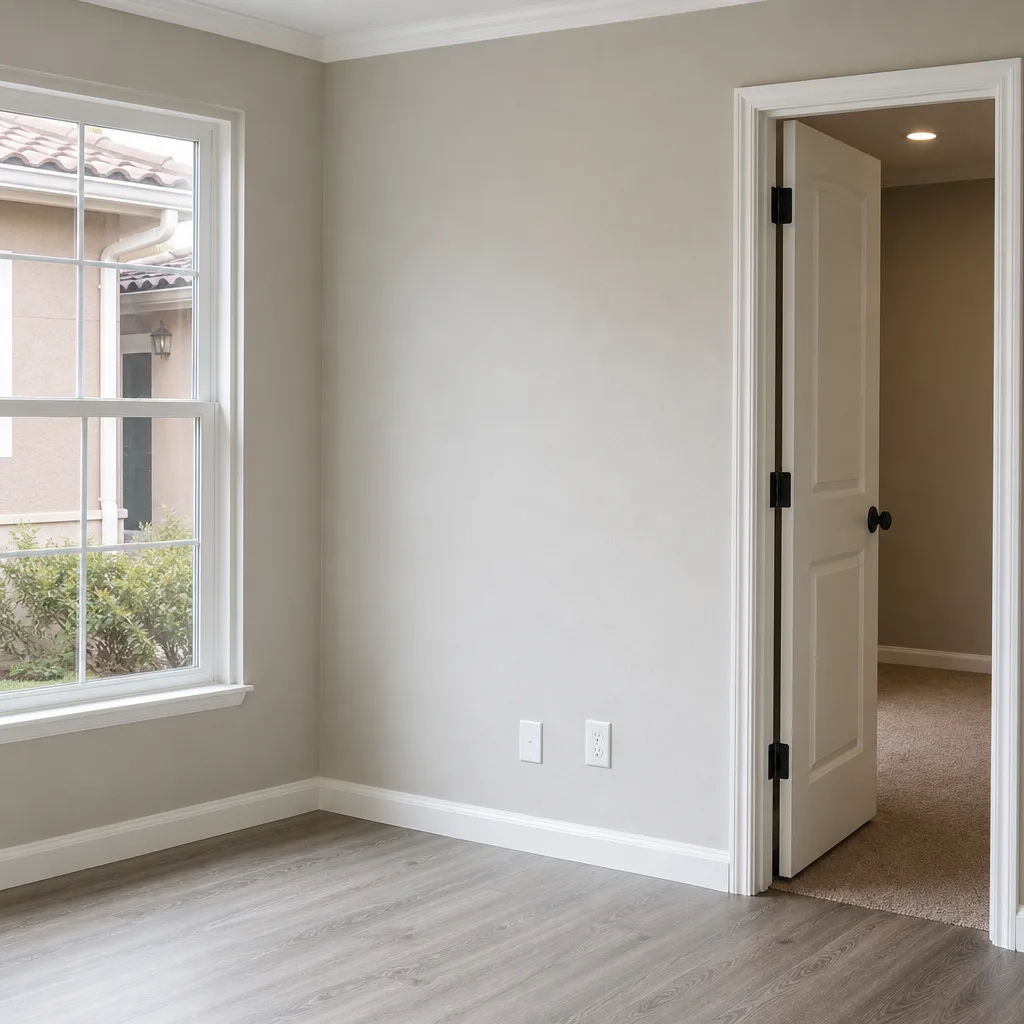 After
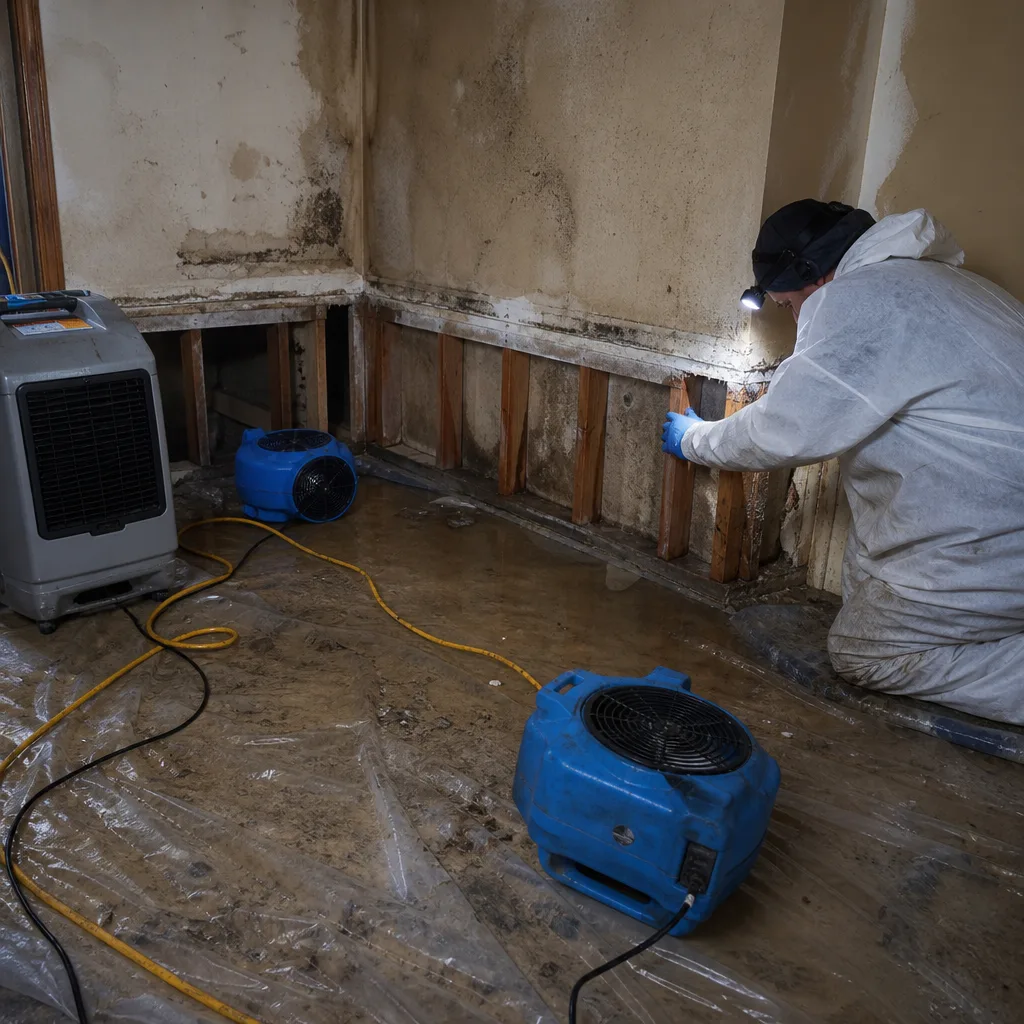 Before
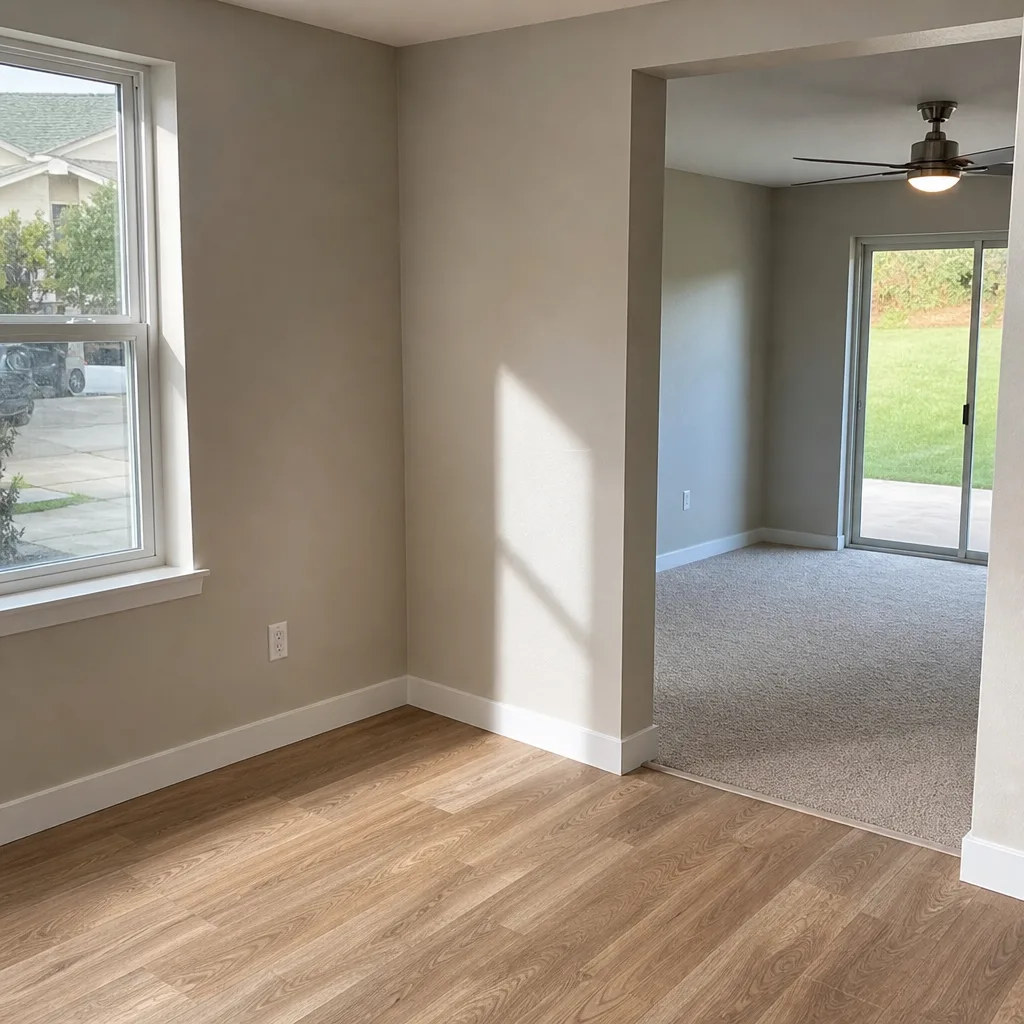 After
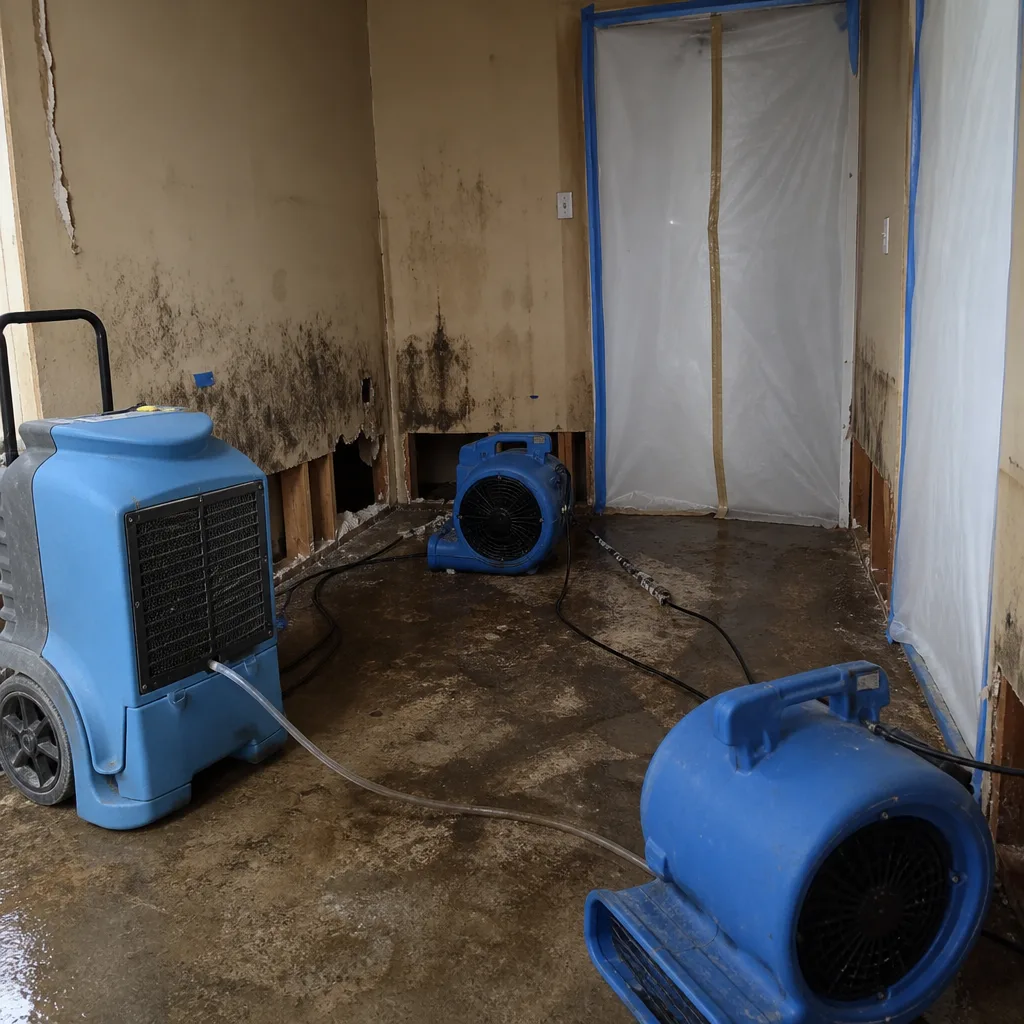 Before
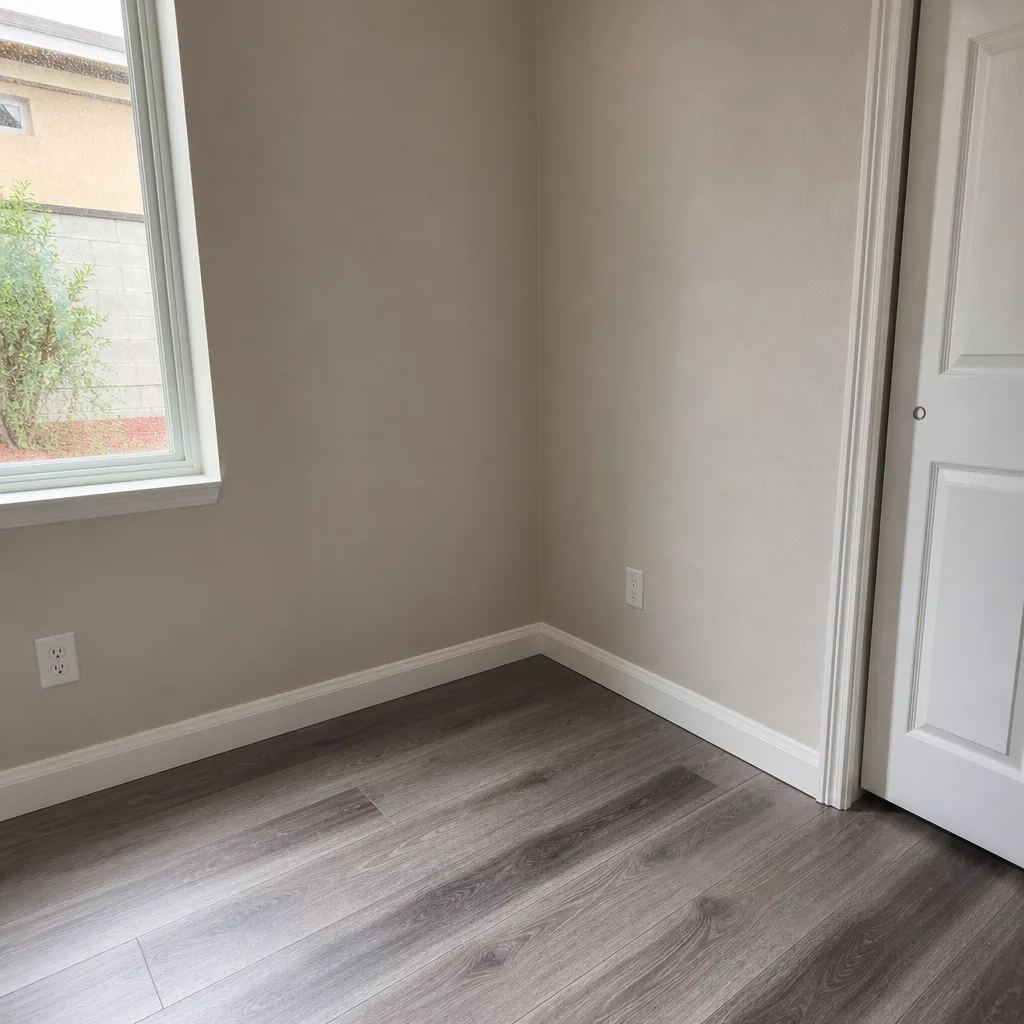 After
Common Mold Remediation Problems We See in March Air Force Base Homes
- Hidden galvanized supply-line pinholes. The pipes in 1940s – 1960s base housing corrode from the inside out, and the first visible sign is often mold on an interior wall, not water on the floor. We trace the reading back to the source before we touch the growth.
- Skipped asbestos and lead testing. Demolition on a pre-1978 cinder-block home without hazmat testing is a direct route to a contaminated work area. We test before we cut, every time, on 92551 jobs.
- Under-dried cinder-block assemblies. Block doesn’t release moisture the way drywall does. A crew that pulls equipment too early leaves the wall above the threshold where mold regrows, and the whole job fails.
- Chasing visible mold while the crawl space feeds it. Galvanized drain lines with root intrusion, failing vapor barriers, and standing water under the house keep humidity high enough to support regrowth even after a clean surface treatment.
Pricing for Mold Remediation in March Air Force Base, CA
Here’s what we see across the 92551: a mold inspection runs $300 – $650. A contained single-wall remediation with drying equipment and antimicrobial treatment starts around $1,800 and lands between $2,800 – $4,500 for most base housing jobs where the leak is inside a cinder-block wall. Full crawl space treatment, multi-room jobs, or any scope involving asbestos or lead abatement runs $4,500 – $6,500 and up depending on square footage and materials. What moves the number is whether the water source is still active, whether hazmat testing triggers abatement, and how much of the wall assembly has to come apart to dry it. Call (844) 878-6356 for a free estimate; we’ll walk the property, take readings, and give you a written scope before any work starts.
We Also Serve Cities Near March Air Force Base
Fresh Start Water Damage handles mold calls throughout the March Air Force Base area, including Moreno Valley, Woodcrest, Perris, and Good Hope. If you’re in one of those communities and dealing with musty odors, visible growth, or recurring mold after a prior cleanup, our Mold Remediation team works across the same housing stock and the same failure patterns we see in the 92551. Same crew, same equipment, same standard of documentation.
Serving March Air Force Base, CA — Our Local Coverage Area
We’re based in the March Air Force Base area and know this community well. Use the map below to see our service coverage — if you’re nearby, we can almost certainly help.
FAQs About Mold Remediation in March Air Force Base
Because the water source feeding the mold was never identified and stopped. In 1940s – 1960s base housing, that source is usually a corroded galvanized supply line leaking inside a cinder-block wall, which means surface cleaning does nothing but buy a few weeks. We locate and fix the source before we treat the growth, or the job isn’t done. If you’ve cleaned twice and still smell mustiness, call (844) 878-6356 and we’ll find the leak.
Only if demolition will disturb materials that test positive for asbestos or lead, which is common in homes built before 1978. We don’t cut into a wall on older 92551 base housing without testing first. If abatement is required, it gets sequenced before the mold work, and we coordinate the full process. Estimates are free, and we’ll tell you honestly if testing is needed.
Cinder block holds moisture longer than drywall, so drying times run longer, and we keep equipment in place until moisture readings drop below the threshold where mold can regrow. A crew that pulls dehumidifiers based on surface feel will leave a wall that’s still wet inside. We use Dri-Eaz equipment and document every reading until the wall is actually dry. Call (844) 878-6356 if a previous crew told you the wall was “dry enough.”
Most mold jobs in March Air Force Base involve Category 1 water from supply-line leaks, which starts clean but becomes contaminated as it sits and feeds microbial growth in wall cavities. The longer the leak runs before discovery, the higher the Category and the more involved the remediation scope. Faster discovery means a smaller job, which is why any musty smell in a 92551 home should be checked immediately.
We can coordinate a pack-out when belongings are affected, though our core scope is structural mold remediation, drying, and source removal. For a March Air Force Base homeowner facing a full pack-out, we’ll bring in the right resources and manage the sequence so the structure gets remediated while your belongings are handled separately. Call (844) 878-6356 and we’ll tell you exactly what the scope includes before anything starts.
Call Fresh Start Water Damage for Mold Remediation in March Air Force Base
If you’ve got mold in a 92551 base housing unit, don’t wait until the wall is opened and you find out the hard way whether there’s asbestos behind it. Nolan Hester and our crew handle mold in March Air Force Base homes with the right containment, the right drying equipment, and the right documentation for insurance. Call (844) 878-6356 for a free estimate, and we’ll give you a written scope before any work begins.
Written by Nolan Hester, Owner at Fresh Start Water Damage, serving March Air Force Base and surrounding Riverside County communities.