

 Water damage drying
 Fire & smoke cleanup
 Mold remediation
 Storm response
 Sewage cleanup
 Reconstruction
Free visual inspection and a written scope of work before any mitigation begins - photos, moisture readings, and drying logs go in your claim file
The scope we write is the scope we bill. Anything new gets shown to you, in writing, before we touch it.
Get your free estimateFast, Reliable Water Damage Restoration Across Phelan
Water damage restoration in Phelan typically costs $2,100 – $4,800 for a standard mitigation job, with emergency water extraction starting around $450 – $900. Most jobs on this side of the high desert are completed in 3 – 5 days when drying conditions cooperate. At Fresh Start Water Damage, our IICRC-certified crew handles everything from burst well lines to monsoon flooding, and we’re familiar with the specific challenges of acreage properties, manufactured homes, and septic-connected plumbing throughout the 92329 and 92371 zip codes. If water is spreading through your home right now, call (844) 878-6356 and we’ll walk you through the first steps before a crew arrives.
Why Fresh Start Water Damage Is Phelan’s Preferred Water Damage Restoration Company
Our Water Damage Restoration team has worked across Phelan long enough to know that every property here has its own quirks. A 1970s ranch house on Rancho Road with original galvanized well lines needs a different approach than a newer manufactured home off Sheep Creek Road with PEX plumbing and a pressure tank in a crawlspace. That local familiarity means we show up with the right equipment the first time, not after a failed attempt with consumer-grade gear.
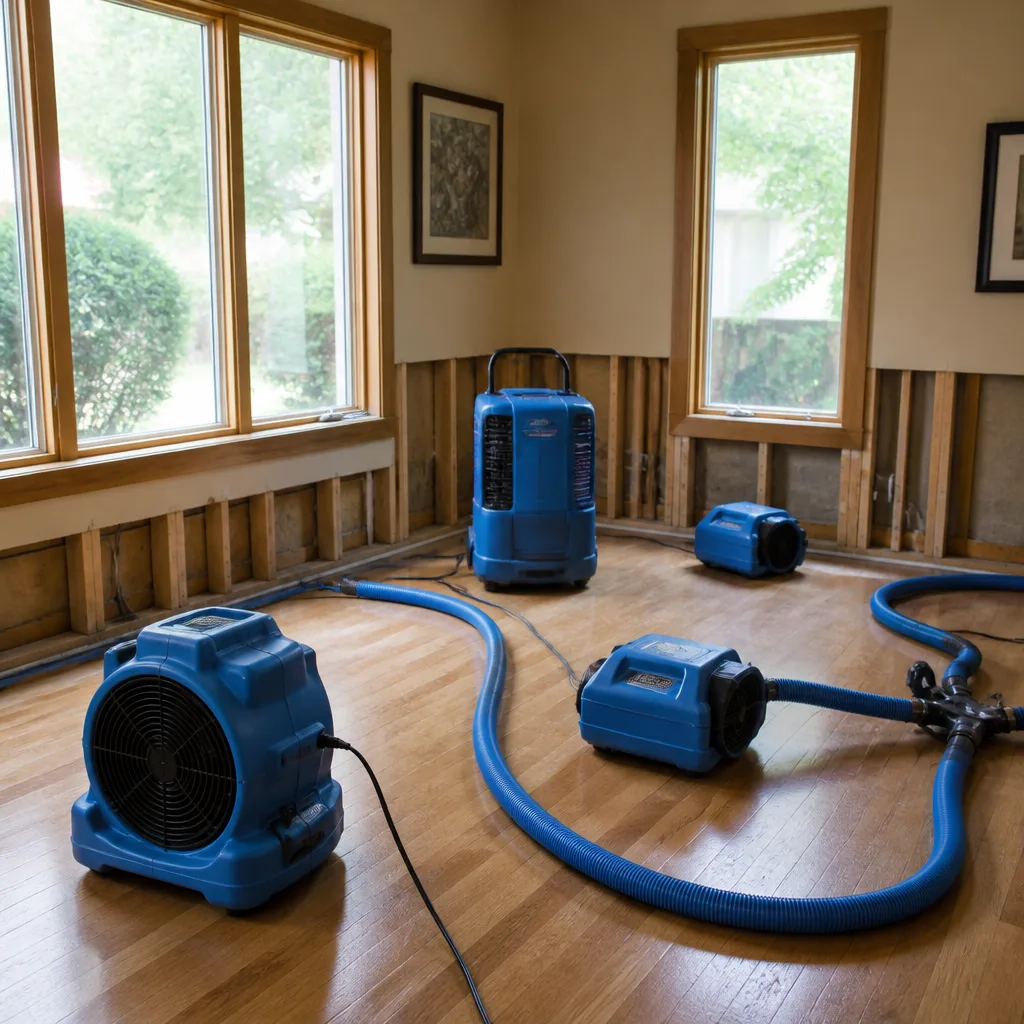
Nolan Hester, who leads our operation, built Fresh Start Water Damage around the idea that rural homeowners deserve the same level of technical rigor as commercial restoration clients. We run Dri-Eaz dehumidifiers, XPOWER air movers, and B-Air scrubbers on every job. We also deploy Injectidry drying systems on applicable losses, which pull moisture from wall cavities and subfloors without ripping everything apart. For a homeowner on acreage who’s already dealing with a flooded laundry room and a dead well pump, less demolition means less rebuild cost and less time living in a construction zone.
We also understand that Phelan residents don’t have the luxury of waiting through a dispatch queue. Properties out here are spread out, and a saturated subfloor in a manufactured home can turn into a mold problem within 48 hours. Our crews know the drive times from the Cajon Pass, up through Oak Hills, and into the flatlands of Phelan proper. When you call, you get a real plan, not a script.
Restoration work we handle
Water Mitigation in Phelan
Water Mitigation in Phelan is the first and most urgent phase of any water loss. It includes extracting standing water, removing saturated materials that can’t be saved, setting up commercial drying equipment, and monitoring moisture levels until the structure reaches its dry standard. For a Phelan homeowner, mitigation often starts with a more fundamental step: getting the well pump shut off. Many mitigation crews from down the hill don’t think about this. We do. A standard mitigation job in Phelan runs $1,800 – $4,200, depending on how far the water has traveled and whether containment is required.
Well-System Failure Mitigation
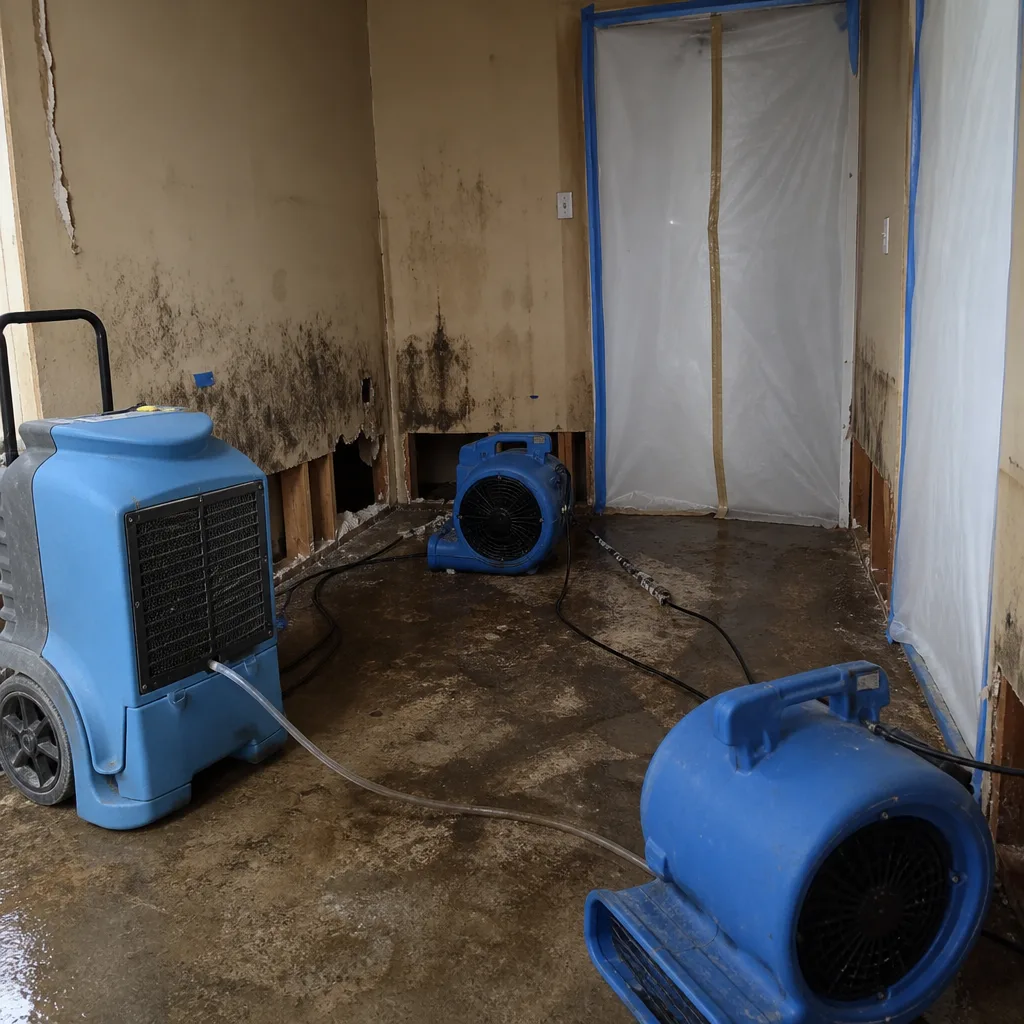
When a pressure tank bladder ruptures or a well line splits, water keeps flowing until the pump is interrupted. We coordinate with the homeowner and their well-service company before we start extraction. Otherwise, you’re literally pulling water out while the well is still feeding the leak. On a recent job on Wilson Ranch Road, a burst pressure tank line in a manufactured home saturated the subfloor for hours before we arrived. After the well-service team killed the pump, our crew extracted the standing water, set containment, and ran Dri-Eaz dehumidifiers and air movers until moisture mapping showed the subfloor was dry.
We also document every step with drying logs and photo evidence. If you’re filing an insurance claim, that paperwork makes the process far less painful.
Structural Drying and Dehumidification
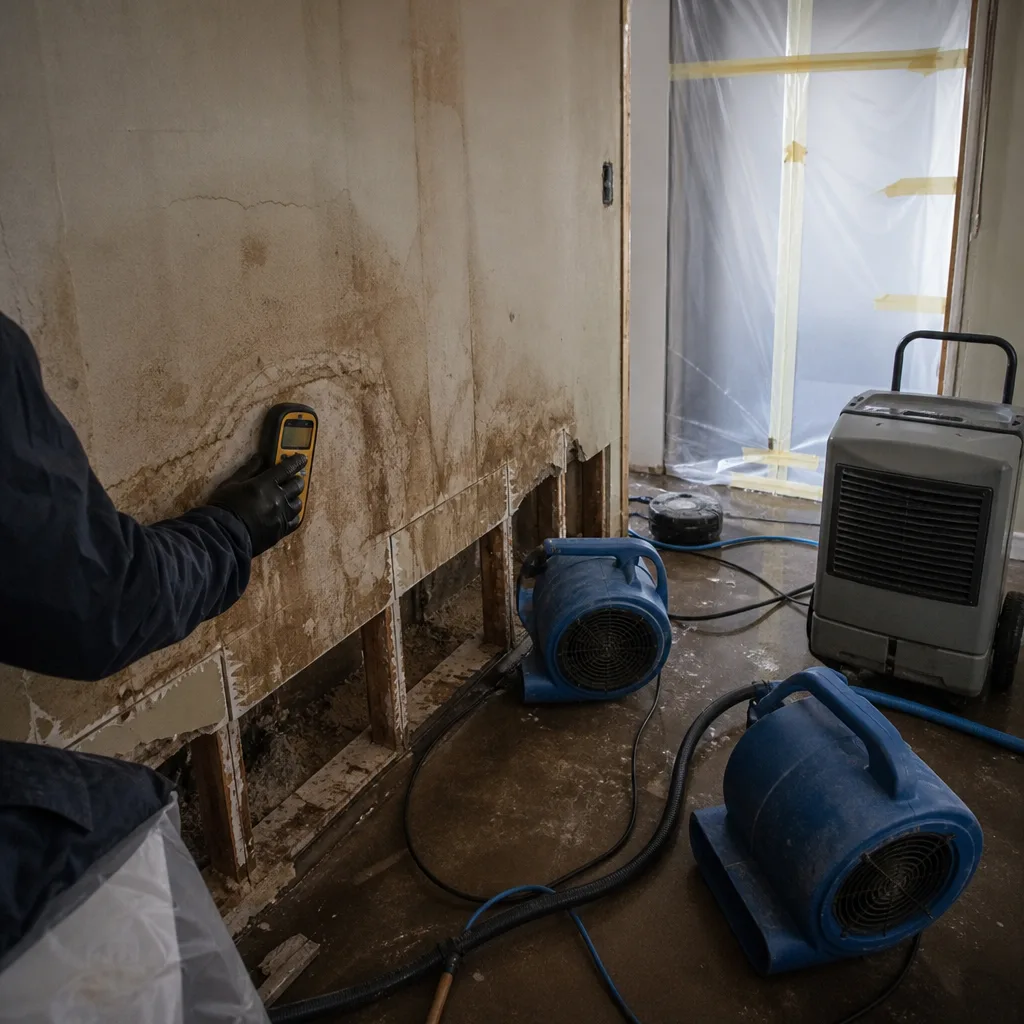
Moisture hides. In Phelan’s arid climate, surface evaporation can make a floor feel dry while the subfloor underneath is still soaked. Our moisture meters and thermal imaging identify exactly where water has traveled. We then match the drying equipment to the affected area, using Injectidry systems for wall cavities and subfloors that would otherwise require tear-out. A targeted drying plan costs $900 – $2,300 as part of a full mitigation job.
Flooded Basement in Phelan
Flooded Basement in Phelan is less common than in suburban Southern California, but it does happen, especially in older homes with below-grade foundations or in properties where monsoon runoff finds a path through a window well or stairwell. The cost to extract and dry a flooded basement in Phelan runs $2,500 – $5,500, depending on square footage and whether the water is clean or contaminated. If your septic system backed up into the basement, that’s Category 3 water and requires full containment, antimicrobial treatment, and removal of porous materials.
Monsoon Season Flooding
Phelan’s summer thunderstorms can drop a lot of water in a short window. Flash flooding can overwhelm drainage, and runoff can enter basements, crawlspaces, or the underbelly of manufactured homes. Our first move is always extraction, followed by an assessment of where the water actually went. In high-desert soil, runoff carries silt and debris that complicate drying. We factor that into every drying plan.

Manufactured Home Underbelly Drying
Manufactured homes on acreage have a vulnerability most site-built homes don’t: the underbelly. The cavity between the floor joists and the ground can hold water invisibly. We’ve seen cases in Phelan where a slow leak from a washing machine supply line went unnoticed for weeks because the water was pooling in the insulation and underbelly material. By the time the homeowner saw the floor warping, mold was already present. Our response includes removing damaged underbelly, extracting trapped water, and drying the cavity with targeted airflow before replacing the barrier and insulation.
Trusted Brands We Service in Phelan
We build our drying plans around equipment that works under real conditions, not showroom specs. Our crews run XPOWER air movers and Dri-Eaz dehumidifiers on every water loss, and we deploy B-Air scrubbers when we need to control airborne particulates during mold or Category 3 water jobs. Injectidry systems are our go-to for drying wall cavities and subfloors without unnecessary demolition. Because we stock parts and maintain our equipment between jobs, we don’t show up to your Phelan home with a rental unit that’s seen a thousand hours of misuse. That matters when a drying plan has to hold for four or five days in a row.
See the difference
 Before
 After
 Before
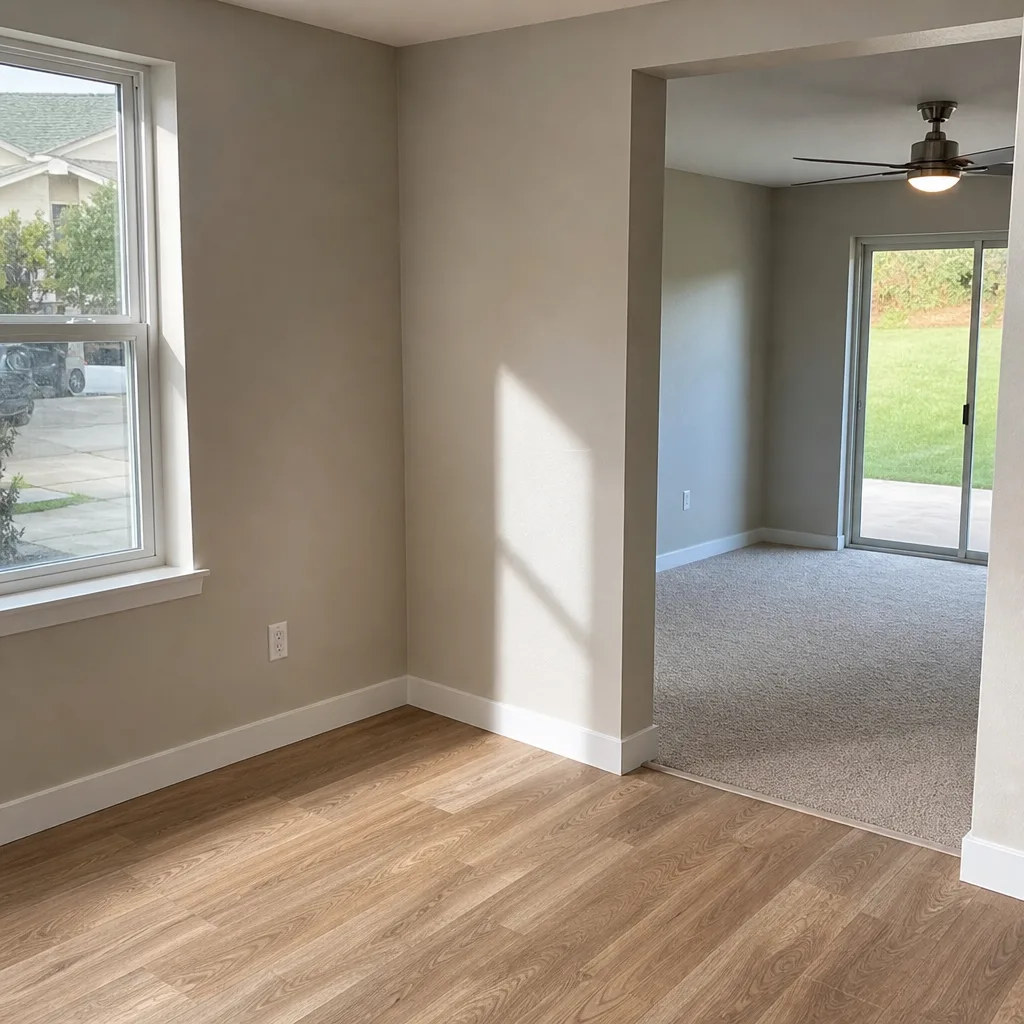 After
 Before
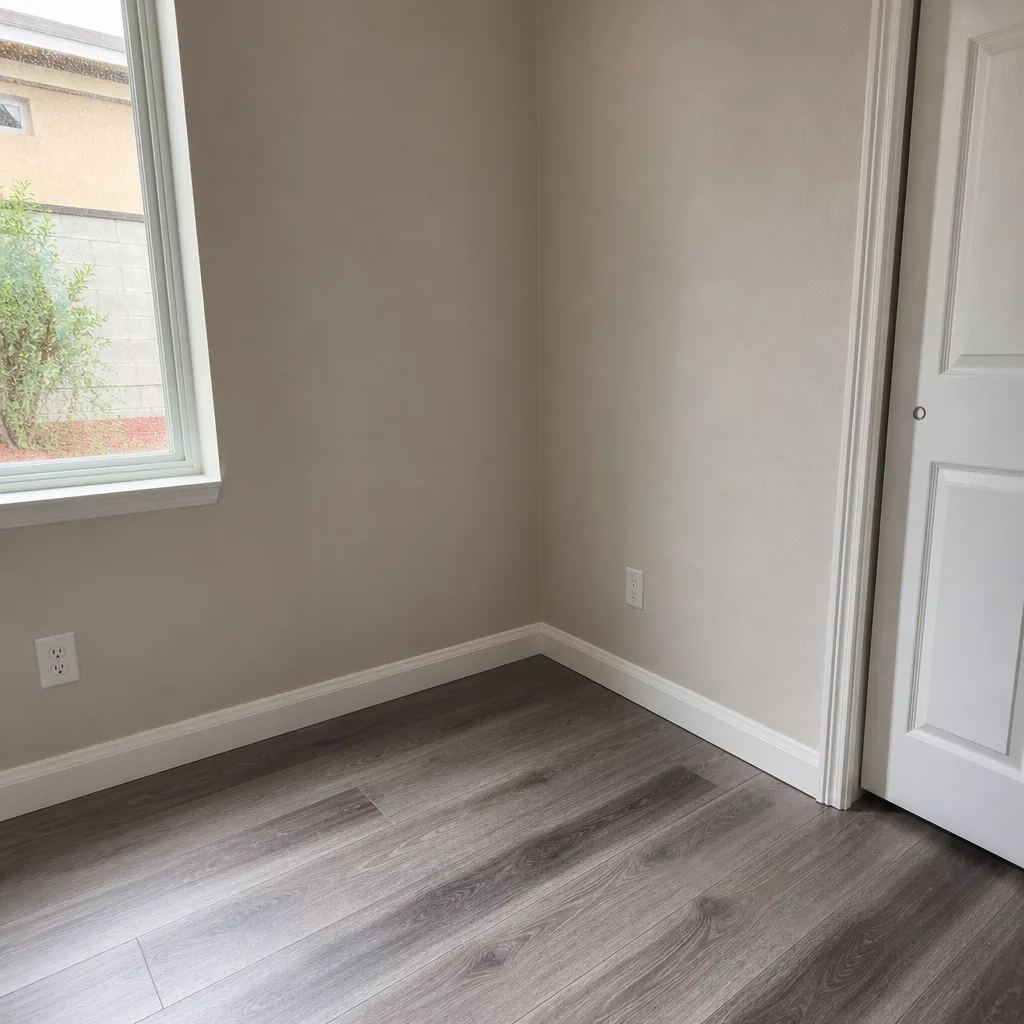 After
Common Water Damage Restoration Problems We See in Phelan Homes
- Well pump still running during mitigation. Crews unfamiliar with rural properties start extracting water before the pump is shut off. The water keeps feeding the leak, and the job doubles in scope. We always confirm the pump is offline before extraction begins.
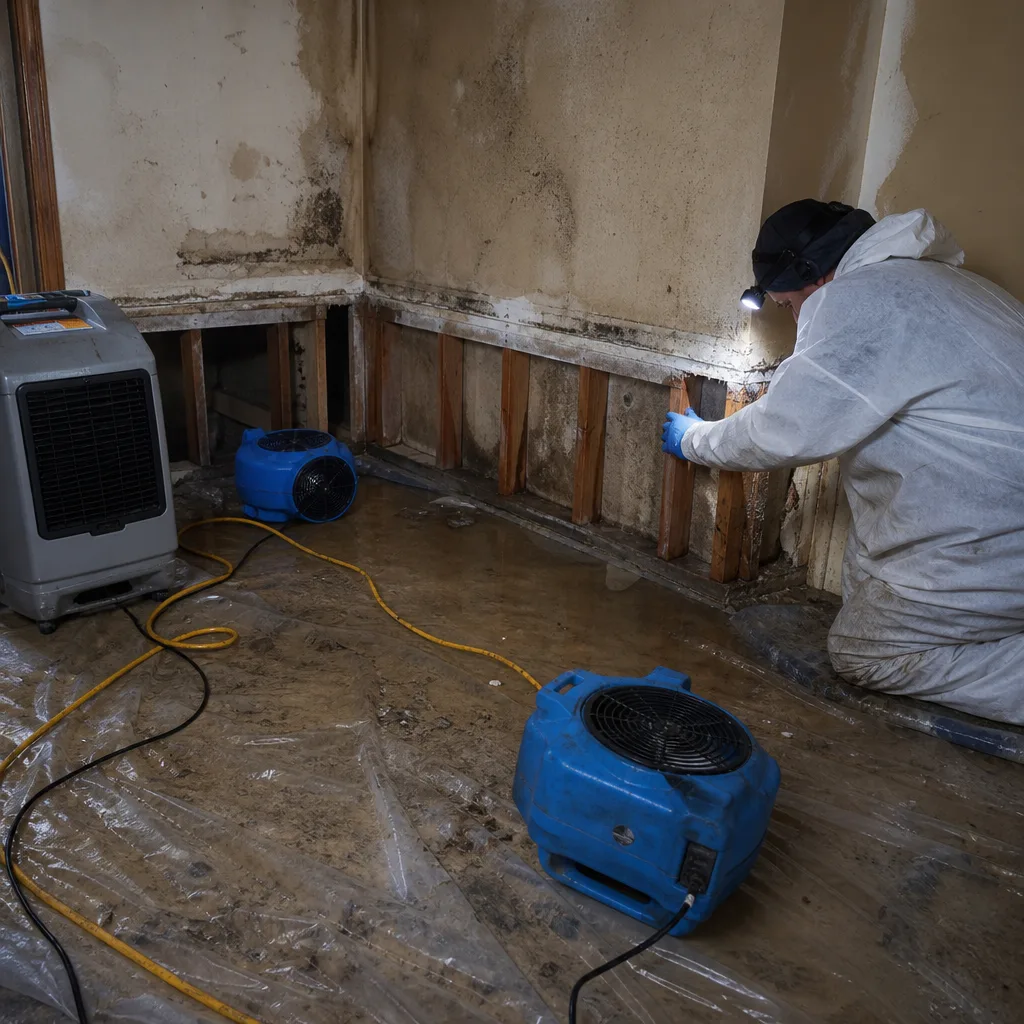
- Hidden moisture in manufactured home underbellies. The space beneath a manufactured home traps moisture like a plastic bag. Without moisture mapping and targeted drying, mold takes hold within 24 – 48 hours. This is the single most missed damage point we see in Phelan.
- Septic contamination turning a clean leak into Category 3 water. When a sewer line is disturbed or a septic tank backs up, water that looks dirty is actually a biohazard. Cross-contamination happens fast. We contain affected areas and treat them as hazardous from the start.
- Winter pipe bursts on exposed supply lines. Phelan winters drop below freezing at night. Pipes run through uninsulated crawlspaces or along exterior walls, and they split. The leak often goes unnoticed for hours, saturating flooring and insulation before anyone finds it.
Pricing for Water Damage Restoration in Phelan, CA
Water damage restoration pricing in Phelan is shaped by a few local realities. Because many homes use private wells, we may need to coordinate with a well-service company before extraction, which adds a coordination step but not necessarily cost. The bigger cost drivers are the size of the affected area, whether the water is Category 1 (clean), Category 2 (gray), or Category 3 (septic or sewage), and whether manufactured-home underbelly access is required. Here are practical ranges for common Phelan jobs:
- Emergency water extraction only: $450 – $900
- Full mitigation (extraction, drying, and monitoring) for a single room: $1,800 – $2,800
- Full mitigation for multiple rooms or a flooded basement: $2,800 – $5,500
- Manufactured home underbelly access and drying: $700 – $1,600 in addition to standard mitigation
- Category 3 water containment and antimicrobial treatment: $800 – $2,000 in addition to extraction and drying
Every job starts with a free estimate. Call (844) 878-6356 and we’ll walk you through what your specific situation is likely to cost, in plain terms, with no obligation.
We Also Serve Cities Near Phelan
Our crews work throughout the high desert and the surrounding foothills. In addition to our Water Damage Restoration in Phelan coverage, we serve Piñon Hills, Wrightwood, Oak Hills, and Hesperia. If your property sits between towns or you’re not sure which service area you fall into, call (844) 878-6356 and we’ll confirm coverage immediately.
Serving Phelan, CA — Our Local Coverage Area
We’re based in the Phelan area and know this community well. Use the map below to see our service coverage — if you’re nearby, we can almost certainly help.
FAQs About Water Damage Restoration in Phelan
A private well means the water supply doesn’t stop unless someone shuts off the pump. If a line ruptures or a pressure tank fails, water continues flowing until the pump is interrupted. That’s why our first coordination point on most Phelan jobs is the homeowner’s well-service company, not just the extraction crew. Once the pump is off, we can begin mitigation without fighting an active feed. Call (844) 878-6356 and we’ll help you get the right calls made in the right order.
No. Well water that has not contacted sewage, animal waste, or other contaminants is generally treated as Category 1 or Category 2 water, depending on whether it has passed through building materials or other soil. Well water from a burst line in a crawlspace may pick up soil and debris, which can push it toward Category 2. Category 3 water only applies when the source is sewage, septic backup, floodwater with contaminants, or standing water that has incubated bacteria. We test and classify water on site using industry standards before we choose a drying plan.
The underbelly is the biggest risk. Water travels under the floor joists and saturates insulation and the plastic vapor barrier, where it stays hidden. Homeowners often see a small stain on the floor or a slight soft spot, but the real damage is underneath. By the time mold becomes visible or the floor warps, the subfloor may need partial replacement. Our moisture mapping catches this early, and our Injectidry systems can dry underbelly cavities without tearing out the entire floor system.
When a septic system backs up or a line from the house to the tank leaks, the water is Category 3 and requires full containment. We isolate the affected area with physical barriers and negative air pressure, remove contaminated porous materials, and apply antimicrobial treatment before any drying begins. We also coordinate with the homeowner’s septic service provider to make sure the source of the backup is addressed before restoration proceeds. Skipping containment on a septic loss spreads contamination into clean areas of the home.
In many cases, yes. If the water is clean and we arrive before materials have started to break down, we can often dry finished basement walls and flooring in place using commercial dehumidifiers, air movers, and targeted Injectidry drying for cavities. The key is early response and accurate moisture mapping. Once drywall or carpet pad has been saturated for more than 48 – 72 hours, removal is usually the safer and more cost-effective route. We’ll give you an honest assessment of what can be saved and what can’t, based on measurements, not guesswork.
Written by Nolan Hester, Owner at Fresh Start Water Damage, serving Phelan and the high desert since 2015.