


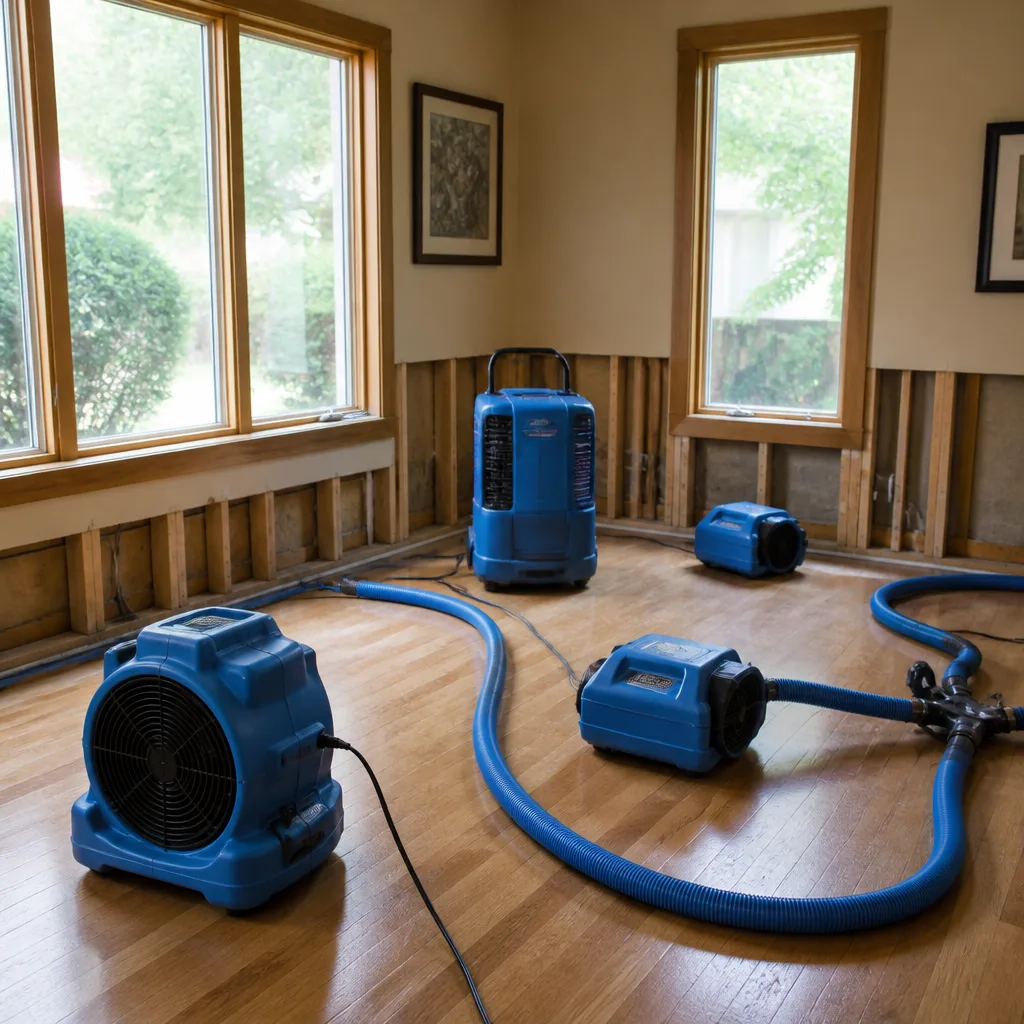
 Water damage drying
 Fire & smoke cleanup
 Mold remediation
 Storm response
 Sewage cleanup
 Reconstruction
Free visual inspection and a written scope of work before any mitigation begins - photos, moisture readings, and drying logs go in your claim file
The scope we write is the scope we bill. Anything new gets shown to you, in writing, before we touch it.
Get your free estimateFast, Reliable Water Damage Restoration Across Running Springs
When water is spreading through a Running Springs cabin, every hour matters. At 6,000 feet, a burst pipe or snowmelt leak doesn’t just damage floors, it soaks into wood siding, deck framing, and the older subfloors common to San Bernardino National Forest housing. Our Water Damage Restoration teams know the canyon roads, the unoccupied second-home risk, and the climate patterns that make this mountain community different from the flatlands below. Call (844) 878-6356 and you’ll get a straight answer, not a script. We serve all of 92382, from the Highway 18 corridor down to the narrower streets off Rim of the World Drive.
Why Fresh Start Water Damage Is Running Springs’s Preferred Water Damage Restoration Company
Running Springs homeowners call us because we treat a mountain cabin the way it deserves to be treated. Nolan Hester built Fresh Start Water Damage on a simple principle: show up with commercial-grade equipment, document everything, and never oversell a job. That matters in a community where many homes sit empty for weeks between visits. A leak that would be caught in a day down in Highland can run for three weeks in an unoccupied Running Springs cabin. By the time a neighbor or property manager notices, the water has often moved from Category 1 to Category 2 or Category 3.
Our crews are IICRC-certified and trained on equipment from Dri-Eaz, Phoenix, and Injectidry. We’re members of both the RIA and IFA, which means we answer to professional standards beyond just our own word. When we pull up to a Running Springs property, we carry enough equipment to handle steep driveway access and tight cabin layouts. And we do moisture mapping on every structural drying job. That’s not optional here. Water hides behind wood siding and under old deck boards, and skipping that step is how mold takes hold before the 24-to-48-hour window closes.
Our reputation in Running Springs is built one job at a time. Homeowners and the property managers who watch over the seasonal cabins here know our trucks, know our process, and know we answer the phone when a January cold snap causes damage. We serve Running Springs with crews who understand defensible-space rules, narrow road turnarounds, and older construction that doesn’t dry like newer sheetrock-and-stucco builds.
Restoration work we handle
Water Damage Repair in Running Springs
Water Damage Repair in Running Springs means putting a cabin back together after the water is out and the framing is dry. Most repair work here involves older materials: wood siding that swelled, subfloor that warped, baseboards that wicked moisture, and sometimes sections of deck framing that need replacement. The repair phase follows structural drying, and we coordinate the handoff so you’re not stuck calling a second contractor. For a typical Running Springs burst-pipe repair that includes drywall removal and replacement in a small bathroom or kitchen area, homeowners usually spend $1,200 to $3,400. Larger jobs involving saturated subfloor or multiple rooms run $4,000 to $9,000 or more.
Burst Pipe Aftermath in Cabins
Old copper supply lines and unheated crawl spaces are a bad combination. When a Running Springs cabin freezes, the pipe that bursts is often behind a wall or under the floor, meaning the water does its damage silently. Repairing that damage means cutting out wet insulation, drying the cavity properly, replacing damaged framing if needed, and rebuilding the surface. We’re not a general contractor, but our team manages the water-specific repair scope and can work alongside your chosen builder if the job extends into full reconstruction.
Subfloor and Deck Framing Repair
Water pooled under a cabin doesn’t dry on its own, especially in shoulder-season weather when temperatures hover and humidity stays high. We frequently remove sections of subfloor in Running Springs homes to expose and dry the joists beneath. If the wood has started to rot or delaminate, we’ll cut out the bad section and sister in new framing before the flooring goes back. This is the repair that catches people off guard, because the floor surface looks fine from above for weeks while the damage underneath compounds.
Water Mitigation in Running Springs
Water Mitigation in Running Springs is the emergency response phase: extraction, containment, and structural drying that stops ongoing damage and prevents mold. In this mountain town, mitigation usually begins with a rushed trip up the highway because a neighbor noticed water running out from under a garage door or a property manager found a soaked rug during a walkthrough. Typical mitigation work on a Running Springs cabin with a burst supply line and one soaked room runs $1,800 to $4,200. Larger events involving multiple rooms, crawlspace water, or subfloor saturation range from $5,000 to $12,000.
Extraction and Containment on Mountain Jobs
Getting water out of a cabin fast means carrying equipment up stairs, around tight corners, and sometimes across snow-packed driveways. Our Dri-Eaz extraction units are portable enough for steep access. We set containment around affected areas so drywall demolition doesn’t spread contaminated dust through a house that’s otherwise clean. On mountain jobs, we also seal off eave and deck gaps that can reintroduce moisture during the drying process.
Injectidry for Wall Cavities Without Demo
Many Running Springs cabins have wood paneling or custom millwork that’s expensive and difficult to replace. Injectidry systems let us dry wall cavities and subfloor spaces by forcing controlled airflow through small access points, which means we don’t have to tear out every wet wall. This targeted approach reduces demolition, preserves original cabin character, and cuts rebuild costs. We use Injectidry on every job where the assembly can be dried in place safely.

Trusted Brands We Service in Running Springs
Running Springs homes don’t follow a single template. Some were built in the 1950s with cedar siding; others went up in the 1990s with builder-grade materials that age differently. Our team works with all of it, and we stock the consumables that matter for mountain jobs: moisture barriers, drying logs, containment materials, and the specialized fittings for Injectidry panels. We don’t have to run down to the valley for basics. That keeps mitigation timelines tight, which matters when the mold clock is running. Our approach is certified by IICRC and reinforced through ongoing RIA and IFA training.
See the difference
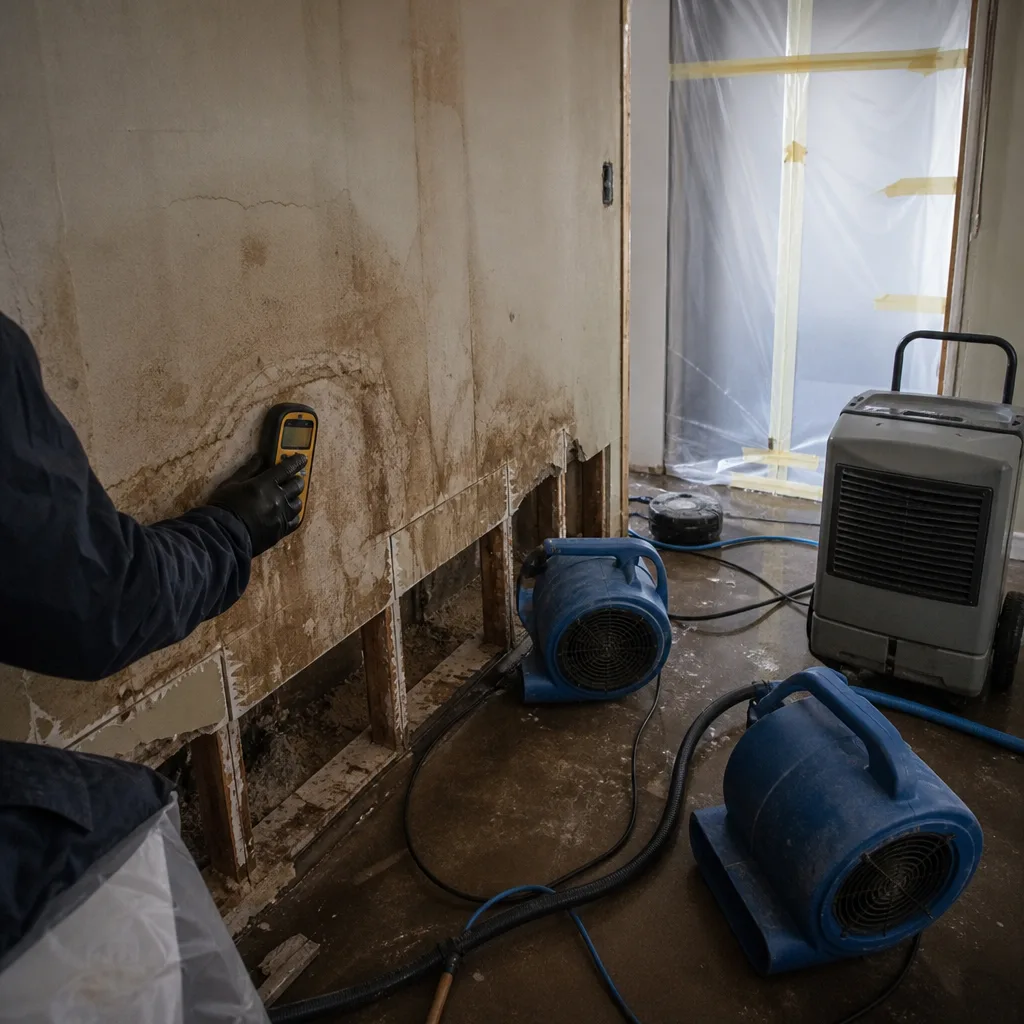 Before
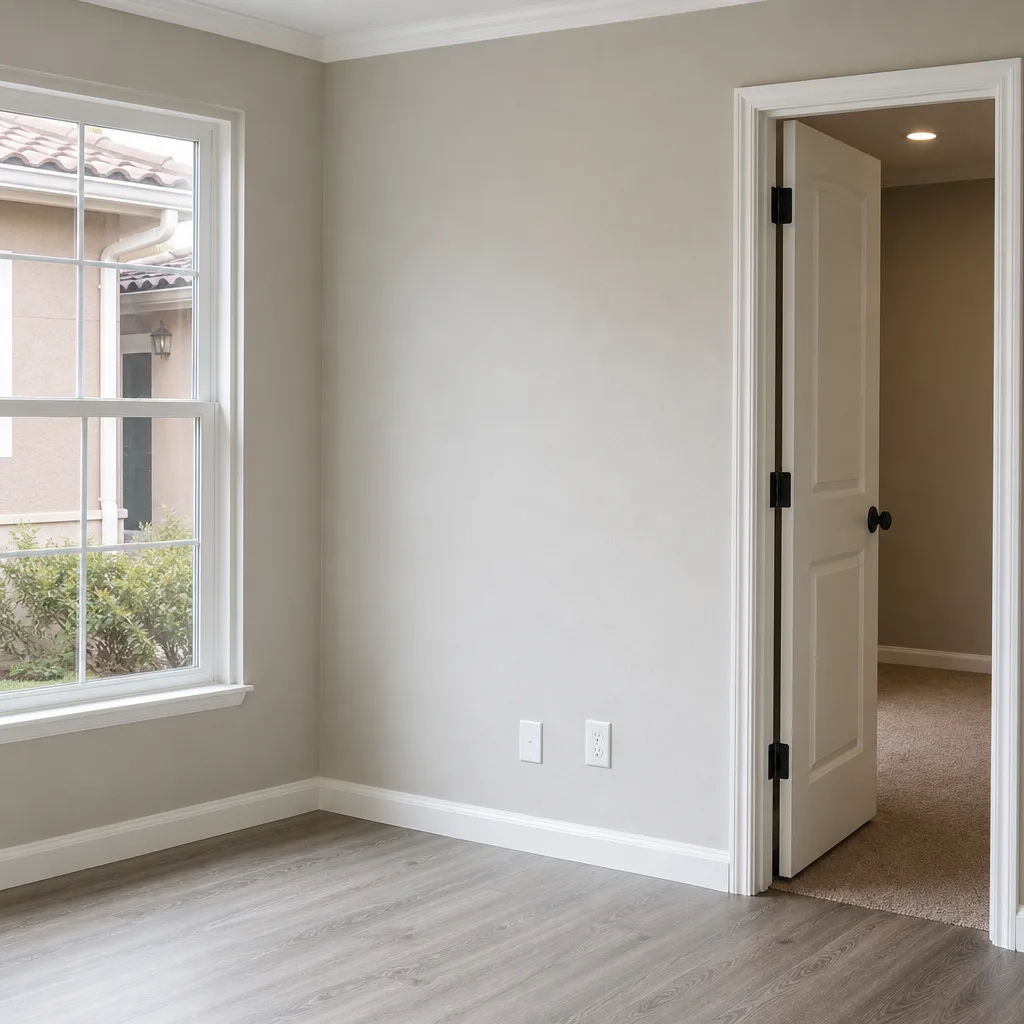 After
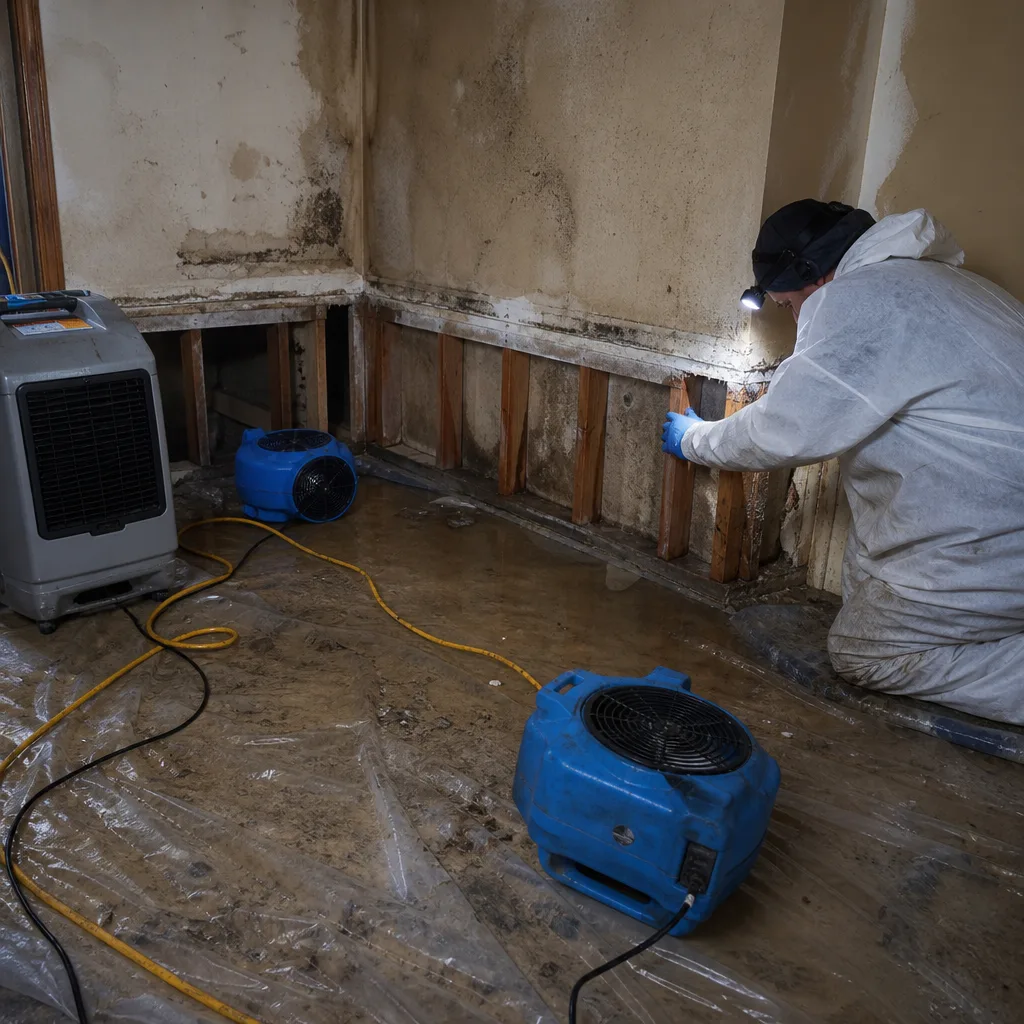 Before
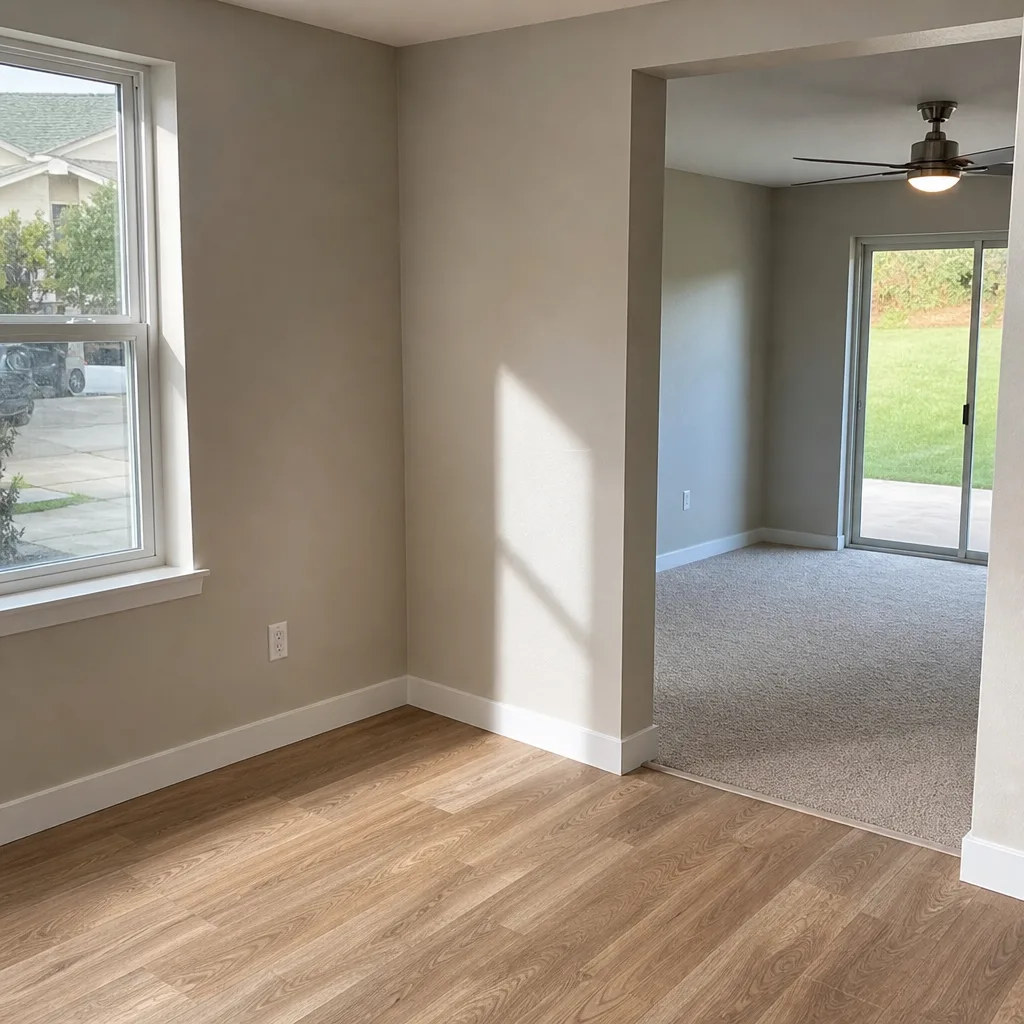 After
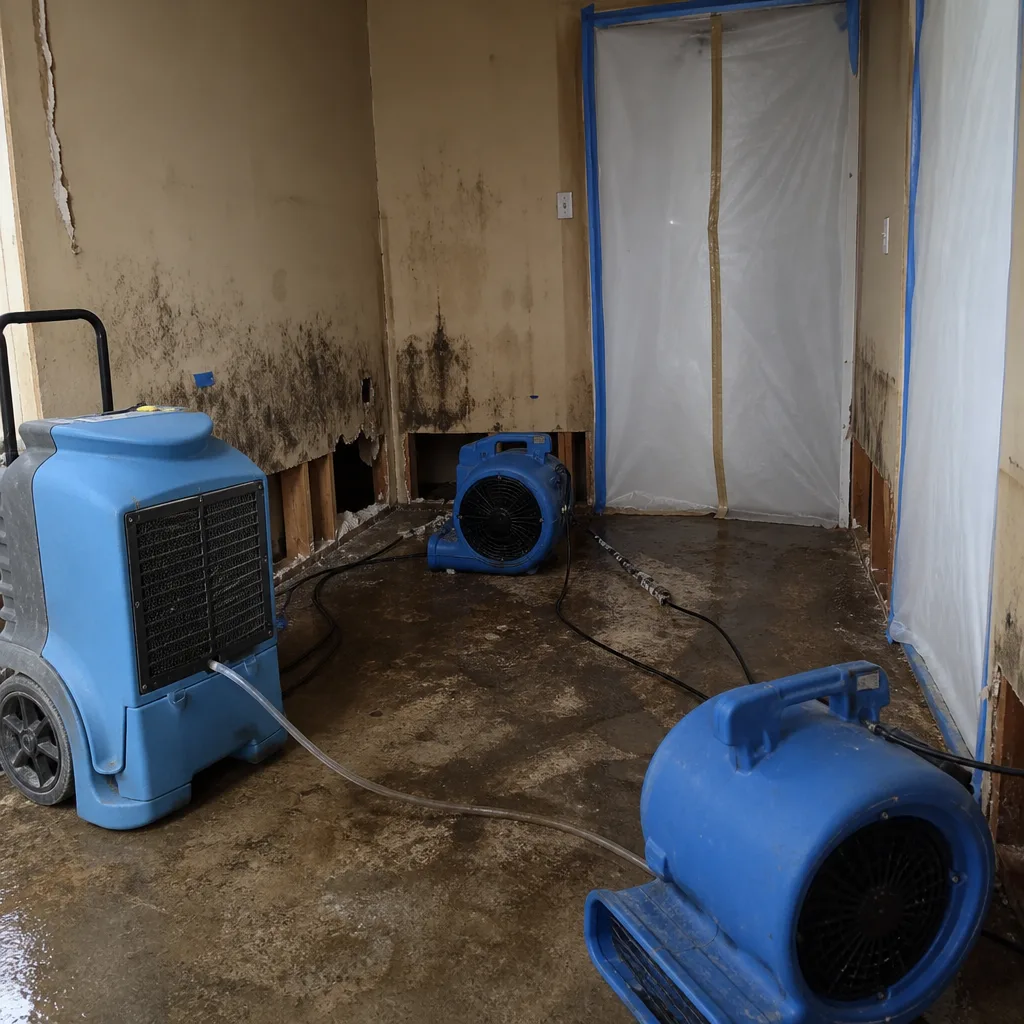 Before
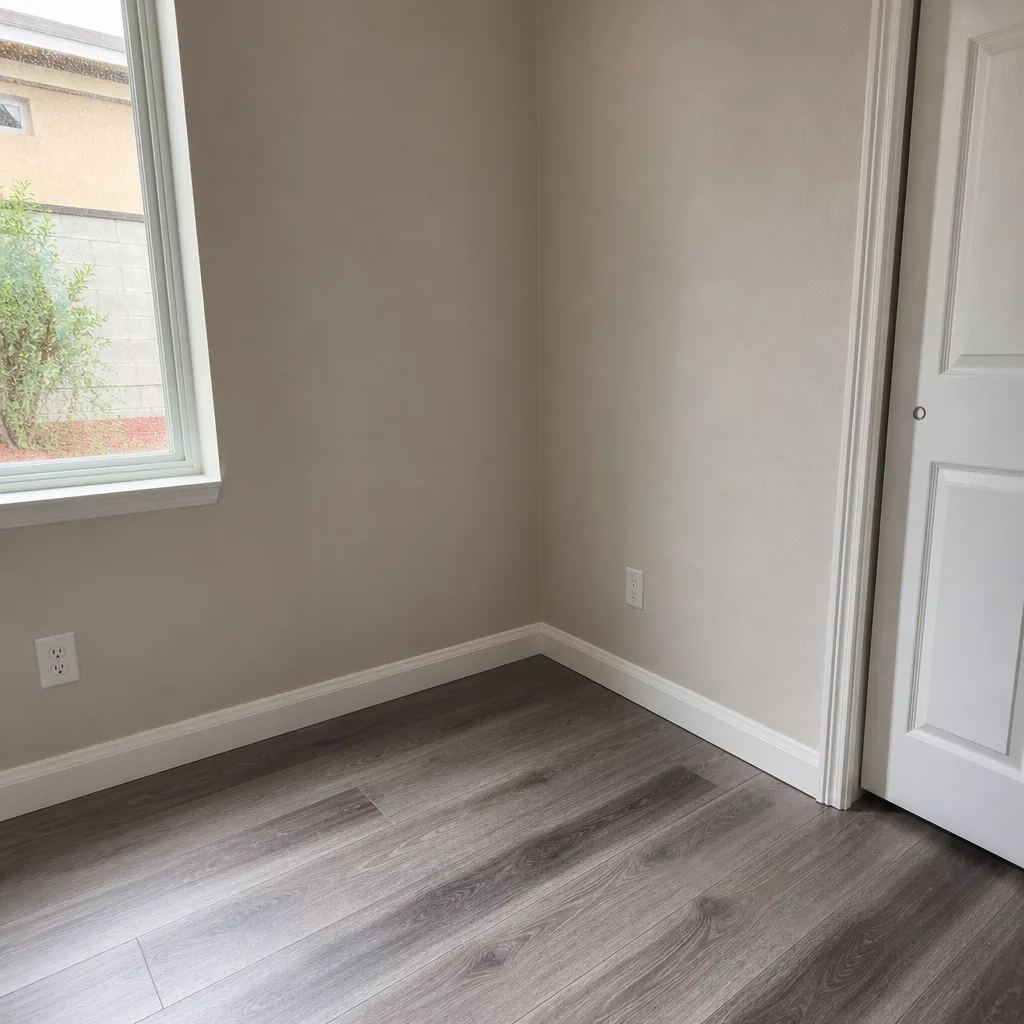 After
Common Water Damage Restoration Problems We See in Running Springs Homes
- Unoccupied-cabin leaks that run for weeks. A second home in Running Springs can sit empty from Thanksgiving to spring break. A slow supply-line leak during that window turns Category 1 clean water into Category 2 or 3 contamination before anyone opens the door. This is the single most common call pattern we see in 92382.
- Frozen pipes in older plumbing systems. Many cabins still run original copper or galvanized supply lines through uninsulated crawl spaces and exterior walls. A hard freeze around 15 degrees with wind will split a pipe that’s been fine for 40 years. The aftermath hides behind wood siding and paneling.
- Snowmelt and roof-leak damage in spring. Ice dams form along roof edges, melt refreezes under shingles, and water finds its way into eave gaps and deck framing. By spring, the damage has saturated wood that’s been cold and wet for months. Moisture mapping catches what a visual inspection misses.
- Post-fire smoke, ash, and suppression-water intrusion. Running Springs sits in the San Bernardino National Forest. After a nearby fire, ash and ember residue force through eave gaps and deck boards. If sprinkler systems or firefighting suppression water got into the home, we’re dealing with water damage and smoke contamination in the same job.
Pricing for Water Damage Restoration in Running Springs, CA
Here’s what you can expect to budget for water damage work in Running Springs. Emergency water extraction alone runs $600 to $1,800 depending on the size of the affected area and access difficulty. Full mitigation, including containment, drying equipment placement, and daily monitoring, runs $1,800 to $4,200 for a single-room event. For repair work after drying, small-scale projects like baseboard replacement and drywall patching start around $800 to $2,000, while full subfloor and wall-cavity repairs in cabins run $3,000 to $9,000. The biggest cost driver on mountain jobs is how long water sat undetected. Weeks-long exposure means more demolition, more drying time, and more reconstruction. We always provide a written scope before mitigation or repair work begins. Call (844) 878-6356 for a free estimate specific to your Running Springs property.
We Also Serve Cities Near Running Springs
Our crews work regularly in Lake Arrowhead, Highland, Mentone, and Crestline. Whether you’re in a slope-side cabin near Crestline or a residential neighborhood in Highland, our team brings the same IICRC-certified process and commercial-grade drying equipment to the job. Call (844) 878-6356 and tell us what you’re dealing with.
Serving Running Springs, CA — Our Local Coverage Area
We’re based in the Running Springs area and know this community well. Use the map below to see our service coverage — if you’re nearby, we can almost certainly help.
FAQs About Water Damage Restoration in Running Springs
Mold can begin growing within 24 to 48 hours when moisture is present and temperatures stay above about 50 degrees. In an unoccupied Running Springs cabin, the problem is that the leak usually starts days or weeks before anyone knows. By the time we arrive, mold is often already active in wall cavities, under subfloor, and along wood siding that’s been wet for weeks. This is why we recommend seasonal homeowners have someone check the property during winter months, and why we treat water damage in unoccupied cabins as an urgent Category 2 or 3 situation from the first inspection. Call (844) 878-6356 if you’re unsure what you’re looking at.
Running Springs sits at roughly 6,000 feet. Cold winters cause freeze-thaw cycles that split pipes, spring snowmelt works through roof edges, and the long dry season carries wildfire smoke and embers into eave gaps. Homes here are often wood-sided cabins with older subfloor and deck framing, not stucco-and-tile builds where water beads up on surfaces. That means drying takes longer, moisture hides deeper, and the 24-to-48-hour mold window is harder to beat when equipment has to be carried up steep driveways. A flatland crew that skips moisture mapping or doesn’t understand mountain construction makes mistakes that cost thousands later.
We classify water by its source and contamination level. Category 1 comes from a clean supply line or faucet. Category 2 has some contamination, often from water that sat for more than 48 hours or passed through building materials. Category 3 is grossly contaminated, including sewage, floodwater, or standing water that picked up bacteria from soil and organic material. In Running Springs cabins that sat unoccupied with a leak for weeks, Category 1 water almost always degrades to Category 2 or 3 before we’re called. That changes our containment and sanitation protocols, and it’s why we inspect and document everything with photo records we can share with your insurer.
Yes, and this is common in Running Springs. When firefighting crews work a nearby wildfire, suppression water sometimes enters homes through roof vents, eave gaps, or deck boards. At the same time, smoke and fine ash push through those same gaps under pressure and settle into insulation, ductwork, and wall cavities. We assess both conditions together because drying a home with smoke-impacted materials requires different containment and air-scrubbing than a clean water job. Our team handles water damage first to stop structural deterioration, then addresses smoke residue as part of the full restoration scope.
Fresh Start Water Damage handles water mitigation and water damage repair, not plumbing line replacement. We’ll extract the water, dry the structure, remove damaged materials, and rebuild the water-affected surfaces. For the pipe itself, we’ll recommend a licensed plumber in the Running Springs area and coordinate with them so the job moves without a gap. What we won’t do is dry a house and leave a leaking pipe in place. We stay on the job until the source is fixed and the structure is ready for repair. Call (844) 878-6356 to talk through your situation.
If you’ve got water spreading through a Running Springs cabin or a second home that’s been sitting wet, don’t wait. Call Fresh Start Water Damage at (844) 878-6356. We’ll walk you through what’s happening, give you a straight answer on the likely scope, and get a crew up the mountain with commercial-grade drying equipment. Written scopes, photo documentation, and one team for water, mold, and fire. That’s the Fresh Start way.
Written by Nolan Hester, Owner at Fresh Start Water Damage, serving Running Springs and the San Bernardino Mountains with IICRC-certified restoration since day one.