
Last updated October 30, 2026
 Water damage drying
 Fire & smoke cleanup
 Mold remediation
 Storm response
 Sewage cleanup
 Reconstruction
Free visual inspection and a written scope of work before any mitigation begins - photos, moisture readings, and drying logs go in your claim file
The scope we write is the scope we bill. Anything new gets shown to you, in writing, before we touch it.
Get your free estimateChoosing the Right Damage Restoration Brand: A Buyer’s Guide for Temecula
Here’s something most Temecula homeowners don’t realize until it’s too late: several of the most heavily advertised restoration brand names rolling through Murrieta Hot Springs Road and Temecula Parkway are independently owned franchises. The logo on the truck is licensed. The training, equipment, and technician quality are whatever that franchise owner decided to pay for. This guide and our Complete Guide to Damage Restoration in Temecula explain why the structural difference between franchise operators and independent restoration companies matters more than the name painted on the van, and how to verify you’re hiring actual technical competence in Temecula before water spreads, mold colonizes, or smoke odor sets into drywall.
Quick Answer
The best damage restoration brand in Temecula is not the one with the biggest marketing budget or the most recognizable franchise logo. It’s the company whose individual technicians hold current IICRC certifications you can verify publicly, whose equipment is commercial-grade and company-owned, and whose operation is structurally accountable to you as a local business, not a distant franchisor. When comparing brands, verify technician-level certification, ask directly about equipment ownership and drying documentation protocols, and confirm the same team handles water, mold, and fire scope rather than subcontracting each discipline to unfamiliar crews.
Restoration work we handle
Table of Contents
- Franchise vs. Independent: Why the Business Model Affects Your Restoration
- The Five Certification Levels That Matter at the Technician Level
- What Equipment Ownership Reveals About a Restoration Company
- How to Read Restoration Reviews for Technical Competence
- Why One-Roof Multi-Service Coverage Matters in Temecula
- Questions to Ask Before You Sign Anything
- Common Mistakes to Avoid
- When to Call a Professional
Franchise vs. Independent: Why the Business Model Affects Your Restoration
When a Temecula homeowner searches for “best damage restoration company Temecula CA,” the results page is dominated by national franchise brands. That’s not an accident of quality. It’s an accident of marketing budgets. Franchise restoration companies pay royalties and advertising fund contributions to a parent corporation in exchange for brand recognition and lead generation. The actual service you receive depends entirely on the local franchisee’s investment decisions.
Here’s the distinction that actually matters: an independent restoration company in Temecula owns its equipment, employs its own technicians, and answers directly to you and the local community when something goes wrong. A franchise operator answers to a franchise agreement first. If the franchisee cuts corners on equipment purchases or hires uncertified labor to protect margins, the national brand has limited enforcement power and zero incentive to publicize the problem.
In our experience serving Temecula since 2017, we’ve walked into homes where a previous restoration attempt failed not because the brand was bad, but because the local franchisee had underinvested in drying equipment and was circulating consumer-grade dehumidifiers that couldn’t achieve the moisture removal rates Temecula’s clay-heavy soils and summer heat demand. The brand name on the invoice didn’t prevent the secondary damage.
How to Determine Which Model You’re Actually Hiring
- Ask directly: “Are you a franchise location or an independent company?” The answer should be immediate and unambiguous.
- Check the technician’s certification, not the company’s. A franchise website may list corporate credentials while the local crew rotates through uncertified labor. Ask for the specific technician’s name and IICRC number before they arrive.
- Verify the physical presence. Does the company have a real Temecula address, or a UPS store mailbox? Franchise territory assignments can shift. An independent operator who owns a warehouse full of drying equipment in Riverside County has made a capital commitment that a mailbox operator hasn’t.
- Ask who resolves disputes. With an independent, the owner is reachable locally. With a franchise, escalation often goes to a corporate call center in another state.
The structural question comes down to accountability. When the person you hired is the person who owns the equipment and signs the checks, the incentive to do the job correctly the first time is direct and personal. That’s not a marketing claim. It’s how local business works.
The Five Certification Levels That Matter at the Technician Level
The IICRC certification that matters is the one held by the individual technician doing the work, not the one listed on the corporate website. A company can claim IICRC affiliation while sending uncertified workers to your Temecula property. Here are the five technician-level certifications that actually indicate competence in damage restoration, and how to verify them in under two minutes.
- WRT (Water Damage Restoration Technician) – The foundational certification for water extraction, structural drying, and moisture measurement. A technician without WRT does not understand how to dry a structure without causing secondary damage.
- ASD (Applied Structural Drying) – Advanced certification focused on drying complex structures, including wall cavities, subfloors, and multi-level homes. Temecula’s two-story tract homes and hillside properties frequently require ASD-level knowledge to dry properly.
- AMRT (Applied Microbial Remediation Technician) – Covers mold remediation protocols, containment procedures, and safe handling of contaminated materials. Essential for any technician touching mold in Temecula’s older neighborhoods like Paloma del Sol or Rancho Highlands, where stucco exteriors can trap moisture behind walls.
- FSRT (Fire and Smoke Restoration Technician) – Addresses smoke odor removal, soot cleaning, and structural cleaning after fire damage. Fire restoration requires different chemistry than water or mold work.
- OCT (Odor Control Technician) – Specialized credential for identifying and eliminating odor sources, critical for fire jobs and sewage backups where smell is the primary complaint.
How to Verify IICRC Certification in Under Two Minutes
- Go to the IICRC’s public locator at iicrc.org/locate-a-certified-professional.
- Enter the technician’s full name and city.
- Confirm their certifications match what the company claimed.
- Check the certification dates. IICRC credentials require continuing education to maintain. A certification from 2018 with no renewal is not current.
Fresh Start Water Damage operates as an IICRC-certified restoration company, and we’re happy to provide technician names and certification numbers before any job begins. Ask any restoration company in Temecula to do the same. If they hesitate, that hesitation is information.
What Equipment Ownership Reveals About a Restoration Company
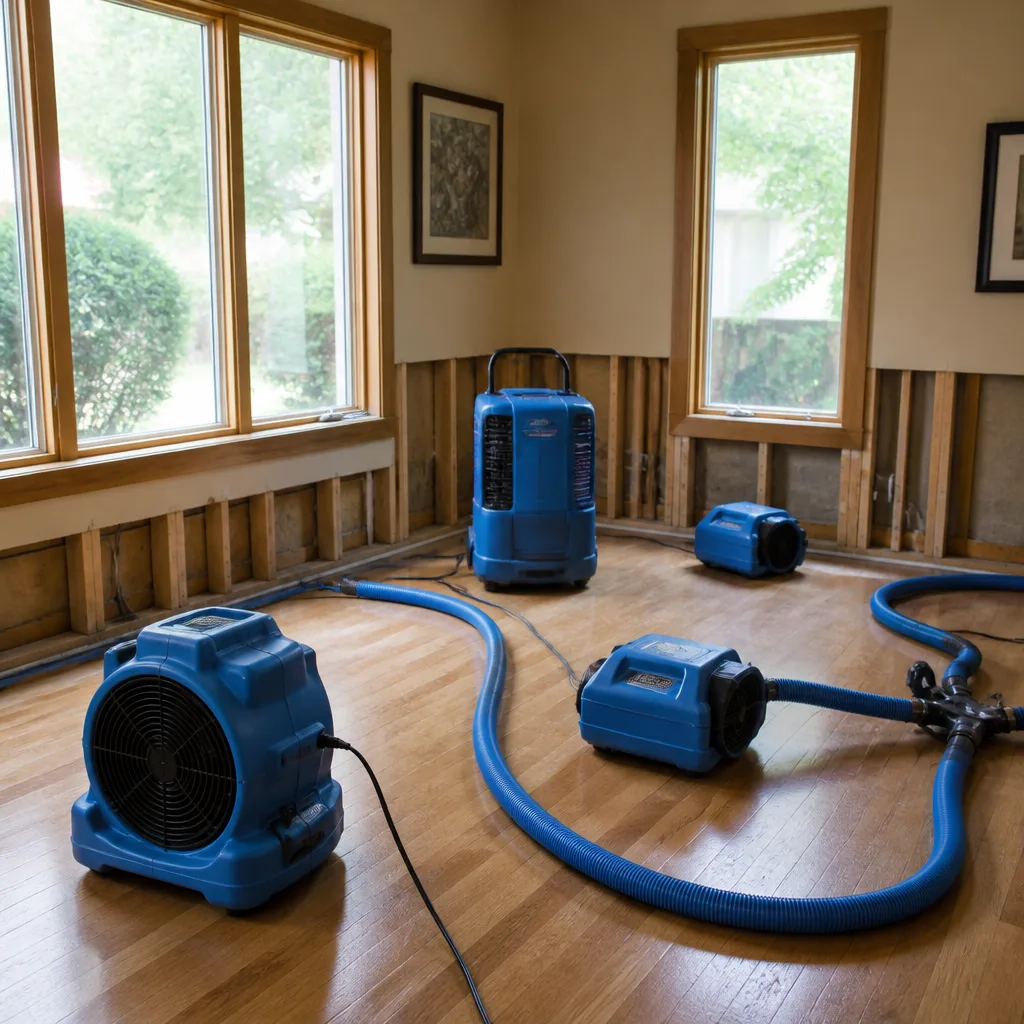
A contractor who owns industrial desiccant dehumidifiers, thermal imaging cameras, and negative air machines has made capital investments that indicate permanence and seriousness. A contractor who rents equipment per job, or worse, uses consumer-grade machines from Home Depot, has made no such commitment. The distinction shows up directly in your drying results.
Commercial restoration equipment is expensive. A single Phoenix desiccant dehumidifier can cost thousands of dollars. Industrial air movers from XPOWER and B-Air run hundreds each. Thermal imaging cameras from FLIR or Fluke add thousands more. A restoration company serving Temecula that owns a full inventory of this equipment has invested tens of thousands of dollars in its ability to do the job right. That’s a structural signal of permanence that a franchise agreement or a marketing budget cannot replicate.
What to Ask About Equipment
- Do you own or rent your drying equipment? Ownership means the equipment is maintained, calibrated, and available immediately. Rental introduces delays and variable quality.
- What specific brands do you run? Listen for names like Dri-Eaz, Phoenix, XPOWER, and B-Air. These are the commercial-grade systems used by top-tier restoration crews, not the units available for weekend rental.
- Do you use specialty drying systems for wall cavities and subfloors? Injectidry systems are the industry standard for targeted drying without unnecessary demolition. If a contractor doesn’t know what Injectidry is, they’re likely planning to tear out drywall that could have been saved.
- Do you document drying progress with moisture readings? A professional restoration company records moisture measurements daily and adjusts equipment placement based on data, not guesswork.
In Temecula’s climate, where summer temperatures regularly exceed 100 degrees and humidity swings between 20% in August and 70% during winter rain events, proper drying requires equipment that can handle both extremes. Consumer-grade machines simply cannot move enough air or remove enough moisture to dry a structure within professional standards. The result is hidden moisture trapped in wall cavities and under flooring, which becomes a mold problem months after the visible water is gone.
How to Read Restoration Reviews for Technical Competence
Most restoration reviews are useless for evaluating technical quality. A five-star review that says “They were nice and polite” tells you nothing about whether the home was actually dried correctly. A one-star review that mentions “they left my house wet” tells you everything. Here’s how to read restoration reviews in Temecula for signals of genuine technical quality rather than generic satisfaction.
Signals That Indicate Real Technical Competence
- Mention of moisture readings: Reviews that reference technicians taking moisture measurements, recording numbers, or discussing drying goals indicate a systematic process was followed.
- Equipment specificity: Reviews that mention specific equipment types like “they set up industrial dehumidifiers and air movers” or “they used a thermal camera” suggest the reviewer understood the technical scope of the work.
- Drying log references: Reviews that mention the company showing daily drying progress or explaining why equipment was being repositioned indicate documentation protocols were followed.
- Mold containment details: Reviews that mention containment barriers being erected, negative air pressure being used, or technicians wearing proper PPE indicate mold remediation was performed to protocol, not just spray-and-pray.
- Fire job specificity: Reviews that mention ozone treatment, hydroxyl generators, or specific odor removal methods indicate the company understands fire restoration chemistry.
Red Flags in Restoration Reviews
- Generic praise only: “They were professional and friendly” without any technical detail often indicates the reviewer couldn’t evaluate the actual work quality.
- No mention of drying equipment: If a water damage review doesn’t mention any equipment being set up, the company may have relied on surface extraction alone, which is insufficient for structural drying.
- Complaints about hidden fees: Restoration pricing should be documented and transparent. Reviews mentioning surprise charges indicate scope creep without written authorization.
- Multiple reviews from the same timeframe: A sudden burst of five-star reviews from accounts with no other activity can indicate review manipulation.
Take the time to read the negative reviews carefully. In restoration, the negative reviews are where you’ll find the truth about a company’s technical practices. A company with 4.8 stars and three reviews mentioning unresolved mold issues is more concerning than a company with 4.5 stars and detailed technical praise from homeowners who clearly understood what was done to their property.
Why One-Roof Multi-Service Coverage Matters in Temecula
Water damage in Temecula rarely stays water damage. A supply line failure on a second-story laundry room in a Paseo del Sol home becomes a ceiling collapse on the floor below, which becomes mold in the wall cavity, which becomes a drywall replacement project that exposes wiring damage. Each of those phases is technically a different discipline. When you hire a water damage contractor who subcontracts mold remediation to one company and reconstruction to another, you inherit three separate scopes, three separate documentation chains, and three separate points of failure.
A one-roof operation like Fresh Start Water Damage handles water damage restoration in Temecula, mold remediation in Temecula, and fire damage restoration in Temecula with the same certified team managing the full restoration arc. The coordination failures we’ve seen from multi-contractor approaches include:
- Drying stopped too early: The water contractor finishes their scope, removes equipment, and the mold contractor arrives to find the structure wasn’t actually dry. Who is responsible for the resulting mold? Both point at the other.
- Documentation gaps: Insurance adjusters need continuous documentation from initial loss through final drying. When subcontractors hand off work, moisture readings, drying logs, and photo documentation get lost in the transition.
- Scope disputes: The mold contractor identifies additional damage the water contractor missed. The homeowner is caught in the middle, with no single point of accountability for the complete restoration.
- Equipment inconsistencies: The water contractor runs commercial-grade drying systems, but the mold subcontractor uses consumer-grade fans and a hardware store spray. The mold treatment fails because the initial drying was never verified.
Temecula’s housing stock makes this coordination burden worse. Many homes in neighborhoods like Chardonnay Hills and Vintage Hills were built during the 1990s and early 2000s boom, with stucco exteriors, tight wall cavities, and multiple levels that complicate drying. A coordinated, single-team approach with shared documentation and consistent equipment is not a convenience. It’s the difference between restoration and repeated restoration.
Questions to Ask Before You Sign Anything
Before you sign any restoration agreement in Temecula, ask these questions directly. A professional restoration company will answer all of them without hesitation. A company that hedges, deflects, or promises to “get back to you” is telling you something important.
- What are the specific IICRC certifications of the technicians who will be doing the work? Ask for names and certification numbers. Verify them publicly before you sign.
- Do you own your drying equipment or rent it? Listen for specific brand names: Dri-Eaz, Phoenix, XPOWER, B-Air. Generic answers like “industrial-grade” without specifics indicate a rental operation.
- Do you use Injectidry or similar specialty drying systems for wall cavities and subfloors? If they don’t know what Injectidry is, they’re planning demolition, not drying.
- Will you document drying progress with daily moisture readings and provide me copies? Drying logs are your proof that the work was done correctly. A company that doesn’t document is a company you can’t hold accountable.
- Who will handle mold if it’s discovered during water restoration? If the answer is “we’ll bring in a mold specialist,” ask who that is, what their credentials are, and whether the same documentation chain will be maintained.
- What is your written scope of work process? The scope should be documented, signed, and updated as conditions change. No verbal changes, no surprise invoices.
- Are you a franchise or an independent company? If franchise, ask which location you’re actually working with and who owns it.
- How do you handle insurance documentation? The company should provide photo documentation and moisture readings suitable for adjuster review. This is not the same as insurance claims management, but proper documentation supports your claim.
These questions take five minutes to ask. They save months of problems. For additional guidance, see our more guides & resources. A restoration company that welcomes these questions is demonstrating the transparency that matters when someone is working inside your walls.
Common Mistakes to Avoid
- Hiring the first company that answers the phone. In an emergency, speed feels like the priority. But restoration companies that answer 24/7 are common in Temecula. The one that can answer your certification, equipment, and documentation questions before dispatching is the one worth waiting an extra 20 minutes for.
- Assuming a national franchise name equals national quality standards. The franchisee bought the right to use the logo. They did not necessarily buy the training, equipment, or quality control that built the brand’s reputation. Verify the local franchisee’s actual practices.
- Skipping the IICRC verification step. Two minutes on the IICRC public registry can reveal whether the technician showing up actually holds the certifications the company claims. Most Temecula homeowners never check.
- Accepting “we’ll tear that out and replace it” as the default answer. Targeted drying systems like Injectidry can often save drywall, subfloors, and wall cavities that demolition-happy contractors would remove. Replacement is sometimes necessary, but it should be justified by moisture data, not convenience.
- Not asking who handles mold if it’s found. Water restoration frequently uncovers mold. If your water contractor doesn’t have a clear mold remediation plan with certified technicians and containment protocols, you’ll be scrambling to find a second contractor mid-project.
- Focusing on price rather than documentation. The cheapest restoration quote often comes from a contractor who cuts corners on equipment, documentation, or labor. In restoration, the cheapest quote frequently becomes the most expensive project after secondary damage appears.
- Ignoring review technical signals. A five-star rating with no technical detail in the reviews tells you nothing about restoration quality. Read the negative reviews first. Look for technical specificity. Generic praise is not evidence of competence.
When to Call a Professional
Some restoration situations require professional intervention immediately. A supply line failure that has been running for hours, water migrating through multiple rooms or levels, visible mold growth larger than a few square feet, sewage backup, or any fire damage that penetrated walls or left smoke odor all demand certified professional response. Temecula’s summer heat accelerates mold growth; a wet wall cavity can begin colonizing within 24 to 48 hours when temperatures climb. If you can smell mustiness but can’t see the source, the problem is behind a wall or under flooring, and DIY drying will not reach it. Fresh Start Water Damage offers free estimates in Temecula. Call (844) 878-6356 and we’ll tell you honestly whether you have a professional-grade problem or a manageable one.
See the difference
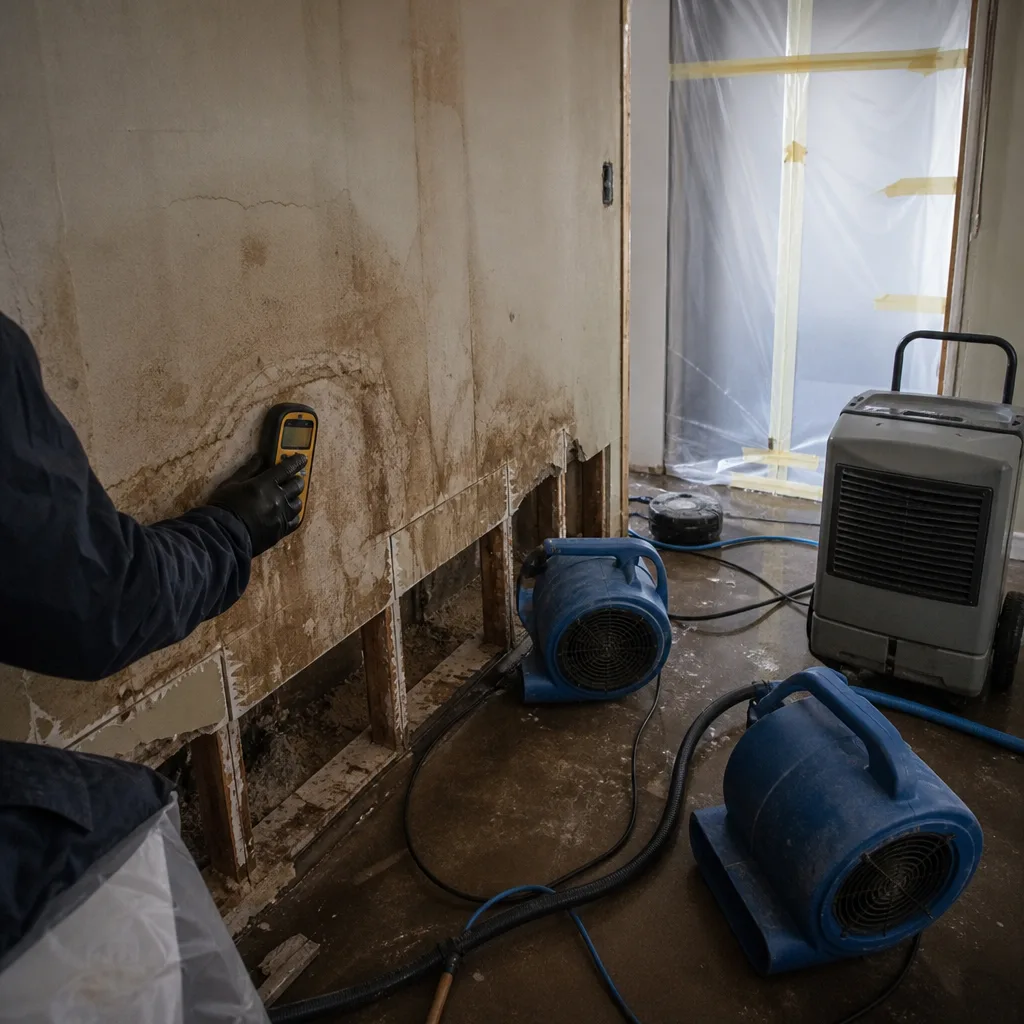 Before
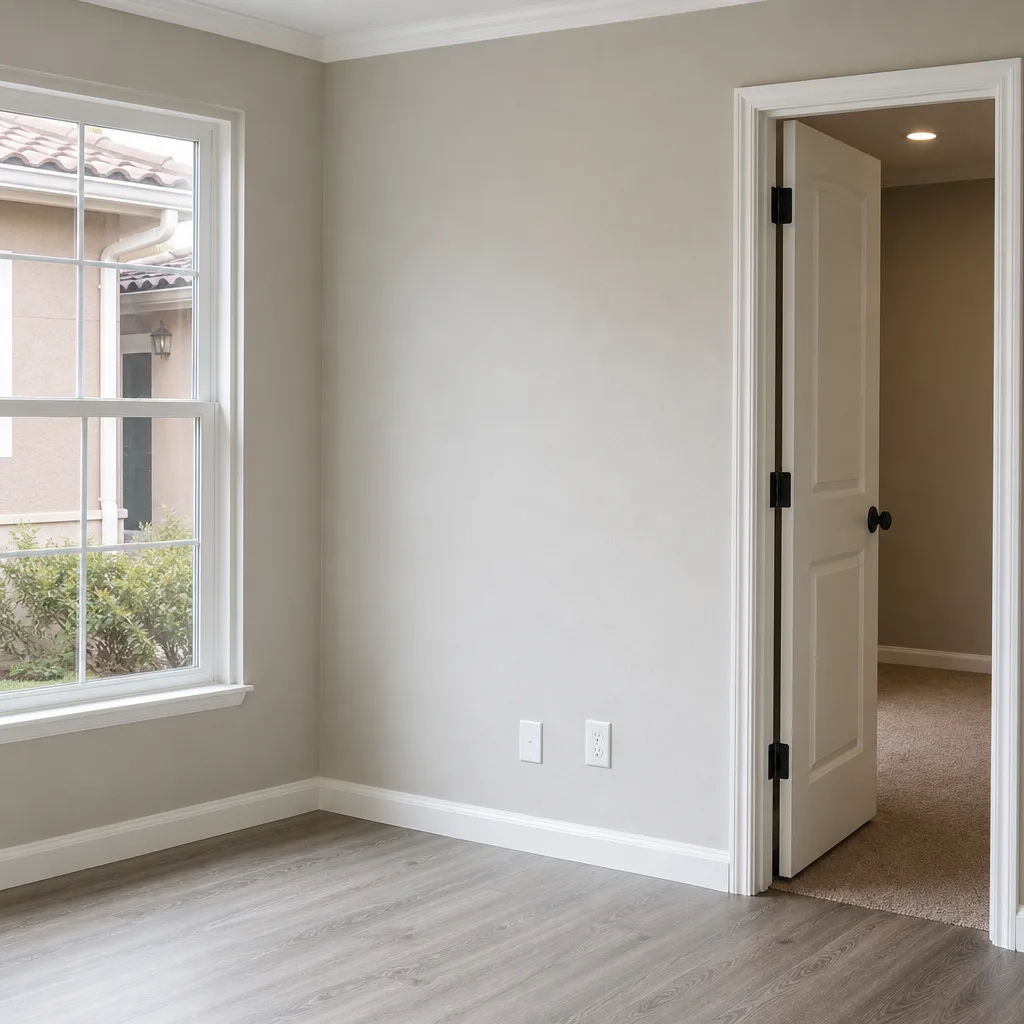 After
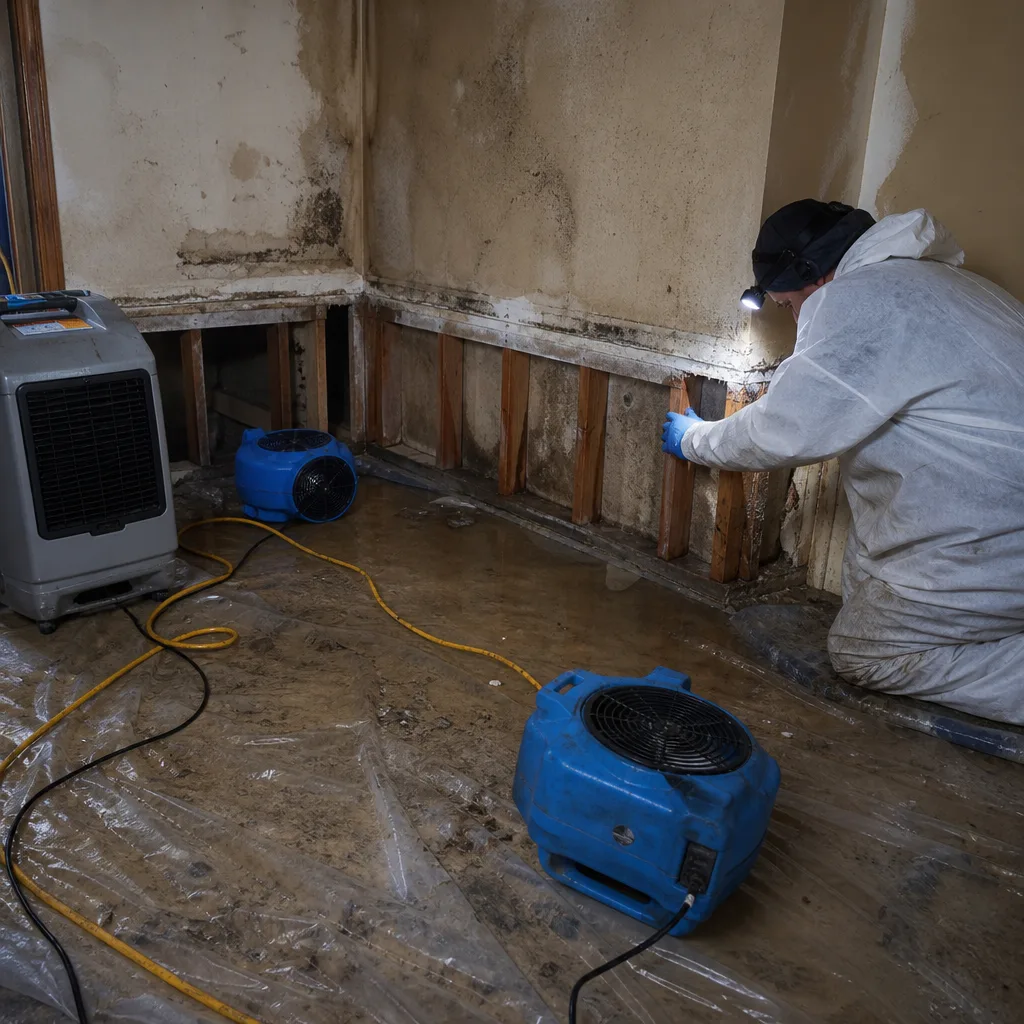 Before
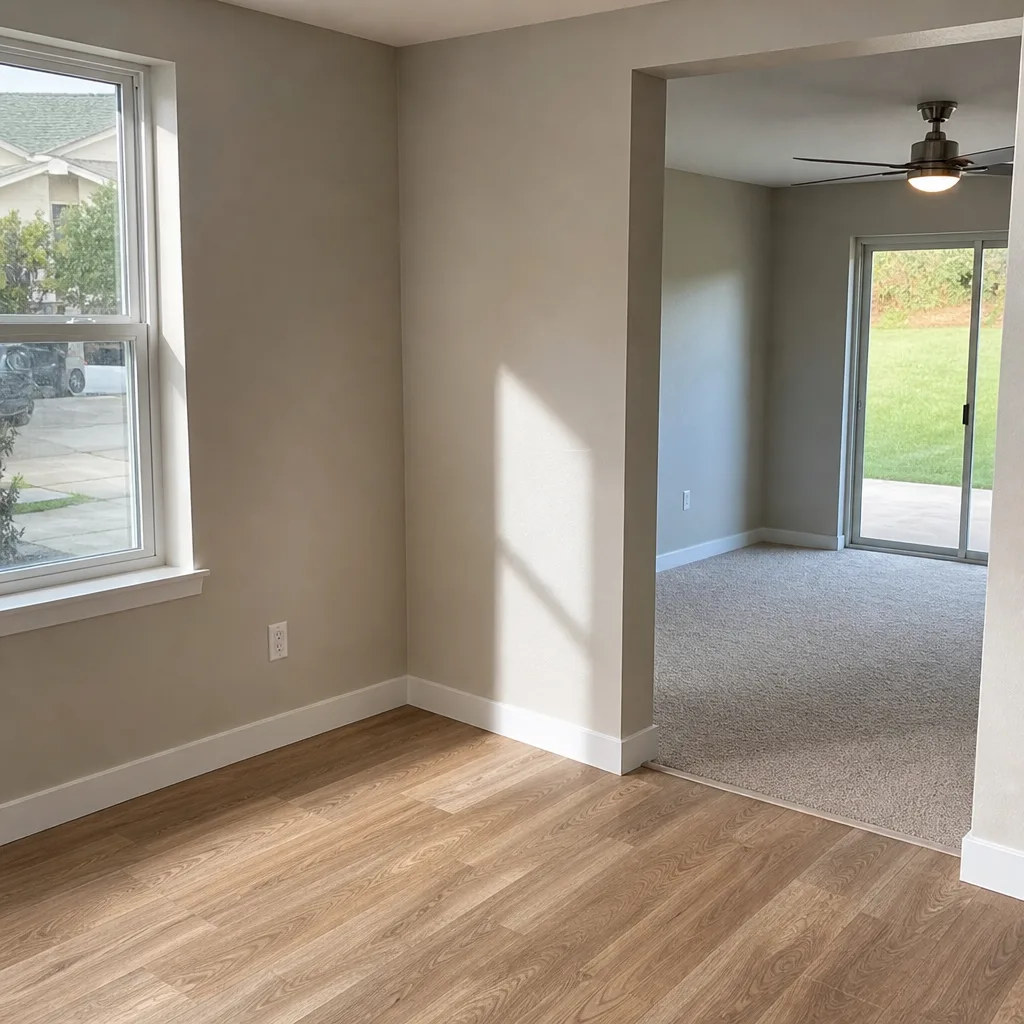 After
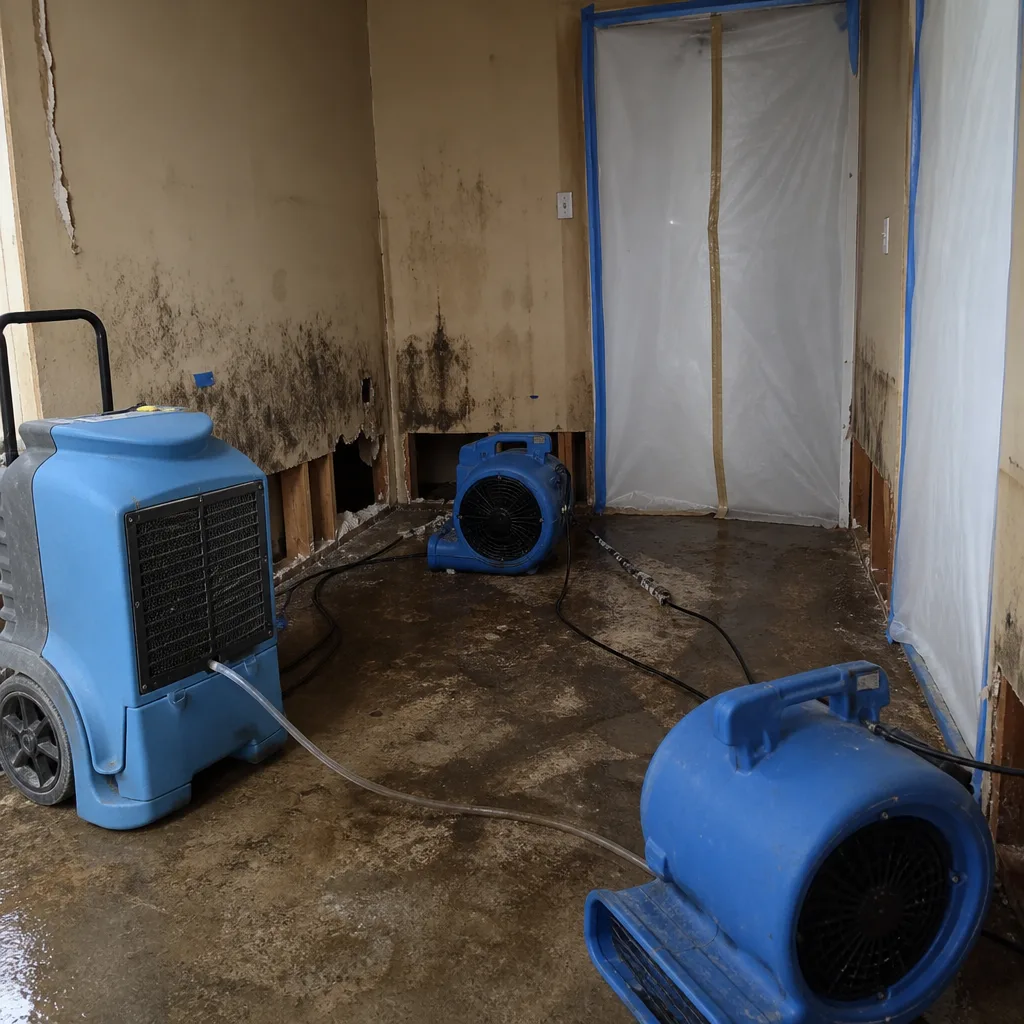 Before
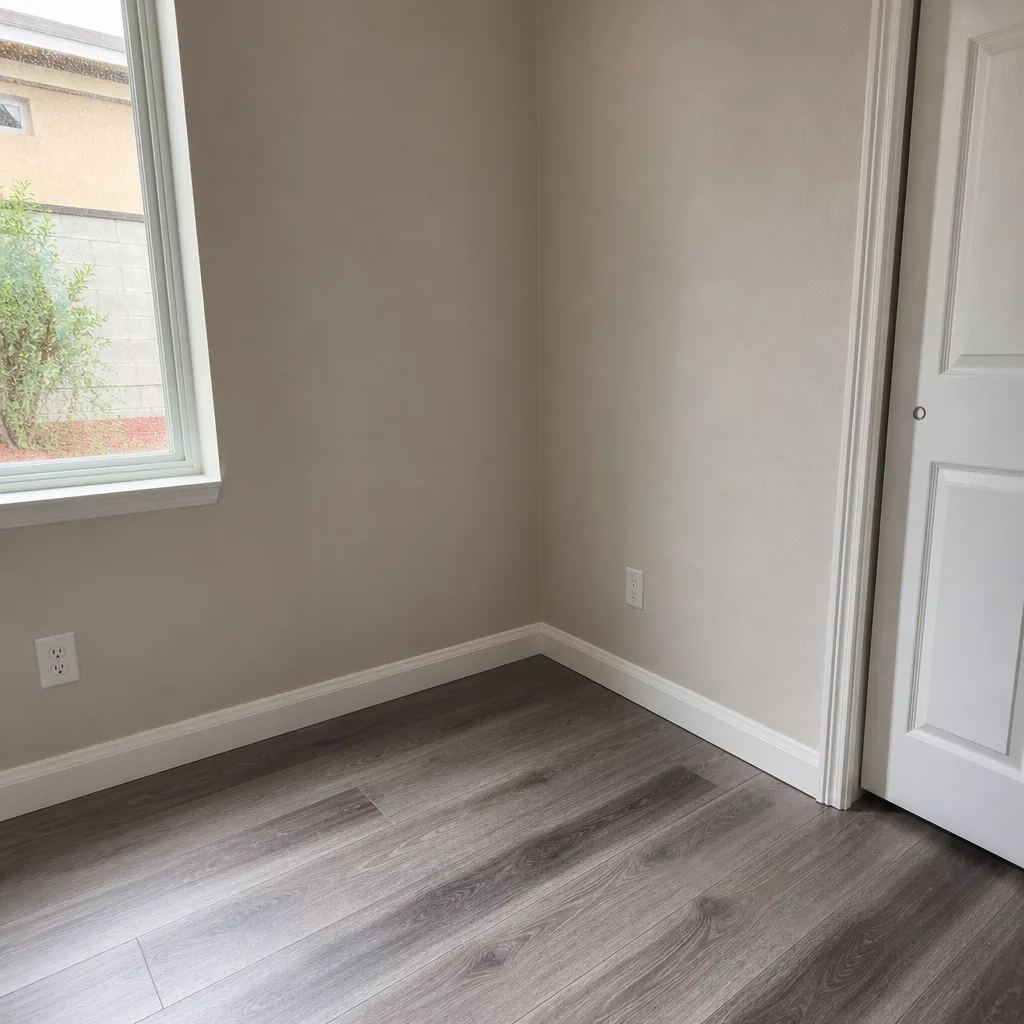 After
Frequently Asked Questions
A franchise restoration company is locally owned but operates under a national brand’s name, paying royalties and following franchise agreements that can limit local decision-making. An independent restoration company like Fresh Start Water Damage is locally owned and operated, with no franchise layer between the homeowner and the company making equipment and staffing decisions. For Temecula homeowners, the practical difference is direct accountability to a local business owner rather than a distant corporate structure.
Go to the IICRC’s public locator at iicrc.org, enter the technician’s name (not just the company name), and confirm their certifications match what was claimed. Ask for the specific technician’s name and certification number before work begins. Company-level IICRC affiliation does not guarantee the individual technician working in your Temecula home holds any certification at all.
A professional restoration company should use commercial-grade drying systems from manufacturers like Dri-Eaz, Phoenix, XPOWER, and B-Air, plus specialty systems like Injectidry for wall cavities and subfloors. These are not the same machines available for consumer rental. If the equipment looks like something you could buy at a hardware store, it’s not professional-grade.
In Temecula’s summer temperatures, mold can begin colonizing within 24 to 48 hours of water exposure. The warm, dry climate paradoxically creates ideal mold conditions inside wall cavities, where moisture is trapped and temperatures stay elevated. Professional drying with proper moisture measurement is the only way to confirm a structure is dry enough to prevent mold growth.
Most homeowner insurance policies cover sudden and accidental water damage, fire damage, and mold remediation when it results from a covered peril. The key to a successful claim is documentation: photo records, moisture readings, and drying logs that demonstrate professional restoration was performed. A restoration company should provide this documentation in a format adjusters can evaluate. Call (844) 878-6356 and we’ll explain what documentation your specific situation requires.
Most professional restoration companies in Temecula can begin water extraction and initial equipment setup the same day you call, with full drying plans established within 24 hours. Mold remediation and fire restoration require more extensive scoping and containment setup, so those timelines run longer. The speed that matters is not same-day arrival but same-day extraction: water continuing to migrate through your structure while you wait is the costliest hour in restoration. Call (844) 878-6356 for an honest assessment of your situation and a realistic timeline.
The Bottom Line
Choosing a damage restoration brand in Temecula is not about recognizing a logo or trusting a national advertising campaign. It’s about verifying what matters: IICRC certification held by the individual technicians who will work in your home, commercial-grade equipment that is owned and maintained by the company, documented drying processes that prove the work was done correctly, and a single accountable team that handles water, mold, and fire under one roof. The structural difference between franchise and independent operators matters because it determines who is accountable when something goes wrong. Ask the hard questions before you sign. The answers will tell you everything you need to know. Learn more about Fresh Start Water Damage and our approach to restoration in Temecula.
Written by the team at Fresh Start Water Damage, serving Temecula since 2017.